
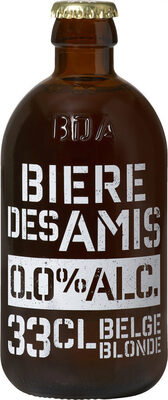


Bière belge blonde sans alcool
Summary
This non-alcoholic beer is ultra-processed, which limits its potential score. It contains added sugar and natural flavors, which are moderately concerning due to their contribution to overall sugar content and lack of transparency. However, the use of hops provides some beneficial qualities, and the product has a relatively low sugar content compared to other beverages.
At a glance
Key ingredients 8
WaterNeutral
Water is a neutral ingredient that serves as the base for most beverages. It is essential for hydration and does not contribute any calories or nutrients. In this product, it acts as a solvent for other ingredients.
See more about Water →Barley MaltNeutral
Barley malt is used for its fermentable sugars and flavor in brewing. It provides carbohydrates and some protein but is not a significant source of nutrients in small quantities. The malting process involves soaking, germinating, and drying barley grains.
Risks
Contains gluten, which can be a concern for individuals with celiac disease or gluten sensitivity.
Benefits
Provides a source of carbohydrates and contributes to the flavor profile of the beverage.
HopsGood
Hops are used in brewing for their flavor and preservative qualities. They contain antioxidants and may have anti-inflammatory properties. The use of hops can enhance the aroma and taste of the beverage.
Benefits
Rich in antioxidants, which can help reduce oxidative stress and inflammation.
YeastNeutral
Yeast is used in fermentation to convert sugars into alcohol and carbon dioxide. In non-alcoholic beverages, yeast contributes to flavor development. It is a natural ingredient with minimal processing.
Benefits
Contributes to the fermentation process and flavor development.
SugarBad
Sugar is added for sweetness and to aid fermentation. Excessive consumption of added sugars can lead to health issues such as obesity and diabetes. In this product, it is used in moderation but still contributes to the overall sugar content.
Risks
High intake of added sugars can increase the risk of metabolic disorders and dental cavities.
Benefits
Provides energy and enhances the sweetness of the beverage.
Carbon DioxideNeutral
Carbon dioxide is used to carbonate beverages, providing effervescence. It is a natural gas and does not contribute any calories or nutrients. The carbonation process involves dissolving CO2 under pressure.
Benefits
Enhances the sensory experience by adding fizz to the beverage.
Natural FlavorsBad
Natural flavors are used to enhance taste but can be vague in terms of specific ingredients. They are often derived from natural sources but may undergo significant processing. The lack of transparency can be a concern for consumers seeking to avoid certain additives.
Risks
Potential for undisclosed allergens or additives due to lack of specificity.
Benefits
Enhances the flavor profile of the beverage.
Ascorbic AcidNeutral
Ascorbic acid, also known as vitamin C, is used as an antioxidant to preserve freshness. It is a naturally occurring compound with minimal processing. In this context, it helps prevent oxidation and spoilage.
Benefits
Acts as an antioxidant, helping to preserve the quality and shelf life of the beverage.
Processing
Ultra-Processed Foods
Get the full breakdown in the Scout app
Scan any product to see lab results, healthy alternatives, and your personalized analysis.
Download on theApp Store