
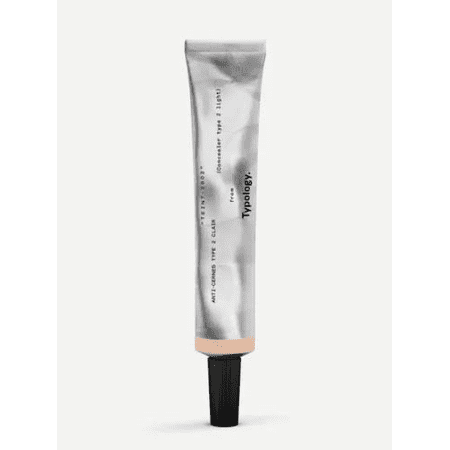
Typology Tinted Concealer Type 2 / Light 0.5 fl oz
Analysis updated September 2026 · How Scout scores
At a glance
Summary
This concealer features a clean formulation with beneficial ingredients such as jojoba esters, niacinamide, and caffeine, which provide moisturizing and soothing properties. The inclusion of natural minerals like titanium dioxide and iron oxides for pigmentation is a positive aspect. The absence of harsh chemicals, synthetic fragrances, and minimal processing contribute to its high rating.
Key ingredients 18
Jojoba EstersVery Good
Jojoba Esters are derived from jojoba oil and are used for their moisturizing properties. They mimic the skin's natural oils, making them highly compatible with the skin. They are non-comedogenic and suitable for all skin types.
Risks
There are no significant risks associated with jojoba esters.
Benefits
They provide excellent moisturizing benefits and help to improve skin texture and elasticity.
Coco-Caprylate/CaprateGood
Coco-Caprylate/Caprate is an emollient derived from coconut oil and caprylic acid. It is used to provide a smooth application and enhance skin softness. It is well-tolerated by most skin types.
Risks
There are minimal risks, though very sensitive skin may experience mild irritation.
Benefits
It helps to moisturize and soften the skin without leaving a greasy residue.
Centaurea Cyanus Flower WaterGood
Centaurea Cyanus Flower Water is known for its soothing and anti-inflammatory properties. It is often used in cosmetics for its calming effects on the skin. It is particularly beneficial for sensitive or irritated skin.
Risks
There are minimal risks, though allergic reactions are possible in rare cases.
Benefits
It helps to soothe and calm the skin, reducing redness and irritation.
NiacinamideGood
Niacinamide is a form of Vitamin B3 that is highly beneficial for the skin. It helps to improve skin elasticity, enhance barrier function, and even out skin tone. It is suitable for all skin types and is known for its anti-inflammatory properties.
Risks
There are minimal risks, though high concentrations can cause irritation in sensitive skin.
Benefits
It improves skin texture, reduces redness, and enhances overall skin health.
TocopherolGood
Tocopherol, also known as Vitamin E, is an antioxidant that helps to protect the skin from free radical damage. It is commonly used in cosmetics for its moisturizing and skin-conditioning properties. It is well-tolerated by most skin types.
Risks
There are minimal risks, though very sensitive skin may experience mild irritation.
Benefits
It helps to moisturize the skin and protect it from environmental damage.
CI 77492 (Iron Oxides)Good
Beneficial ingredient — whole-food or functional value in this product class.
Risks
There are no significant risks associated with iron oxides.
Benefits
They provide natural-looking color and are suitable for sensitive skin.
CI 77491 (Iron Oxides)Good
Beneficial ingredient — whole-food or functional value in this product class.
Risks
There are no significant risks associated with iron oxides.
Benefits
They provide natural-looking color and are suitable for sensitive skin.
CI 77499 (Iron Oxides)Good
Beneficial ingredient — whole-food or functional value in this product class.
Risks
There are no significant risks associated with iron oxides.
Benefits
They provide natural-looking color and are suitable for sensitive skin.
Aqua (Water)Neutral
Aqua is commonly used as a solvent in cosmetic formulations. It helps to dissolve other ingredients and provides a base for the product. It is generally considered safe and non-reactive.
Risks
There are no significant risks associated with water in cosmetics.
Benefits
Water helps in hydrating the skin and acts as a carrier for other beneficial ingredients.
Tri(Polyglyceryl-3/Lauryl) Hydrogenated TrilinoleateNeutral
This ingredient is an emulsifier that helps to stabilize formulations. It ensures that oil and water components mix well and remain stable. It is generally considered safe for use in cosmetics.
Risks
There are no significant risks associated with this ingredient.
Benefits
It helps to maintain the consistency and stability of the product.
SilicaNeutral
Silica is used in cosmetics for its oil-absorbing properties and to improve the texture of products. It provides a matte finish and helps to control shine. It is generally considered safe for topical use.
Risks
Inhalation of silica dust can be harmful, but this is not a concern in liquid formulations.
Benefits
It helps to absorb excess oil and provides a smooth, matte finish.
CaffeineNeutral
Standard formulation ingredient — neither beneficial nor harmful at typical use.
Risks
There are minimal risks, though overuse can lead to skin dryness.
Benefits
It helps to reduce puffiness and improve the appearance of tired skin.
Magnesium SulfateNeutral
Magnesium Sulfate is used as a thickening agent and to enhance the texture of cosmetic products. It is generally considered safe and non-irritating. It helps to improve the consistency of formulations.
Risks
There are no significant risks associated with this ingredient.
Benefits
It helps to improve the texture and consistency of the product.
Cetyl AlcoholNeutral
Cetyl Alcohol is a fatty alcohol used as an emollient and thickener in cosmetics. It helps to soften the skin and improve the texture of products. It is generally considered safe and non-irritating.
Risks
There are minimal risks, though very sensitive skin may experience mild irritation.
Benefits
It helps to moisturize and soften the skin, enhancing the product's feel.
Citric AcidNeutral
Citric Acid is used to adjust the pH of cosmetic formulations. It is also known for its antioxidant properties. It is generally considered safe for use in cosmetics.
Risks
There are minimal risks, though high concentrations can cause irritation.
Benefits
It helps to maintain the stability and effectiveness of the product.
CI 77891 (Titanium Dioxide)Neutral
Titanium Dioxide is used as a pigment and UV filter in cosmetics. It provides coverage and helps to protect the skin from UV radiation. It is generally considered safe for topical use.
Risks
Inhalation of titanium dioxide particles can be harmful, but this is not a concern in liquid formulations.
Benefits
It provides sun protection and enhances the product's coverage.
Sodium BenzoateBad
Synthetic preservative that can form benzene in the presence of vitamin C.
Risks
There are minimal risks, though it can cause irritation in sensitive individuals.
Benefits
It helps to preserve the product and prevent spoilage.
Potassium SorbateBad
Synthetic preservative — flagged in daily-use products.
Risks
There are minimal risks, though it can cause irritation in sensitive individuals.
Benefits
It helps to preserve the product and prevent microbial contamination.
Get the full breakdown in the Scout appTake Scout shopping
Scan any product to see lab results, healthy alternatives, and your personalized analysis.
Download on theApp Store GET IT ONGoogle PlayAmazon pricing & content
Amazon price as of . Product prices and availability are accurate as of the date/time indicated and are subject to change. Any price and availability information displayed on Amazon.com at the time of purchase will apply to the purchase of this product.
CERTAIN CONTENT THAT APPEARS ON THIS SITE COMES FROM AMAZON. THIS CONTENT IS PROVIDED “AS IS” AND IS SUBJECT TO CHANGE OR REMOVAL AT ANY TIME.