
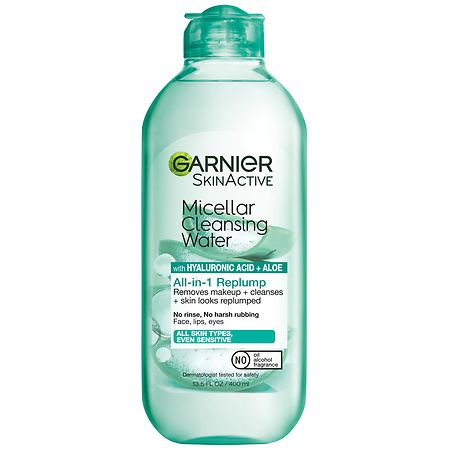
Garnier SkinActive Replumping Hyaluronic Acid + Aloe Micellar Cleansing Water - 13.5 fl oz
Analysis updated August 2026 · How Scout scores
At a glance
Summary
This micellar cleansing water contains beneficial ingredients like glycerin, sodium hyaluronate, and aloe vera, which provide hydration and soothing properties. However, the presence of synthetic compounds such as PEG-40 hydrogenated castor oil and PPG-26-Buteth-26, along with the processed nature of the product, slightly lowers its score. The formulation is mostly safe but includes some synthetic emulsifiers that prevent it from achieving a higher rating.
Key ingredients 12
Aloe Barbadensis Leaf Juice PowderVery Good
Aloe Barbadensis Leaf Juice Powder is derived from aloe vera and is known for its soothing and moisturizing properties. It is widely used in skincare for its ability to calm irritated skin. It is considered safe and beneficial for most skin types.
Risks
There are minimal risks, though it may cause irritation in very sensitive skin.
Benefits
It soothes and hydrates the skin, providing relief from irritation.
GlycerinGood
Glycerin is a humectant that attracts moisture to the skin, helping to keep it hydrated. It is widely used in skincare for its moisturizing properties. It is considered safe and beneficial for most skin types.
Risks
There are minimal risks associated with glycerin, though it may cause irritation in very sensitive skin.
Benefits
Glycerin helps to maintain skin hydration and improve skin barrier function.
Sodium HyaluronateGood
Sodium Hyaluronate is a form of hyaluronic acid that is easily absorbed by the skin. It provides intense hydration and helps to plump the skin. It is highly regarded for its anti-aging and moisturizing benefits.
Risks
There are minimal risks, though it may cause irritation in very sensitive skin.
Benefits
It significantly improves skin hydration and reduces the appearance of fine lines.
Aqua/Water/EauNeutral
Water is a universal solvent and is used as a base in many cosmetic products. It helps dissolve other ingredients and provides hydration. It is generally considered safe and non-irritating.
Risks
There are no significant risks associated with water in cosmetics.
Benefits
Water helps to hydrate the skin and acts as a carrier for other beneficial ingredients.
Hexylene GlycolNeutral
Hexylene Glycol is a solvent and viscosity agent used in cosmetics. It helps to improve the texture and spreadability of products. It is generally considered safe in low concentrations.
Risks
In high concentrations, it may cause skin irritation.
Benefits
It enhances the texture of the product, making it easier to apply.
Poloxamer 184Neutral
Poloxamer 184 is a surfactant and emulsifying agent used to help mix oil and water. It is commonly used in cleansing products for its ability to remove dirt and oil. It is generally considered safe for use in cosmetics.
Risks
There are no significant risks associated with Poloxamer 184 in cosmetics.
Benefits
It helps to cleanse the skin by effectively removing impurities.
PPG-26-Buteth-26Neutral
PPG-26-Buteth-26 is an emollient and surfactant used to improve the texture of cosmetic products. It helps to create a smooth application and enhance product stability. It is generally considered safe for use in cosmetics.
Risks
There are no significant risks associated with PPG-26-Buteth-26 in cosmetics.
Benefits
It improves the texture and feel of the product on the skin.
PEG-40 Hydrogenated Castor OilNeutral
PEG-40 Hydrogenated Castor Oil is an emulsifier and surfactant that helps to mix oil and water. It is used to improve the texture and stability of cosmetic formulations. It is generally considered safe for use in cosmetics.
Risks
There is a potential risk of contamination with impurities during manufacturing.
Benefits
It enhances the texture and stability of the product.
Myrtrimonium BromideNeutral
Myrtrimonium Bromide is a surfactant and antimicrobial agent used in cosmetics. It helps to cleanse the skin and prevent microbial growth. It is generally considered safe for use in cosmetics.
Risks
There are no significant risks associated with Myrtrimonium Bromide in cosmetics.
Benefits
It helps to cleanse the skin and maintain product freshness.
Disodium CocoamphodiacetateNeutral
Disodium Cocoamphodiacetate is a mild surfactant used in cleansing products. It helps to create foam and cleanse the skin without stripping natural oils. It is generally considered safe for use in cosmetics.
Risks
There are no significant risks associated with Disodium Cocoamphodiacetate in cosmetics.
Benefits
It provides gentle cleansing without causing irritation.
Potassium HydroxideNeutral
Potassium Hydroxide is used to adjust the pH of cosmetic formulations. It helps to maintain the stability and effectiveness of the product. It is generally considered safe when used in low concentrations.
Risks
In high concentrations, it can be irritating to the skin.
Benefits
It helps to maintain the desired pH level of the product.
Disodium EDTABad
Processed additive flagged under Scout's ingredient doctrine.
Risks
There are no significant risks associated with Disodium EDTA in cosmetics.
Benefits
It enhances product stability and prolongs shelf life.
Processing
Processed Foods
Get the full breakdown in the Scout appTake Scout shopping
Scan any product to see lab results, healthy alternatives, and your personalized analysis.
Download on theApp Store GET IT ONGoogle PlayAmazon pricing & content
Amazon price as of . Product prices and availability are accurate as of the date/time indicated and are subject to change. Any price and availability information displayed on Amazon.com at the time of purchase will apply to the purchase of this product.
CERTAIN CONTENT THAT APPEARS ON THIS SITE COMES FROM AMAZON. THIS CONTENT IS PROVIDED “AS IS” AND IS SUBJECT TO CHANGE OR REMOVAL AT ANY TIME.