
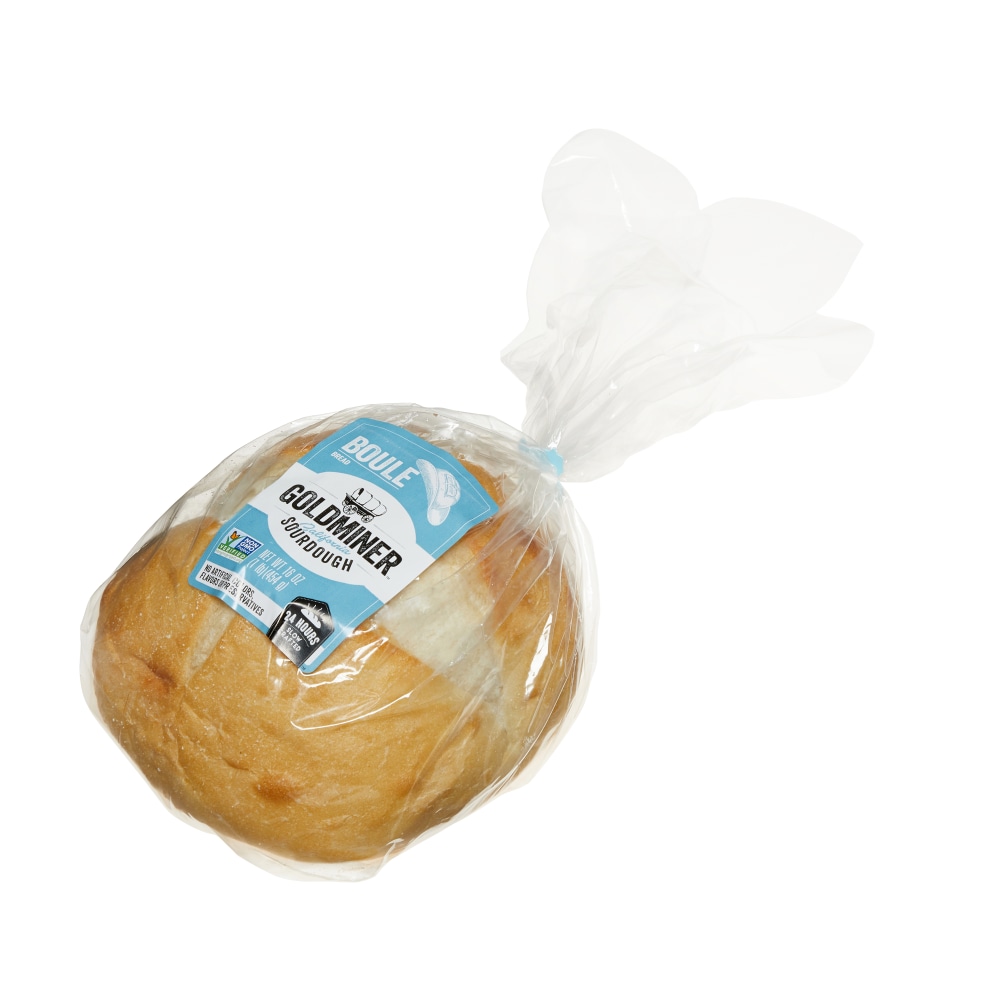
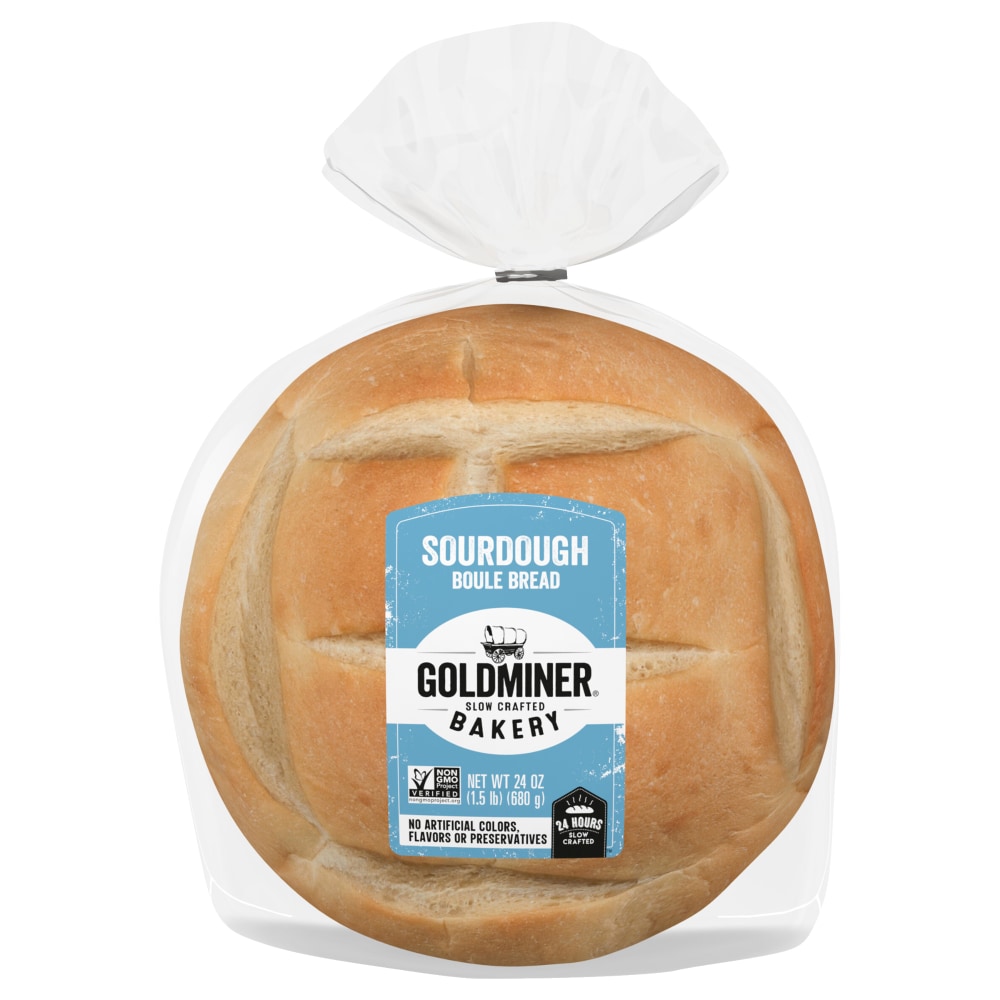

Sourdough Boule
Summary
This sourdough boule includes beneficial ingredients like rye flour, buttermilk, and vinegar, which contribute to its nutritional value and flavor. However, the presence of added sugar, although minimal, detracts from its healthiness. The bread is moderately processed, which limits its score despite the overall clean ingredient list.
At a glance
Key ingredients 8
Wheat FlourNeutral
Wheat flour is a staple ingredient in bread-making, providing structure and texture. It is typically refined, which removes some nutrients and fiber. Whole wheat alternatives offer more nutritional benefits.
Risks
Refined wheat flour may contribute to blood sugar spikes and lacks fiber.
Benefits
Provides essential carbohydrates for energy and is a key component in bread structure.
WaterNeutral
Water is a fundamental ingredient in bread, hydrating the flour and activating yeast. It is essential for dough formation and texture. There are no health concerns associated with water in this context.
Benefits
Essential for hydration and dough consistency in bread-making.
Rye FlourGood
Rye flour is a whole grain flour that adds flavor and nutritional value to bread. It contains more fiber and nutrients compared to refined wheat flour. Rye can improve digestive health and provide a unique taste.
Risks
May cause digestive discomfort in individuals sensitive to gluten.
Benefits
Rich in fiber and nutrients, supporting digestive health and providing a distinct flavor.
ButtermilkGood
Buttermilk adds a tangy flavor and tender texture to bread. It is a source of calcium and beneficial probiotics. The fermentation process enhances digestibility and nutrient absorption.
Risks
May not be suitable for individuals with lactose intolerance.
Benefits
Provides calcium and probiotics, supporting bone health and digestion.
SaltNeutral
Salt is used in bread to enhance flavor and control yeast activity. It is a necessary component in small amounts for proper dough development. Excessive consumption can lead to health issues like hypertension.
Risks
High sodium intake can contribute to hypertension and cardiovascular issues.
Benefits
Enhances flavor and regulates yeast activity in bread-making.
VinegarGood
Vinegar is used in bread to enhance flavor and improve shelf life. It acts as a natural preservative and can aid in digestion. The acidity helps strengthen gluten structure in dough.
Benefits
Acts as a natural preservative and aids in digestion.
Potato FlakesNeutral
Potato flakes are used to enhance the texture and moisture of bread. They provide carbohydrates and a mild flavor. While not harmful, they do not offer significant nutritional benefits.
Benefits
Enhances texture and moisture in bread.
SugarBad
Sugar is added to bread to enhance flavor and aid in yeast fermentation. However, refined sugar can contribute to health issues like obesity and diabetes when consumed in excess. It is not necessary for bread-making and can be replaced with healthier alternatives.
Risks
Excessive consumption can lead to obesity, diabetes, and other metabolic disorders.
Benefits
Aids in yeast fermentation and enhances flavor.
Processing
Processed Foods
Get the full breakdown in the Scout app
Scan any product to see lab results, healthy alternatives, and your personalized analysis.
Download on theApp Store