
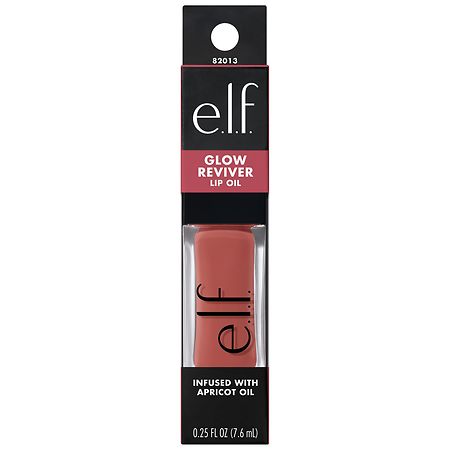

e.l.f. Glow Reviver Lip Oil - It's Giving Guava - 0.25 fl oz
Analysis updated August 2026 · How Scout scores
At a glance
Summary
This lip oil contains several beneficial natural oils such as squalane, apricot kernel oil, avocado oil, and jojoba oil, which are known for their moisturizing and nourishing properties. However, the presence of fragrance, which can cause skin irritation and allergic reactions, slightly detracts from its overall safety profile. The product is moderately processed, which also influences its rating.
Key ingredients 23
SqualaneVery Good
Squalane is a highly effective emollient and natural antioxidant. It mimics the skin's natural oils, making it an excellent moisturizer. It is well-tolerated by most skin types.
Risks
There are minimal risks associated with squalane, as it is non-irritating and non-comedogenic.
Benefits
It provides deep hydration and helps to improve skin elasticity.
Prunus Armeniaca (Apricot) Kernel OilVery Good
Apricot Kernel Oil is a natural oil rich in fatty acids and vitamins. It is known for its moisturizing and nourishing properties. It is suitable for sensitive skin.
Risks
There are minimal risks, though individuals with nut allergies should patch test first.
Benefits
It provides nourishment and hydration, improving skin softness.
Persea Gratissima (Avocado) OilVery Good
Avocado Oil is rich in vitamins and fatty acids, making it an excellent moisturizer. It helps to nourish and protect the skin. It is well-suited for dry and sensitive skin types.
Risks
Minimal risks, though it may cause mild irritation in rare cases.
Benefits
It deeply moisturizes and provides essential nutrients to the skin.
Simmondsia Chinensis (Jojoba) Seed OilVery Good
Jojoba Oil is a natural oil that closely resembles the skin's sebum. It is highly moisturizing and helps to balance oil production. It is non-comedogenic and suitable for all skin types.
Risks
There are minimal risks, as it is generally well-tolerated.
Benefits
It provides hydration and helps to regulate skin oil levels.
Punica Granatum Seed OilVery Good
Pomegranate Seed Oil is rich in antioxidants and fatty acids. It helps to protect the skin from environmental damage and promotes regeneration. It is beneficial for mature and dry skin.
Risks
Minimal risks, though it may cause mild irritation in sensitive individuals.
Benefits
It provides antioxidant protection and supports skin renewal.
Tocopheryl AcetateGood
Tocopheryl Acetate is a form of Vitamin E, known for its antioxidant properties. It helps to protect the skin from free radical damage. It is commonly used in skincare for its moisturizing benefits.
Risks
There are minimal risks, though it may cause mild irritation in rare cases.
Benefits
It provides antioxidant protection and helps to maintain skin moisture.
TocopherolGood
Tocopherol is a form of Vitamin E, known for its antioxidant properties. It helps to protect the skin from free radical damage. It is commonly used in skincare for its moisturizing benefits.
Risks
There are minimal risks, though it may cause mild irritation in rare cases.
Benefits
It provides antioxidant protection and helps to maintain skin moisture.
Hydrogenated PolyisobuteneNeutral
Hydrogenated Polyisobutene is a synthetic polymer used as a thickening agent and emollient. It provides a smooth application and helps to lock in moisture. It is generally considered safe for use in cosmetics.
Risks
There are minimal risks associated with this ingredient, primarily related to potential skin sensitivity in rare cases.
Benefits
It helps to create a smooth texture and provides a moisturizing effect on the lips.
Tridecyl TrimellitateNeutral
Tridecyl Trimellitate is an ester used as an emollient and skin conditioning agent. It helps to improve the texture and feel of the product. It is generally regarded as safe for use in cosmetics.
Risks
Potential risks include mild skin irritation for sensitive individuals.
Benefits
It enhances the smoothness and spreadability of the lip oil.
PolyisobuteneNeutral
Polyisobutene is a synthetic polymer used for its film-forming properties. It helps to create a barrier on the skin, preventing moisture loss. It is considered safe for use in cosmetics.
Risks
There are minimal risks, with rare cases of skin irritation reported.
Benefits
It provides a protective layer that helps retain moisture on the lips.
Phytosteryl/Octyldodecyl Lauroyl GlutamateNeutral
This ingredient is a skin conditioning agent derived from amino acids and fatty acids. It helps to improve skin feel and hydration. It is generally considered safe for use in cosmetics.
Risks
Potential risks are minimal, with rare instances of skin sensitivity.
Benefits
It enhances skin hydration and provides a smooth feel.
Hydrogenated Styrene/Isoprene CopolymerNeutral
This copolymer is used as a film-forming agent and thickener. It helps to improve the texture and longevity of the product. It is considered safe for use in cosmetics.
Risks
There are minimal risks, primarily related to potential skin sensitivity.
Benefits
It provides a long-lasting film that helps maintain product application.
Diethylhexyl SyringylidenemalonateNeutral
This ingredient is used as a UV filter and antioxidant. It helps to protect the product from degradation due to light exposure. It is considered safe for use in cosmetics.
Risks
There are minimal risks, primarily related to potential skin sensitivity.
Benefits
It helps to stabilize the product and extend its shelf life.
Caprylyl GlycolNeutral
Caprylyl Glycol is a skin conditioning agent and preservative booster. It helps to improve the moisture content of the skin. It is considered safe for use in cosmetics.
Risks
There are minimal risks, with rare cases of skin irritation reported.
Benefits
It enhances skin hydration and boosts preservative efficacy.
Caprylic/Capric TriglycerideNeutral
This ingredient is an emollient derived from coconut oil and glycerin. It helps to improve the spreadability and absorption of the product. It is considered safe and non-irritating.
Risks
There are minimal risks, primarily related to potential skin sensitivity.
Benefits
It provides a lightweight, non-greasy moisturizing effect.
Pentaerythrityl Tetra-Di-T-Butyl HydroxyhydrocinnamateNeutral
This ingredient is an antioxidant used to stabilize formulations. It helps to prevent the oxidation of other ingredients. It is considered safe for use in cosmetics.
Risks
There are minimal risks, with rare cases of skin irritation reported.
Benefits
It helps to extend the shelf life of the product by preventing oxidation.
MentholNeutral
Menthol is used for its cooling and soothing properties. It provides a refreshing sensation on the skin. It is generally considered safe for use in cosmetics.
Risks
Potential risks include skin irritation and allergic reactions in sensitive individuals.
Benefits
It provides a cooling effect and can soothe irritated skin.
Mentha Piperita (Peppermint) OilNeutral
Peppermint Oil is used for its cooling and invigorating properties. It provides a refreshing scent and sensation. It is generally considered safe for use in cosmetics.
Risks
Potential risks include skin irritation and allergic reactions in sensitive individuals.
Benefits
It provides a refreshing scent and cooling sensation.
Eucalyptus Globulus OilNeutral
Eucalyptus Oil is used for its aromatic and soothing properties. It provides a refreshing scent and can help to soothe the skin. It is generally considered safe for use in cosmetics.
Risks
Potential risks include skin irritation and allergic reactions in sensitive individuals.
Benefits
It provides a refreshing scent and soothing effect.
AnetholeNeutral
Anethole is a flavoring agent derived from anise and fennel. It provides a sweet, licorice-like scent and taste. It is generally considered safe for use in cosmetics.
Risks
Potential risks include skin irritation and allergic reactions in sensitive individuals.
Benefits
It provides a pleasant scent and flavor to the product.
Mentha Viridis (Spearmint) Leaf OilNeutral
Spearmint Oil is used for its refreshing scent and cooling properties. It provides a pleasant aroma and sensation. It is generally considered safe for use in cosmetics.
Risks
Potential risks include skin irritation and allergic reactions in sensitive individuals.
Benefits
It provides a refreshing scent and cooling sensation.
PhenoxyethanolBad
Processed additive flagged under Scout's ingredient doctrine.
Risks
Potential risks include skin irritation and allergic reactions in sensitive individuals.
Benefits
It helps to preserve the product and prevent contamination.
Fragrance (Parfum)Very Bad
Fragrance is used to impart scent to cosmetic products. It can cause allergic reactions and skin irritation in sensitive individuals. It is often criticized for its lack of transparency regarding specific components.
Risks
Potential risks include skin irritation and allergic reactions.
Benefits
It provides a pleasant scent to the product.
Get the full breakdown in the Scout appTake Scout shopping
Scan any product to see lab results, healthy alternatives, and your personalized analysis.
Download on theApp Store GET IT ONGoogle PlayAmazon pricing & content
Amazon price as of . Product prices and availability are accurate as of the date/time indicated and are subject to change. Any price and availability information displayed on Amazon.com at the time of purchase will apply to the purchase of this product.
CERTAIN CONTENT THAT APPEARS ON THIS SITE COMES FROM AMAZON. THIS CONTENT IS PROVIDED “AS IS” AND IS SUBJECT TO CHANGE OR REMOVAL AT ANY TIME.