
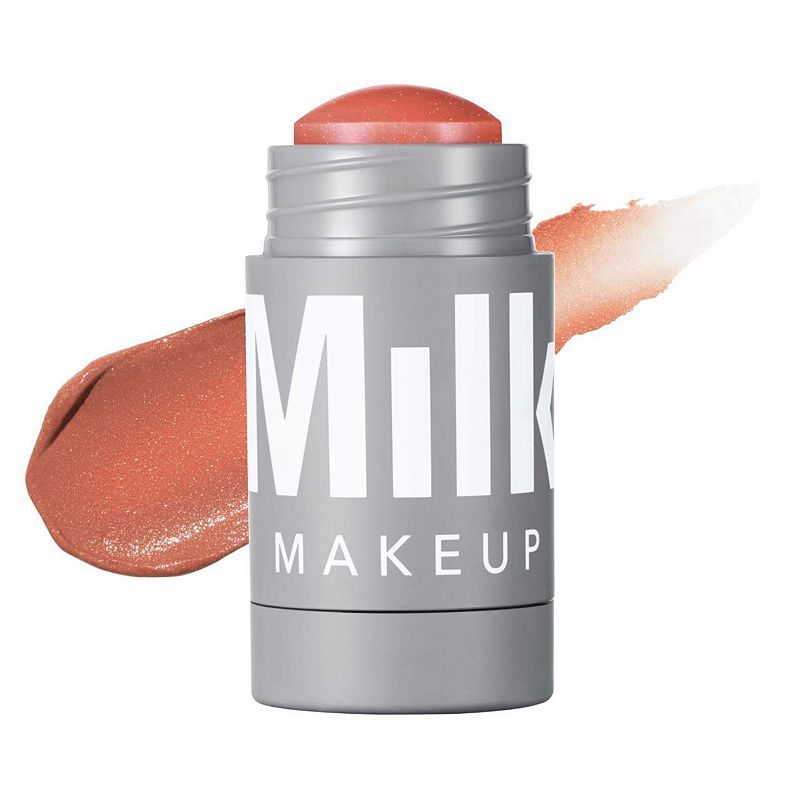

MILK MAKEUP Lip + Cheek Cream Blush Stick Color: Smirk Size: N/A
Analysis updated August 2026 · How Scout scores
At a glance
Summary
This product contains several beneficial natural oils and butters, such as castor seed oil, avocado oil, and mango seed butter, which provide moisturizing and nourishing properties. However, the presence of synthetic fragrance, which can cause allergic reactions and sensitivities, slightly detracts from its overall safety profile. The product is moderately processed, which also impacts its rating.
Key ingredients 30
Ricinus Communis (Castor) Seed OilVery Good
Castor seed oil is a natural oil known for its moisturizing properties. It helps to lock in moisture and provides a smooth application. It is widely used in cosmetics for its emollient benefits.
Risks
Rarely, it may cause allergic reactions in sensitive individuals.
Benefits
It deeply hydrates the skin and enhances the texture of the product.
Persea Gratissima (Avocado) OilVery Good
Avocado oil is rich in fatty acids and vitamins, making it an excellent moisturizer. It helps to nourish and soften the skin. Its high vitamin E content provides antioxidant benefits.
Risks
May cause irritation in individuals with avocado allergies.
Benefits
It provides deep hydration and supports skin health with its nutrient-rich profile.
Mangifera Indica (Mango) Seed ButterVery Good
Mango seed butter is a natural butter rich in fatty acids and vitamins. It is known for its moisturizing and nourishing properties. It helps to soften and smooth the skin.
Risks
Rarely, it may cause allergic reactions in sensitive individuals.
Benefits
It deeply hydrates and nourishes the skin, improving its texture.
Prunus Armeniaca (Apricot) Kernel OilVery Good
Apricot kernel oil is a natural oil rich in vitamins A and E. It is known for its moisturizing and nourishing properties. It helps to soften and smooth the skin.
Risks
Generally considered safe with low risk of irritation.
Benefits
It provides deep hydration and supports skin health.
Helianthus Annuus (Sunflower) Seed WaxGood
Sunflower seed wax is a natural wax that provides structure and stability to cosmetic formulations. It is derived from sunflower seeds and is known for its emollient properties. It helps to create a protective barrier on the skin.
Risks
Generally considered safe with low risk of irritation.
Benefits
It helps to lock in moisture and provides a smooth, creamy texture.
Citrus Aurantium Dulcis (Orange) Peel WaxGood
Orange peel wax is a natural wax derived from orange peels. It is used for its emollient and protective properties. It helps to create a barrier on the skin, locking in moisture.
Risks
Generally considered safe with low risk of irritation.
Benefits
It provides a natural barrier and enhances the product's texture.
Tocopheryl AcetateGood
Tocopheryl acetate is a form of vitamin E used for its antioxidant properties. It helps to protect the skin from free radical damage. It is commonly used in cosmetics for its skin-conditioning benefits.
Risks
May cause irritation in sensitive individuals.
Benefits
It provides antioxidant protection and supports skin health.
MicaGood
Beneficial ingredient — whole-food or functional value in this product class.
Risks
Inhalation of fine mica particles can be harmful; however, in cosmetic formulations, it is generally safe.
Benefits
It adds a shimmering effect and enhances the visual appeal of the product.
Iron Oxides (CI 77491)Good
Beneficial ingredient — whole-food or functional value in this product class.
Risks
Generally considered safe with low risk of irritation.
Benefits
They provide stable and vibrant color to the product.
Ethylhexyl PalmitateNeutral
Ethylhexyl palmitate is an ester of 2-ethylhexyl alcohol and palmitic acid, used as an emollient. It provides a smooth application and enhances the texture of the product. It is commonly used in cosmetics for its skin-conditioning properties.
Risks
May cause mild irritation in sensitive skin types.
Benefits
It improves the spreadability of the product and leaves a non-greasy feel.
Euphorbia Cerifera (Candelilla) WaxNeutral
Standard formulation ingredient — neither beneficial nor harmful at typical use.
Risks
Low risk of irritation; generally safe for use.
Benefits
It provides a smooth application and enhances the product's texture.
C12-15 Alkyl BenzoateNeutral
C12-15 alkyl benzoate is an ester used as an emollient and texture enhancer in cosmetics. It provides a silky feel and helps to reduce greasiness. It is commonly used for its skin-conditioning properties.
Risks
May cause mild irritation in sensitive individuals.
Benefits
It improves the spreadability and feel of the product on the skin.
Isononyl IsononanoateNeutral
Isononyl isononanoate is an ester used as an emollient and skin-conditioning agent. It provides a lightweight, non-greasy feel. It is often used to enhance the texture and spreadability of cosmetic products.
Risks
Generally considered safe with low risk of irritation.
Benefits
It contributes to a smooth application and a soft finish.
SilicaNeutral
Silica is a mineral used in cosmetics for its oil-absorbing properties. It helps to control shine and provides a matte finish. It is commonly used in powder formulations.
Risks
Inhalation of fine silica particles can be harmful; however, in cosmetic formulations, it is generally safe.
Benefits
It helps to absorb excess oil and provides a smooth, matte finish.
Hydrogenated Vegetable OilNeutral
Hydrogenated vegetable oil is used as an emollient and thickening agent in cosmetics. It helps to improve the texture and stability of formulations. It is commonly used for its moisturizing properties.
Risks
Generally considered safe with low risk of irritation.
Benefits
It provides a smooth application and enhances the product's texture.
Stearalkonium HectoriteNeutral
Stearalkonium hectorite is a clay-derived thickening agent used in cosmetics. It helps to stabilize formulations and improve texture. It is commonly used for its viscosity-enhancing properties.
Risks
Generally considered safe with low risk of irritation.
Benefits
It improves the stability and texture of the product.
Synthetic FluorphlogopiteNeutral
Synthetic fluorphlogopite is a synthetic mica used to add shimmer and shine to cosmetics. It is used as a safer alternative to natural mica. It provides a pearlescent effect in formulations.
Risks
Generally considered safe with low risk of irritation.
Benefits
It adds a shimmering effect and enhances the visual appeal of the product.
Isopropyl MyristateNeutral
Isopropyl myristate is an ester used as an emollient and texture enhancer in cosmetics. It provides a smooth application and helps to reduce greasiness. It is commonly used for its skin-conditioning properties.
Risks
May cause mild irritation in sensitive individuals.
Benefits
It improves the spreadability and feel of the product on the skin.
Polyhydroxystearic AcidNeutral
Polyhydroxystearic acid is used as an emulsifier and stabilizer in cosmetics. It helps to improve the texture and consistency of formulations. It is commonly used for its thickening properties.
Risks
Generally considered safe with low risk of irritation.
Benefits
It enhances the stability and texture of the product.
Bis-Stearyl DimethiconeNeutral
Bis-stearyl dimethicone is a silicone-based compound used as an emollient and conditioning agent. It provides a smooth, silky feel and enhances the texture of the product. It is commonly used for its skin-conditioning properties.
Risks
Generally considered safe with low risk of irritation.
Benefits
It improves the spreadability and feel of the product on the skin.
Isopropyl Titanium TriisostearateNeutral
Isopropyl titanium triisostearate is used as a pigment dispersant and emollient in cosmetics. It helps to improve the spreadability and texture of formulations. It is commonly used for its skin-conditioning properties.
Risks
Generally considered safe with low risk of irritation.
Benefits
It enhances the texture and application of the product.
Tin OxideNeutral
Tin oxide is used as an opacifying agent and pigment in cosmetics. It helps to improve the opacity and color of formulations. It is commonly used for its light-reflecting properties.
Risks
Generally considered safe with low risk of irritation.
Benefits
It enhances the color and opacity of the product.
Palmitic AcidNeutral
Palmitic acid is a fatty acid used as an emollient and thickening agent in cosmetics. It helps to improve the texture and stability of formulations. It is commonly used for its skin-conditioning properties.
Risks
Generally considered safe with low risk of irritation.
Benefits
It provides a smooth application and enhances the product's texture.
Titanium Dioxide (CI 77891)Neutral
Titanium dioxide is a mineral used as a pigment and sunscreen agent in cosmetics. It provides opacity and UV protection. It is commonly used for its light-reflecting properties.
Risks
Inhalation of fine titanium dioxide particles can be harmful; however, in cosmetic formulations, it is generally safe.
Benefits
It provides UV protection and enhances the color and opacity of the product.
Red 28 Lake (CI 45410)Neutral
Red 28 Lake is a synthetic dye used to provide color in cosmetics. It is commonly used for its vibrant red hue. It is approved for use in cosmetics by regulatory agencies.
Risks
May cause irritation in sensitive individuals.
Benefits
It provides a vibrant red color to the product.
Red 30 Lake (CI 15850)Neutral
Red 30 Lake is a synthetic dye used to provide color in cosmetics. It is commonly used for its vibrant red hue. It is approved for use in cosmetics by regulatory agencies.
Risks
May cause irritation in sensitive individuals.
Benefits
It provides a vibrant red color to the product.
Yellow 5 Lake (CI 19140)Neutral
Yellow 5 Lake is a synthetic dye used to provide color in cosmetics. It is commonly used for its bright yellow hue. It is approved for use in cosmetics by regulatory agencies.
Risks
May cause irritation in sensitive individuals.
Benefits
It provides a bright yellow color to the product.
LimoneneBad
Processed additive flagged under Scout's ingredient doctrine.
Risks
Can cause skin irritation or allergic reactions in sensitive individuals.
Benefits
It provides a pleasant citrus scent to the product.
LinaloolBad
Processed additive flagged under Scout's ingredient doctrine.
Risks
Can cause skin irritation or allergic reactions in sensitive individuals.
Benefits
It provides a pleasant floral scent to the product.
Fragrance (Parfum)Very Bad
Fragrance is used to impart scent to cosmetic products. It can be a mixture of various aromatic compounds. Fragrances are known to cause allergic reactions and sensitivities in some individuals.
Risks
Potential allergen and irritant, especially for sensitive skin.
Benefits
Provides a pleasant scent to the product.
Get the full breakdown in the Scout appTake Scout shopping
Scan any product to see lab results, healthy alternatives, and your personalized analysis.
Download on theApp Store GET IT ONGoogle PlayAmazon pricing & content
Amazon price as of . Product prices and availability are accurate as of the date/time indicated and are subject to change. Any price and availability information displayed on Amazon.com at the time of purchase will apply to the purchase of this product.
CERTAIN CONTENT THAT APPEARS ON THIS SITE COMES FROM AMAZON. THIS CONTENT IS PROVIDED “AS IS” AND IS SUBJECT TO CHANGE OR REMOVAL AT ANY TIME.