
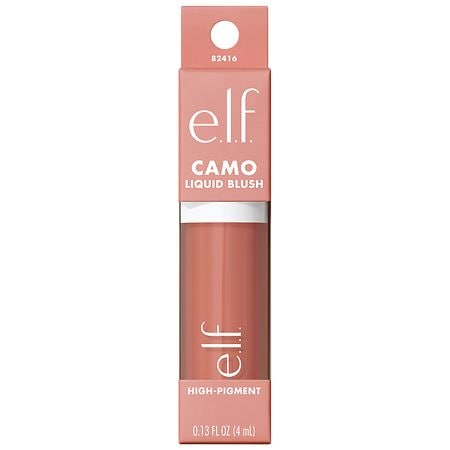


e.l.f. Camo Liquid Blush - Dusty Rosé - 0.13 fl oz: Paraben-Free, Dewy Finish, Buildable Coverage, Vegan
Analysis updated August 2026 · How Scout scores
At a glance
Summary
This blush contains several beneficial ingredients such as castor seed oil, sodium hyaluronate, and tocopherol, which provide moisturizing and antioxidant benefits. However, the presence of phenoxyethanol, a preservative that can cause irritation, slightly detracts from its overall safety profile. The product is moderately processed, which also influences its rating, but the inclusion of natural extracts and oils helps maintain a favorable score.
Key ingredients 32
TocopherolVery Good
Tocopherol, also known as Vitamin E, is an antioxidant that helps to protect the skin from free radical damage. It is beneficial for skin health and is widely used in cosmetics. It is generally considered safe and beneficial for use in cosmetics.
Risks
There are minimal risks associated with this ingredient.
Benefits
It provides antioxidant protection and supports skin health.
Ricinus Communis (Castor) Seed OilVery Good
Castor Seed Oil is a natural oil known for its emollient and moisturizing properties. It helps to nourish and hydrate the skin. It is generally considered safe and beneficial for use in cosmetics.
Risks
There are minimal risks associated with this ingredient.
Benefits
It provides moisturizing and nourishing benefits to the skin.
Rosa Damascena Flower WaterGood
Rosa Damascena Flower Water is a botanical extract known for its soothing and hydrating properties. It is used to enhance the fragrance and feel of cosmetic products. It is generally considered safe and beneficial for use in cosmetics.
Risks
There are minimal risks associated with this ingredient.
Benefits
It provides soothing and hydrating benefits to the skin.
Sodium HyaluronateGood
Sodium Hyaluronate is a form of hyaluronic acid known for its excellent hydrating properties. It helps to retain moisture and improve skin elasticity. It is generally considered safe and beneficial for use in cosmetics.
Risks
There are minimal risks associated with this ingredient.
Benefits
It provides deep hydration and improves skin elasticity.
Hibiscus Mutabilis Flower ExtractGood
Hibiscus Mutabilis Flower Extract is a botanical extract known for its antioxidant and soothing properties. It helps to protect and calm the skin. It is generally considered safe and beneficial for use in cosmetics.
Risks
There are minimal risks associated with this ingredient.
Benefits
It provides antioxidant protection and soothing benefits to the skin.
Hydrogenated PolyisobuteneNeutral
Hydrogenated Polyisobutene is a synthetic polymer used as an emollient and texture enhancer. It provides a smooth application and helps to lock in moisture. It is generally considered safe for use in cosmetics.
Risks
There are minimal risks associated with this ingredient, though it is a synthetic compound.
Benefits
It helps improve the texture and feel of the product, providing a smooth and silky finish.
OctyldodecanolNeutral
Octyldodecanol is a fatty alcohol used as an emollient and emulsifier. It helps to improve the texture and spreadability of the product. It is generally considered safe for use in cosmetics.
Risks
There are minimal risks associated with this ingredient, though it may cause irritation in very sensitive skin.
Benefits
It provides a smooth application and helps to maintain skin hydration.
Trimethylolpropane TriisostearateNeutral
This ingredient is an emollient and skin conditioning agent. It helps to improve the texture and feel of the product. It is generally considered safe for use in cosmetics.
Risks
There are minimal risks associated with this ingredient.
Benefits
It enhances the smoothness and spreadability of the product.
IlliteNeutral
Illite is a natural clay mineral used for its absorbent properties. It helps to control oil and shine in cosmetic formulations. It is generally considered safe for use in cosmetics.
Risks
There are minimal risks associated with this ingredient.
Benefits
It helps to absorb excess oil and provides a matte finish.
Boron NitrideNeutral
Boron Nitride is used in cosmetics for its lubricating and light-diffusing properties. It helps to improve the texture and appearance of the skin. It is generally considered safe for use in cosmetics.
Risks
There are minimal risks associated with this ingredient.
Benefits
It provides a silky feel and enhances the appearance of the skin by diffusing light.
TrimethylsiloxysilicateNeutral
Trimethylsiloxysilicate is a silicone used as a film-forming agent. It helps to improve the longevity and water resistance of the product. It is generally considered safe for use in cosmetics.
Risks
There are minimal risks associated with this ingredient.
Benefits
It enhances the wear time and water resistance of the product.
C9-12 AlkaneNeutral
C9-12 Alkane is a hydrocarbon used as an emollient and solvent. It helps to improve the texture and spreadability of the product. It is generally considered safe for use in cosmetics.
Risks
There are minimal risks associated with this ingredient.
Benefits
It provides a smooth application and helps to maintain skin hydration.
AluminaNeutral
Alumina is used as an abrasive and absorbent in cosmetics. It helps to improve the texture and appearance of the product. It is generally considered safe for use in cosmetics.
Risks
There are minimal risks associated with this ingredient.
Benefits
It helps to improve the texture and appearance of the product.
Disteardimonium HectoriteNeutral
Disteardimonium Hectorite is a clay-derived thickening agent. It helps to stabilize emulsions and improve the texture of the product. It is generally considered safe for use in cosmetics.
Risks
There are minimal risks associated with this ingredient.
Benefits
It helps to stabilize the product and improve its texture.
Phenyl TrimethiconeNeutral
Phenyl Trimethicone is a silicone used as an emollient and conditioning agent. It helps to improve the texture and feel of the product. It is generally considered safe for use in cosmetics.
Risks
There are minimal risks associated with this ingredient.
Benefits
It provides a smooth application and enhances the feel of the product.
Sorbitan SesquioleateNeutral
Sorbitan Sesquioleate is an emulsifier used to stabilize formulations. It helps to blend oil and water components in the product. It is generally considered safe for use in cosmetics.
Risks
There are minimal risks associated with this ingredient.
Benefits
It helps to stabilize the product and improve its consistency.
Propylene CarbonateNeutral
Propylene Carbonate is a solvent and viscosity regulator. It helps to improve the texture and spreadability of the product. It is generally considered safe for use in cosmetics.
Risks
There are minimal risks associated with this ingredient.
Benefits
It helps to improve the texture and spreadability of the product.
Ethylene/Propylene/Styrene CopolymerNeutral
This copolymer is used as a film-forming agent and texture enhancer. It helps to improve the durability and feel of the product. It is generally considered safe for use in cosmetics.
Risks
There are minimal risks associated with this ingredient.
Benefits
It enhances the durability and feel of the product.
EthylhexylglycerinNeutral
Ethylhexylglycerin is a preservative and skin conditioning agent. It helps to improve the shelf life and feel of the product. It is generally considered safe for use in cosmetics.
Risks
There are minimal risks associated with this ingredient.
Benefits
It helps to preserve the product and improve its feel.
TriethoxycaprylylsilaneNeutral
Triethoxycaprylylsilane is a silicone used as a surface modifier. It helps to improve the adhesion and spreadability of the product. It is generally considered safe for use in cosmetics.
Risks
There are minimal risks associated with this ingredient.
Benefits
It enhances the adhesion and spreadability of the product.
Tin OxideNeutral
Tin Oxide is used as an opacifying agent and colorant. It helps to improve the appearance and opacity of the product. It is generally considered safe for use in cosmetics.
Risks
There are minimal risks associated with this ingredient.
Benefits
It enhances the appearance and opacity of the product.
Butylene/Ethylene/Styrene CopolymerNeutral
This copolymer is used as a film-forming agent and texture enhancer. It helps to improve the durability and feel of the product. It is generally considered safe for use in cosmetics.
Risks
There are minimal risks associated with this ingredient.
Benefits
It enhances the durability and feel of the product.
Pentaerythrityl Tetra-Di-T-Butyl HydroxyhydrocinnamateNeutral
This ingredient is an antioxidant used to stabilize formulations. It helps to prevent the degradation of the product. It is generally considered safe for use in cosmetics.
Risks
There are minimal risks associated with this ingredient.
Benefits
It helps to stabilize the product and prevent degradation.
Water (Aqua)Neutral
Water is used as a solvent in cosmetic formulations. It helps to dissolve other ingredients and provides a base for the product. It is generally considered safe for use in cosmetics.
Risks
There are minimal risks associated with this ingredient.
Benefits
It acts as a solvent and provides a base for the product.
Hydrogenated Castor OilNeutral
Hydrogenated Castor Oil is used as an emollient and thickening agent. It helps to improve the texture and feel of the product. It is generally considered safe for use in cosmetics.
Risks
There are minimal risks associated with this ingredient.
Benefits
It enhances the texture and feel of the product.
Titanium Dioxide (CI 77891)Neutral
Titanium Dioxide is used as a pigment and UV filter in cosmetics. It helps to provide coverage and sun protection. It is generally considered safe for use in cosmetics.
Risks
There are minimal risks associated with this ingredient.
Benefits
It provides coverage and sun protection.
Red 28 Lake (CI 45410)Neutral
Red 28 Lake is a synthetic colorant used to provide color to cosmetics. It is widely used and generally considered safe for use in cosmetics. It is regulated for safety in cosmetic applications.
Risks
There are minimal risks associated with this ingredient.
Benefits
It provides vibrant color to the product.
Red 7 Lake (CI 15850)Neutral
Red 7 Lake is a synthetic colorant used to provide color to cosmetics. It is widely used and generally considered safe for use in cosmetics. It is regulated for safety in cosmetic applications.
Risks
There are minimal risks associated with this ingredient.
Benefits
It provides vibrant color to the product.
Blue 1 Lake (CI 42090)Neutral
Blue 1 Lake is a synthetic colorant used to provide color to cosmetics. It is widely used and generally considered safe for use in cosmetics. It is regulated for safety in cosmetic applications.
Risks
There are minimal risks associated with this ingredient.
Benefits
It provides vibrant color to the product.
Yellow Iron Oxide (CI 77492)Neutral
Yellow Iron Oxide is a mineral pigment used to provide color to cosmetics. It is widely used and generally considered safe for use in cosmetics. It is regulated for safety in cosmetic applications.
Risks
There are minimal risks associated with this ingredient.
Benefits
It provides vibrant color to the product.
Red Iron Oxide (CI 77491)Neutral
Red Iron Oxide is a mineral pigment used to provide color to cosmetics. It is widely used and generally considered safe for use in cosmetics. It is regulated for safety in cosmetic applications.
Risks
There are minimal risks associated with this ingredient.
Benefits
It provides vibrant color to the product.
PhenoxyethanolBad
Phenoxyethanol is a preservative used to prevent microbial growth in cosmetics. It is effective but can cause irritation in some individuals. It is generally considered safe in low concentrations but has potential for irritation.
Risks
It may cause irritation, especially in sensitive skin.
Benefits
It helps to preserve the product and prevent microbial growth.
Processing
Processed Foods
Get the full breakdown in the Scout appTake Scout shopping
Scan any product to see lab results, healthy alternatives, and your personalized analysis.
Download on theApp Store GET IT ONGoogle PlayAmazon pricing & content
Amazon price as of . Product prices and availability are accurate as of the date/time indicated and are subject to change. Any price and availability information displayed on Amazon.com at the time of purchase will apply to the purchase of this product.
CERTAIN CONTENT THAT APPEARS ON THIS SITE COMES FROM AMAZON. THIS CONTENT IS PROVIDED “AS IS” AND IS SUBJECT TO CHANGE OR REMOVAL AT ANY TIME.