
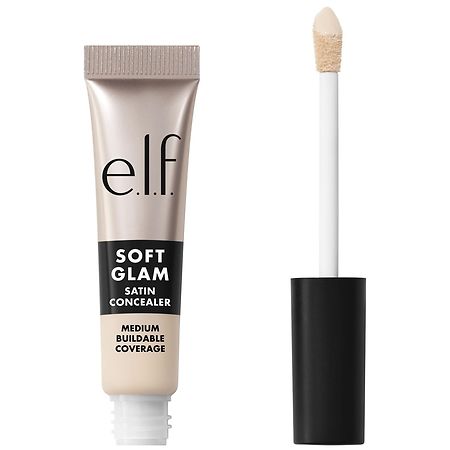

e.l.f. Soft Glam Satin Concealer - 10 Fair Cool - 0.21 fl oz: Medium Coverage, Paraben-Free, Vegan
Analysis updated August 2026 · How Scout scores
At a glance
Summary
This concealer contains several beneficial ingredients such as squalane, panthenol, and sodium hyaluronate, which provide excellent moisturizing and skin-soothing properties. The product is free from parabens and is vegan, which are positive attributes. However, the presence of phenoxyethanol, a preservative that can cause irritation in some individuals, slightly impacts the overall ingredient safety score.
Key ingredients 30
SqualaneVery Good
Squalane is a highly effective emollient and natural antioxidant. It mimics the skin's natural oils, making it an excellent moisturizer. It is non-irritating and suitable for all skin types.
Risks
There are no significant risks associated with squalane.
Benefits
It deeply hydrates the skin and helps in reducing the appearance of fine lines.
PanthenolVery Good
Panthenol is a provitamin of B5 known for its moisturizing and soothing properties. It helps in improving skin hydration and reducing inflammation. It is safe and beneficial for all skin types.
Risks
There are no significant risks associated with panthenol.
Benefits
It enhances skin hydration and promotes healing of the skin.
Hydrolyzed Sodium HyaluronateVery Good
Hydrolyzed Sodium Hyaluronate is a smaller molecule form of hyaluronic acid that penetrates deeper into the skin. It provides intense hydration and improves skin elasticity. It is safe and effective for all skin types.
Risks
There are no significant risks associated with hydrolyzed sodium hyaluronate.
Benefits
It offers deep hydration and enhances skin elasticity and texture.
TocopherolVery Good
Tocopherol, also known as Vitamin E, is a powerful antioxidant. It helps in protecting the skin from free radical damage and improving skin health. It is safe and beneficial for all skin types.
Risks
There are no significant risks associated with tocopherol.
Benefits
It provides antioxidant protection and improves skin health.
Helianthus Annuus (Sunflower) Seed OilVery Good
Sunflower Seed Oil is a natural oil rich in essential fatty acids and vitamins. It helps in moisturizing and nourishing the skin. It is safe and beneficial for all skin types.
Risks
There are no significant risks associated with sunflower seed oil.
Benefits
It provides deep nourishment and hydration to the skin.
GlycerinGood
Glycerin is a well-known humectant that attracts moisture to the skin. It is beneficial for maintaining skin hydration and improving skin barrier function. It is safe and effective for all skin types.
Risks
There are no significant risks associated with glycerin.
Benefits
It helps in keeping the skin moisturized and improves skin texture.
Sodium HyaluronateGood
Sodium Hyaluronate is a form of hyaluronic acid known for its excellent moisturizing properties. It helps in retaining moisture and improving skin elasticity. It is safe and beneficial for all skin types.
Risks
There are no significant risks associated with sodium hyaluronate.
Benefits
It provides deep hydration and improves skin texture and elasticity.
Hibiscus Sabdariffa Fruit ExtractGood
Hibiscus Sabdariffa Fruit Extract is rich in antioxidants and natural acids. It helps in exfoliating and brightening the skin. It is safe and beneficial for skin health.
Risks
There are no significant risks associated with hibiscus extract.
Benefits
It provides antioxidant protection and improves skin radiance.
Water (Aqua)Neutral
Water is a common solvent used in cosmetics to dissolve other ingredients. It helps in the application and absorption of the product. It does not provide any direct benefits or risks.
Risks
There are no significant risks associated with water in cosmetics.
Benefits
Water helps in the even distribution of the product on the skin.
Isononyl IsononanoateNeutral
Isononyl Isononanoate is an emollient that helps to soften and smooth the skin. It is commonly used in cosmetics for its non-greasy feel. It is generally considered safe for use.
Risks
There are minimal risks associated with this ingredient, though it may cause irritation in very sensitive individuals.
Benefits
It provides a silky, smooth texture to the skin without leaving a greasy residue.
Hydrogenated PolyisobuteneNeutral
Hydrogenated Polyisobutene is a synthetic polymer used as a skin conditioning agent. It provides a smooth application and helps in moisture retention. It is considered safe for use in cosmetics.
Risks
There are no significant risks associated with this ingredient.
Benefits
It helps in maintaining skin hydration and provides a smooth texture.
Polyglyceryl-3 PolyricinoleateNeutral
Polyglyceryl-3 Polyricinoleate is an emulsifier that helps to blend oil and water-based ingredients. It is derived from castor oil and is considered safe for use in cosmetics. It does not provide direct skin benefits.
Risks
There are minimal risks associated with this ingredient.
Benefits
It helps in stabilizing the formulation and ensures even application.
Magnesium SulfateNeutral
Magnesium Sulfate is used as a thickening agent in cosmetics. It helps in improving the texture and consistency of the product. It is generally considered safe for use.
Risks
There are no significant risks associated with magnesium sulfate.
Benefits
It helps in maintaining the desired consistency of the product.
Disteardimonium HectoriteNeutral
Disteardimonium Hectorite is a thickening agent and suspending agent. It helps in stabilizing emulsions and improving the texture of the product. It is considered safe for use in cosmetics.
Risks
There are no significant risks associated with this ingredient.
Benefits
It helps in maintaining the stability and consistency of the product.
Polyglyceryl-3 DiisostearateNeutral
Polyglyceryl-3 Diisostearate is an emulsifier that helps to blend oil and water-based ingredients. It is derived from natural sources and is considered safe for use. It does not provide direct skin benefits.
Risks
There are minimal risks associated with this ingredient.
Benefits
It helps in stabilizing the formulation and ensures even application.
TrimethylsiloxysilicateNeutral
Trimethylsiloxysilicate is a silicone-based film-forming agent. It provides a long-lasting effect and improves the wear of the product. It is considered safe for use in cosmetics.
Risks
There are no significant risks associated with this ingredient.
Benefits
It helps in providing a long-lasting finish and enhances the durability of the product.
HDI/Trimethylol Hexyllactone CrosspolymerNeutral
This ingredient is a film-forming agent that helps in providing a smooth application. It enhances the texture and longevity of the product. It is considered safe for use in cosmetics.
Risks
There are no significant risks associated with this ingredient.
Benefits
It helps in improving the texture and wear of the product.
Disodium Stearoyl GlutamateNeutral
Disodium Stearoyl Glutamate is an emulsifier that helps in blending ingredients. It is derived from natural sources and is considered safe for use. It does not provide direct skin benefits.
Risks
There are minimal risks associated with this ingredient.
Benefits
It helps in stabilizing the formulation and ensures even application.
Aluminum HydroxideNeutral
Aluminum Hydroxide is used as a thickening agent and opacifying agent in cosmetics. It helps in improving the texture and appearance of the product. It is considered safe for use.
Risks
There are no significant risks associated with this ingredient.
Benefits
It helps in enhancing the texture and opacity of the product.
Sorbitan IsostearateNeutral
Sorbitan Isostearate is an emulsifier that helps in blending oil and water-based ingredients. It is derived from natural sources and is considered safe for use. It does not provide direct skin benefits.
Risks
There are minimal risks associated with this ingredient.
Benefits
It helps in stabilizing the formulation and ensures even application.
Magnesium PalmitateNeutral
Magnesium Palmitate is used as a thickening agent in cosmetics. It helps in improving the texture and consistency of the product. It is considered safe for use.
Risks
There are no significant risks associated with this ingredient.
Benefits
It helps in maintaining the desired consistency of the product.
Magnesium StearateNeutral
Magnesium Stearate is used as a thickening agent and lubricant in cosmetics. It helps in improving the texture and application of the product. It is considered safe for use.
Risks
There are no significant risks associated with this ingredient.
Benefits
It helps in enhancing the texture and application of the product.
Caprylyl GlycolNeutral
Caprylyl Glycol is a skin conditioning agent and preservative. It helps in moisturizing the skin and enhancing the efficacy of other preservatives. It is considered safe for use.
Risks
There are no significant risks associated with this ingredient.
Benefits
It helps in keeping the skin moisturized and enhances product preservation.
EthylhexylglycerinNeutral
Ethylhexylglycerin is a skin conditioning agent and preservative enhancer. It helps in improving the skin feel and boosting the efficacy of preservatives. It is considered safe for use.
Risks
There are no significant risks associated with this ingredient.
Benefits
It helps in enhancing skin feel and product preservation.
ErythritolNeutral
Erythritol is a sugar alcohol used as a humectant in cosmetics. It helps in retaining moisture in the skin. It is considered safe for use.
Risks
There are no significant risks associated with erythritol.
Benefits
It helps in maintaining skin hydration.
SilicaNeutral
Silica is used as an absorbent and anti-caking agent in cosmetics. It helps in improving the texture and mattifying the skin. It is considered safe for use.
Risks
There are no significant risks associated with silica.
Benefits
It helps in providing a matte finish and improves product texture.
Titanium Dioxide (CI 77891)Neutral
Titanium Dioxide is used as a pigment and UV filter in cosmetics. It helps in providing coverage and sun protection. It is considered safe for use in cosmetics.
Risks
There are no significant risks associated with titanium dioxide when used in cosmetics.
Benefits
It provides coverage and helps in protecting the skin from UV rays.
Iron Oxides (CI 77492, CI 77491, CI 77499)Neutral
Iron Oxides are used as pigments in cosmetics to provide color. They are stable and non-toxic, making them safe for use. They do not provide direct skin benefits.
Risks
There are no significant risks associated with iron oxides.
Benefits
They provide natural color to cosmetic products.
Propylene GlycolBad
Processed additive flagged under Scout's ingredient doctrine.
Risks
In rare cases, it may cause skin irritation or allergic reactions.
Benefits
It helps in keeping the skin hydrated and enhances the efficacy of other active ingredients.
PhenoxyethanolBad
Phenoxyethanol is a preservative used to prevent microbial growth in cosmetics. It is effective but can cause irritation in some individuals. It is considered safe in low concentrations but has potential risks.
Risks
It may cause skin irritation or allergic reactions in sensitive individuals.
Benefits
It helps in preserving the product and extending its shelf life.
Get the full breakdown in the Scout appTake Scout shopping
Scan any product to see lab results, healthy alternatives, and your personalized analysis.
Download on theApp Store GET IT ONGoogle PlayAmazon pricing & content
Amazon price as of . Product prices and availability are accurate as of the date/time indicated and are subject to change. Any price and availability information displayed on Amazon.com at the time of purchase will apply to the purchase of this product.
CERTAIN CONTENT THAT APPEARS ON THIS SITE COMES FROM AMAZON. THIS CONTENT IS PROVIDED “AS IS” AND IS SUBJECT TO CHANGE OR REMOVAL AT ANY TIME.