
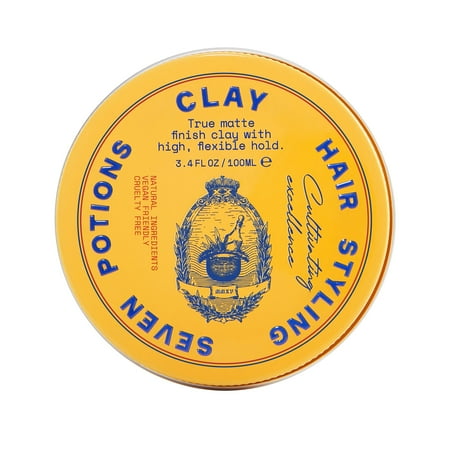

Seven Potions Men s Hair Styling Clay — Natural Water-Based Matte Hair Wax High Hold — Vegan Cruelty Free 3.4fl oz
Analysis updated June 2026 · How Scout scores
At a glance
Summary
This hair styling clay features a variety of natural oils and butters, such as shea butter, castor oil, and avocado oil, which are beneficial for hair health and provide moisturizing properties. The product is mostly composed of natural ingredients, with minimal synthetic additives, contributing to its safety profile. However, the presence of synthetic emulsifiers and the processed nature of the product slightly reduce its overall score.
Key ingredients 38
Butyrospermum Parkii (Shea) ButterVery Good
Shea butter is a natural fat extracted from the nuts of the shea tree. It is known for its moisturizing and anti-inflammatory properties. It is rich in vitamins and beneficial for skin and hair health.
Risks
There are minimal risks associated with shea butter.
Benefits
Shea butter deeply moisturizes and nourishes the skin and hair.
Ricinus Communis (Castor) Seed OilVery Good
Castor oil is a natural oil known for its conditioning properties. It is used to enhance hair health and promote shine. It is rich in fatty acids and beneficial for skin and hair.
Risks
There are minimal risks associated with castor oil.
Benefits
Castor oil helps to nourish and strengthen hair.
Theobroma Cacao (Cocoa) Seed ButterVery Good
Cocoa butter is a natural fat extracted from cocoa beans. It is used for its moisturizing and emollient properties. It is rich in antioxidants and beneficial for skin and hair health.
Risks
There are minimal risks associated with cocoa butter.
Benefits
Cocoa butter deeply moisturizes and protects the skin and hair.
Cocos Nucifera (Coconut) OilVery Good
Coconut oil is a natural oil known for its moisturizing and antibacterial properties. It is used to enhance hair health and promote shine. It is rich in fatty acids and beneficial for skin and hair.
Risks
There are minimal risks associated with coconut oil.
Benefits
Coconut oil helps to nourish and protect the skin and hair.
Persea Gratissima (Avocado) OilVery Good
Avocado oil is a natural oil rich in vitamins and fatty acids. It is used for its moisturizing and nourishing properties. It is beneficial for skin and hair health.
Risks
There are minimal risks associated with avocado oil.
Benefits
Avocado oil helps to hydrate and strengthen the skin and hair.
Prunus Amygdalus Dulcis (Sweet Almond) OilVery Good
Sweet almond oil is a natural oil known for its emollient properties. It is used to soften and moisturize the skin and hair. It is rich in vitamins and suitable for sensitive skin.
Risks
There are minimal risks associated with sweet almond oil.
Benefits
Sweet almond oil helps to nourish and protect the skin and hair.
KaolinGood
Kaolin is a natural clay that is used for its absorbent properties. It helps to control oil and provides a matte finish. It is gentle on the skin and suitable for sensitive skin types.
Risks
Overuse may lead to dryness in some individuals.
Benefits
Kaolin helps to absorb excess oil and impurities from the skin.
Copernicia Cerifera (Carnauba) CeraGood
Carnauba wax is a natural wax derived from the leaves of the carnauba palm. It is used to provide texture and hold in hair products. It is hypoallergenic and safe for use in cosmetics.
Risks
There are minimal risks associated with carnauba wax.
Benefits
Carnauba wax provides a strong hold and adds shine to hair.
Euphorbia Cerifera (Candelilla) CeraGood
Candelilla wax is a plant-based wax used as a thickening agent. It helps to stabilize formulations and provides a glossy finish. It is vegan-friendly and non-toxic.
Risks
There are no significant risks associated with candelilla wax.
Benefits
Candelilla wax helps to improve the texture and consistency of the product.
Glycerin (Veg)Good
Vegetable glycerin is a humectant that attracts moisture to the skin. It is used in cosmetics for its hydrating properties. It is non-toxic and safe for use in personal care products.
Risks
There are no significant risks associated with glycerin.
Benefits
Glycerin helps to keep the skin and hair hydrated and soft.
Prunus Armeniaca (Apricot) Kernel OilGood
Apricot kernel oil is a natural oil rich in vitamins and fatty acids. It is used for its moisturizing and nourishing properties. It is gentle and suitable for sensitive skin.
Risks
There are minimal risks associated with apricot kernel oil.
Benefits
Apricot kernel oil helps to soften and hydrate the skin and hair.
BentoniteGood
Bentonite is a natural clay used for its absorbent properties. It helps to control oil and provides a matte finish. It is gentle on the skin and suitable for sensitive skin types.
Risks
Overuse may lead to dryness in some individuals.
Benefits
Bentonite helps to absorb excess oil and impurities from the skin.
Citrus Aurantium Bergamia Peel OilGood
Bergamot peel oil is used for its fragrance and potential antibacterial properties. It adds a fresh scent to cosmetic products. It is generally considered safe for use in cosmetics.
Risks
There is a risk of photosensitivity when exposed to sunlight.
Benefits
Bergamot oil provides a pleasant scent and may have antibacterial benefits.
Citrus Limon Peel OilGood
Lemon peel oil is used for its fragrance and potential antibacterial properties. It adds a fresh citrus scent to cosmetic products. It is generally considered safe for use in cosmetics.
Risks
There is a risk of photosensitivity when exposed to sunlight.
Benefits
Lemon peel oil provides a refreshing scent and may have antibacterial benefits.
Juniperus Virginiana OilGood
Cedarwood oil is used for its fragrance and potential antibacterial properties. It adds a woody scent to cosmetic products. It is generally considered safe for use in cosmetics.
Risks
There are no significant risks associated with cedarwood oil.
Benefits
Cedarwood oil provides a pleasant woody scent and may have antibacterial benefits.
Pogostemon Cablin OilGood
Patchouli oil is used for its fragrance and potential antibacterial properties. It adds an earthy scent to cosmetic products. It is generally considered safe for use in cosmetics.
Risks
There are no significant risks associated with patchouli oil.
Benefits
Patchouli oil provides a pleasant earthy scent and may have antibacterial benefits.
Mentha Piperita OilGood
Peppermint oil is used for its fragrance and cooling properties. It adds a minty scent and provides a refreshing sensation. It is generally considered safe for use in cosmetics.
Risks
Peppermint oil can cause skin irritation or allergic reactions in sensitive individuals.
Benefits
Peppermint oil provides a refreshing scent and cooling sensation.
Aqua (Water)Neutral
Water is a common solvent used in cosmetic formulations. It helps to dissolve other ingredients and provides a base for the product. It is generally considered safe and non-irritating.
Risks
There are no significant risks associated with water in cosmetics.
Benefits
Water helps to hydrate and blend other ingredients effectively.
Ceteareth-20Neutral
Ceteareth-20 is an emulsifier that helps to blend oil and water-based ingredients. It is commonly used in cosmetics for its stabilizing properties. It is generally considered safe for use in cosmetics.
Risks
There is a potential risk of contamination with 1,4-dioxane, a byproduct of ethoxylation.
Benefits
Ceteareth-20 helps to create a smooth and stable product texture.
Glyceryl Stearate SENeutral
Glyceryl Stearate SE is an emulsifier that helps to blend ingredients. It is used to improve the texture and stability of cosmetic products. It is generally considered safe for use in cosmetics.
Risks
There are no significant risks associated with glyceryl stearate SE.
Benefits
Glyceryl Stearate SE helps to create a smooth and stable product texture.
Cetearyl AlcoholNeutral
Cetearyl alcohol is a fatty alcohol used as an emulsifier and thickener. It helps to stabilize formulations and improve texture. It is generally considered safe for use in cosmetics.
Risks
There are no significant risks associated with cetearyl alcohol.
Benefits
Cetearyl alcohol helps to create a smooth and stable product texture.
Phenethyl AlcoholNeutral
Phenethyl alcohol is used as a preservative and fragrance component. It helps to prevent microbial growth and add a pleasant scent. It is generally considered safe for use in cosmetics.
Risks
There are no significant risks associated with phenethyl alcohol.
Benefits
Phenethyl alcohol helps to preserve the product and add fragrance.
Caprylyl GlycolNeutral
Caprylyl glycol is used as a skin conditioning agent and preservative. It helps to improve the texture and stability of cosmetic products. It is generally considered safe for use in cosmetics.
Risks
There are no significant risks associated with caprylyl glycol.
Benefits
Caprylyl glycol helps to condition the skin and preserve the product.
Citric AcidNeutral
Citric acid is used to adjust the pH of cosmetic formulations. It helps to stabilize and preserve the product. It is generally considered safe for use in cosmetics.
Risks
There are no significant risks associated with citric acid.
Benefits
Citric acid helps to maintain the stability and effectiveness of the product.
Linalyl AcetateNeutral
Linalyl acetate is used for its fragrance in cosmetic products. It adds a floral scent and is generally considered safe. It is a common component in essential oils.
Risks
There are no significant risks associated with linalyl acetate.
Benefits
Linalyl acetate provides a pleasant floral scent to the product.
Benzyl SalicylateNeutral
Benzyl salicylate is used as a fragrance component and UV light absorber. It adds a floral scent and helps to stabilize the product. It is generally considered safe for use in cosmetics.
Risks
Benzyl salicylate can cause skin irritation or allergic reactions in sensitive individuals.
Benefits
Benzyl salicylate provides a pleasant scent and helps to stabilize the product.
Beta-CaryophylleneNeutral
Beta-caryophyllene is a naturally occurring compound used for its fragrance. It adds a spicy scent to cosmetic products. It is generally considered safe for use in cosmetics.
Risks
There are no significant risks associated with beta-caryophyllene.
Benefits
Beta-caryophyllene provides a spicy scent to the product.
Rose KetonesNeutral
Rose ketones are used for their fragrance in cosmetic products. They add a floral scent and are generally considered safe. They are a common component in rose essential oils.
Risks
There are no significant risks associated with rose ketones.
Benefits
Rose ketones provide a pleasant floral scent to the product.
Geranyl AcetateNeutral
Geranyl acetate is used for its fragrance in cosmetic products. It adds a floral scent and is generally considered safe. It is a common component in essential oils.
Risks
There are no significant risks associated with geranyl acetate.
Benefits
Geranyl acetate provides a pleasant floral scent to the product.
TerpineolNeutral
Terpineol is a naturally occurring compound used for its fragrance. It adds a floral scent to cosmetic products. It is generally considered safe for use in cosmetics.
Risks
There are no significant risks associated with terpineol.
Benefits
Terpineol provides a pleasant floral scent to the product.
TerpinoleneNeutral
Terpinolene is a naturally occurring compound used for its fragrance. It adds a fresh scent to cosmetic products. It is generally considered safe for use in cosmetics.
Risks
There are no significant risks associated with terpinolene.
Benefits
Terpinolene provides a fresh scent to the product.
MentholNeutral
Menthol is used for its cooling and soothing properties. It provides a refreshing sensation and is commonly used in hair and skin products. It is generally considered safe for use in cosmetics.
Risks
Menthol can cause skin irritation or allergic reactions in sensitive individuals.
Benefits
Menthol provides a cooling and soothing sensation.
Benzyl AlcoholBad
Benzyl alcohol is used as a preservative and solvent in cosmetics. It helps to prevent microbial growth and extend shelf life. However, it can be irritating to the skin and eyes in high concentrations.
Risks
Benzyl alcohol may cause irritation or allergic reactions in sensitive individuals.
Benefits
Benzyl alcohol helps to preserve the product and prevent spoilage.
Parfum (Natural Fragrance)Bad
Fragrance is used to add scent to cosmetic products. While it enhances the sensory experience, it can cause irritation or allergic reactions in sensitive individuals. The term 'natural' does not eliminate the risk of irritation.
Risks
Fragrance can cause skin irritation or allergic reactions.
Benefits
Fragrance enhances the sensory appeal of the product.
LimoneneBad
Processed additive flagged under Scout's ingredient doctrine.
Risks
Limonene can cause skin irritation or allergic reactions in sensitive individuals.
Benefits
Limonene provides a fresh citrus scent to the product.
LinaloolBad
Processed additive flagged under Scout's ingredient doctrine.
Risks
Linalool can cause skin irritation or allergic reactions in sensitive individuals.
Benefits
Linalool provides a pleasant floral scent to the product.
PineneBad
Processed additive flagged under Scout's ingredient doctrine.
Risks
There are no significant risks associated with pinene.
Benefits
Pinene provides a fresh pine scent to the product.
CitralBad
Processed additive flagged under Scout's ingredient doctrine.
Risks
Citral can cause skin irritation or allergic reactions in sensitive individuals.
Benefits
Citral provides a fresh lemon scent to the product.
Get the full breakdown in the Scout appTake Scout shopping
Scan any product to see lab results, healthy alternatives, and your personalized analysis.
Download on theApp Store GET IT ONGoogle PlayAmazon pricing & content
Amazon price as of . Product prices and availability are accurate as of the date/time indicated and are subject to change. Any price and availability information displayed on Amazon.com at the time of purchase will apply to the purchase of this product.
CERTAIN CONTENT THAT APPEARS ON THIS SITE COMES FROM AMAZON. THIS CONTENT IS PROVIDED “AS IS” AND IS SUBJECT TO CHANGE OR REMOVAL AT ANY TIME.