
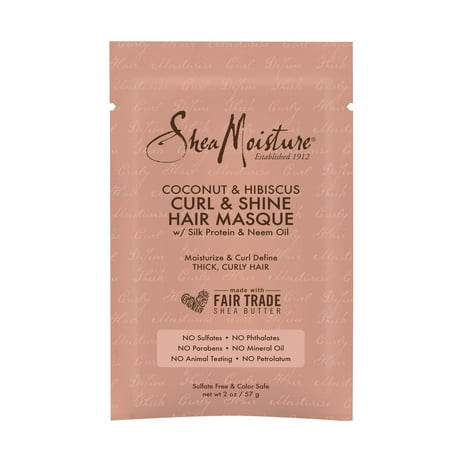

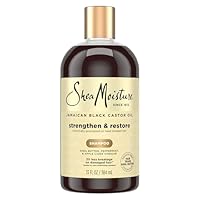

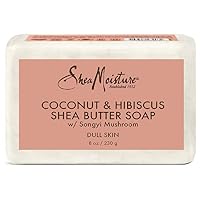
SheaMoisture Curl and Shine Hair Mask with Shea Butter Coconut and Hibiscus 2 oz
SheaMoistureAnalysis updated August 2026 · How Scout scores
At a glance
Summary
This hair mask contains a variety of beneficial natural ingredients such as shea butter, coconut oil, and argan oil, which are known for their moisturizing and nourishing properties. However, the presence of fragrance, which can cause irritation and allergic reactions, slightly detracts from its overall safety profile. Despite being processed, the product maintains a relatively clean ingredient list with minimal synthetic additives.
Key ingredients 23
Butyrospermum Parkii (Shea) ButterVery Good
Shea Butter is a natural fat extracted from the nuts of the shea tree. It is rich in vitamins and fatty acids, making it an excellent moisturizer. It helps to soothe and nourish dry skin.
Risks
There are minimal risks, though individuals with nut allergies should exercise caution.
Benefits
It provides deep hydration and has anti-inflammatory properties.
Cocos Nucifera (Coconut) OilVery Good
Coconut Oil is a natural oil extracted from the meat of coconuts. It is rich in fatty acids and has moisturizing and nourishing properties. It helps to improve hair and skin health.
Risks
It may cause breakouts in acne-prone skin when used in high concentrations.
Benefits
It deeply moisturizes and strengthens hair, reducing protein loss.
PanthenolVery Good
Panthenol, also known as provitamin B5, is a moisturizing agent that improves skin and hair hydration. It helps to enhance the appearance and feel of hair. It is well-tolerated and non-irritating.
Risks
There are minimal risks associated with panthenol.
Benefits
It improves hair elasticity and shine, and soothes irritated skin.
Argania Spinosa Kernel OilVery Good
Argan Oil is extracted from the kernels of the argan tree and is rich in essential fatty acids and antioxidants. It is highly moisturizing and nourishing for hair and skin. It is well-tolerated and non-irritating.
Risks
There are minimal risks associated with argan oil.
Benefits
It improves hair elasticity, shine, and overall health.
Caprylic/Capric TriglycerideGood
Caprylic/Capric Triglyceride is derived from coconut oil and glycerin. It is used as an emollient and helps to improve the spreadability of products. It is lightweight and non-greasy, making it suitable for all skin types.
Risks
There are minimal risks associated with this ingredient.
Benefits
It helps to moisturize and soften the skin without leaving a greasy residue.
Glycerin (Vegetable)Good
Glycerin is a humectant that attracts moisture to the skin. It is derived from vegetable oils and is widely used in skincare products. It helps to maintain skin hydration and improve skin barrier function.
Risks
There are no significant risks associated with glycerin.
Benefits
It helps to keep the skin hydrated and smooth.
Cocos Nucifera (Coconut) Fruit JuiceGood
Coconut Fruit Juice is derived from the liquid inside coconuts. It is rich in nutrients and provides hydration. It is considered safe and beneficial for skin and hair.
Risks
There are minimal risks associated with this ingredient.
Benefits
It hydrates and nourishes the hair and scalp.
Melia Azadirachta Seed OilGood
Neem Oil is derived from the seeds of the neem tree and is known for its antibacterial and antifungal properties. It is used to soothe and protect the skin and scalp. It is considered safe and beneficial for hair care.
Risks
There are minimal risks, though it may cause irritation in sensitive individuals.
Benefits
It helps to treat dandruff and promote a healthy scalp.
Hibiscus Rosa-Sinensis Flower ExtractGood
Hibiscus Extract is derived from the hibiscus flower and is rich in antioxidants and vitamins. It helps to condition and strengthen hair. It is considered safe and beneficial for hair care.
Risks
There are minimal risks associated with this ingredient.
Benefits
It promotes hair growth and adds shine and volume.
TocopherolGood
Tocopherol, also known as Vitamin E, is an antioxidant that helps to protect the skin and hair from damage. It is used to improve the stability of cosmetic formulations. It is well-tolerated and non-irritating.
Risks
There are minimal risks associated with tocopherol.
Benefits
It provides antioxidant protection and improves hair and skin health.
Hydrolyzed Soy ProteinGood
Hydrolyzed Soy Protein is a conditioning agent that helps to strengthen and repair hair. It improves hair texture and adds shine. It is considered safe and beneficial for hair care.
Risks
There are minimal risks associated with this ingredient.
Benefits
It strengthens hair and improves manageability.
WaterNeutral
Water is a common solvent used in cosmetic formulations. It helps to dissolve other ingredients and provides a base for the product. It is generally considered safe and non-irritating.
Risks
There are no significant risks associated with water in cosmetics.
Benefits
Water helps to hydrate and distribute other ingredients evenly in the formulation.
Cetearyl AlcoholNeutral
Cetearyl Alcohol is a fatty alcohol used as an emollient and thickener in cosmetics. It helps to improve the texture and spreadability of products. It is generally considered safe and non-irritating.
Risks
In rare cases, it may cause mild irritation in sensitive individuals.
Benefits
It provides a smooth, creamy texture and helps to lock in moisture.
Stearyl AlcoholNeutral
Stearyl Alcohol is a fatty alcohol used as an emollient and thickener. It helps to stabilize and thicken formulations. It is generally considered safe and non-irritating.
Risks
In rare cases, it may cause mild irritation in sensitive individuals.
Benefits
It helps to improve the texture and consistency of the product.
Cetyl AlcoholNeutral
Cetyl Alcohol is a fatty alcohol used as an emollient and thickener. It helps to improve the texture and spreadability of products. It is generally considered safe and non-irritating.
Risks
In rare cases, it may cause mild irritation in sensitive individuals.
Benefits
It provides a smooth, creamy texture and helps to lock in moisture.
Behentrimonium ChlorideNeutral
Behentrimonium Chloride is a conditioning agent that helps to detangle and soften hair. It is effective in reducing static and frizz. It is generally considered safe for use in hair care products.
Risks
There are minimal risks, though it may cause irritation if used in high concentrations.
Benefits
It provides excellent conditioning and detangling properties.
HydroxyethylcelluloseNeutral
Hydroxyethylcellulose is a thickening agent used to improve the texture of cosmetic products. It helps to stabilize formulations and is considered safe for use. It is non-irritating and suitable for sensitive skin.
Risks
There are minimal risks associated with this ingredient.
Benefits
It enhances the texture and consistency of the product.
Triethyl CitrateNeutral
Triethyl Citrate is used as a stabilizer and fragrance ingredient in cosmetics. It helps to improve the longevity of the product. It is generally considered safe and non-irritating.
Risks
There are minimal risks associated with this ingredient.
Benefits
It helps to stabilize formulations and enhance fragrance longevity.
Caprylyl GlycolNeutral
Caprylyl Glycol is a skin conditioning agent and preservative. It helps to improve the texture and feel of products. It is considered safe and non-irritating.
Risks
There are minimal risks associated with this ingredient.
Benefits
It provides moisturizing and antimicrobial properties.
Benzoic AcidNeutral
Benzoic Acid is a preservative used to prevent microbial growth in cosmetics. It is effective in extending shelf life and is generally recognized as safe. It is non-irritating at low concentrations.
Risks
High concentrations may cause irritation, but it is used in safe amounts in cosmetics.
Benefits
It helps to maintain product freshness and safety.
Behentrimonium MethosulfateBad
Processed additive flagged under Scout's ingredient doctrine.
Risks
There are minimal risks associated with this ingredient.
Benefits
It provides excellent conditioning and detangling properties.
Sodium BenzoateBad
Synthetic preservative that can form benzene in the presence of vitamin C.
Risks
High concentrations may cause irritation, but it is used in safe amounts in cosmetics.
Benefits
It helps to maintain product freshness and safety.
Fragrance (Essential Oil Blend)Very Bad
Fragrance is used to impart scent to cosmetic products. It can cause allergic reactions and irritation in sensitive individuals. The exact composition is often undisclosed, leading to potential safety concerns.
Risks
It may cause skin irritation and allergic reactions.
Benefits
It provides a pleasant scent to the product.
Get the full breakdown in the Scout appTake Scout shopping
Scan any product to see lab results, healthy alternatives, and your personalized analysis.
Download on theApp Store GET IT ONGoogle PlayAmazon pricing & content
Amazon price as of . Product prices and availability are accurate as of the date/time indicated and are subject to change. Any price and availability information displayed on Amazon.com at the time of purchase will apply to the purchase of this product.
CERTAIN CONTENT THAT APPEARS ON THIS SITE COMES FROM AMAZON. THIS CONTENT IS PROVIDED “AS IS” AND IS SUBJECT TO CHANGE OR REMOVAL AT ANY TIME.