
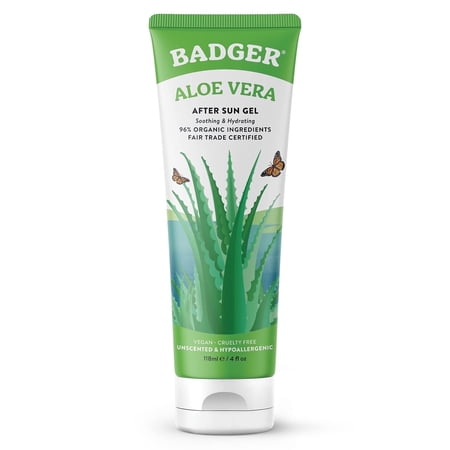

Badger Aloe Vera After Sun Gel 4oz tube
Summary
This product primarily features natural ingredients like Aloe Barbadensis Juice, known for its soothing and hydrating properties, and Glyceryl Caprylate, which provides moisturizing benefits. However, the presence of sodium benzoate, a preservative with potential health concerns under certain conditions, slightly impacts its overall safety profile. Despite this, the product maintains a clean label with minimal processing and beneficial ingredients.
At a glance
Key ingredients 7
Aloe Barbadensis (Aloe) JuiceVery Good
Aloe Barbadensis Juice is a natural extract from the aloe vera plant, known for its soothing and hydrating properties. It is commonly used in skincare products to calm irritated skin and provide moisture. Its natural origin and skin benefits make it a positive addition to cosmetic formulations.
Risks
There are minimal risks associated with aloe vera juice, though some individuals may experience allergic reactions.
Benefits
Aloe vera juice is highly beneficial for its anti-inflammatory and moisturizing effects, making it ideal for after-sun care.
Xanthan GumNeutral
Xanthan Gum is a polysaccharide used as a thickening and stabilizing agent in cosmetic products. It helps to improve the texture and consistency of formulations. Being derived from natural fermentation, it is generally considered safe for use in skincare.
Risks
Xanthan Gum is generally safe, but in rare cases, it may cause skin irritation or allergic reactions.
Benefits
It enhances the texture of products, providing a smooth application experience.
WaterNeutral
Water is a universal solvent used in cosmetics to dissolve other ingredients and provide hydration. It is a fundamental component in many skincare products, ensuring proper consistency and application. Its presence is essential for the formulation of gels and creams.
Risks
There are no significant risks associated with water in cosmetics.
Benefits
Water is crucial for hydration and acts as a carrier for other beneficial ingredients.
Gluconic AcidNeutral
Gluconic Acid is an organic compound used in cosmetics for its mild exfoliating properties. It helps to gently remove dead skin cells, promoting a smoother skin texture. Its gentle nature makes it suitable for sensitive skin types.
Risks
Gluconic Acid may cause mild irritation in sensitive individuals, though it is generally well-tolerated.
Benefits
It provides gentle exfoliation, improving skin texture without harshness.
Sodium BenzoateBad
Sodium Benzoate is a preservative used to prevent microbial growth in cosmetic products. While effective, it can form benzene, a known carcinogen, under certain conditions when combined with ascorbic acid. Its use is regulated due to potential health concerns.
Risks
Sodium Benzoate can form benzene, a carcinogen, when combined with vitamin C, posing potential health risks.
Benefits
It effectively preserves products, extending their shelf life and preventing spoilage.
Glyceryl CaprylateGood
Glyceryl Caprylate is an emollient and co-emulsifier derived from glycerin and caprylic acid. It helps to stabilize emulsions and provides moisturizing benefits to the skin. Its natural origin and multifunctional properties make it a beneficial ingredient in skincare.
Risks
There are minimal risks associated with Glyceryl Caprylate, though it may cause irritation in very sensitive skin.
Benefits
It offers moisturizing and stabilizing benefits, enhancing the overall formulation of skincare products.
Citric AcidNeutral
Citric Acid is an alpha hydroxy acid used in cosmetics to adjust pH levels and provide mild exfoliation. It helps to maintain the stability and effectiveness of formulations. Its natural occurrence in citrus fruits makes it a common ingredient in skincare.
Risks
Citric Acid can cause irritation or sensitivity in some individuals, especially in high concentrations.
Benefits
It helps to balance pH and provides gentle exfoliation, contributing to smoother skin.
Processing
Processed Foods
Get the full breakdown in the Scout app
Scan any product to see lab results, healthy alternatives, and your personalized analysis.
Download on theApp Store