
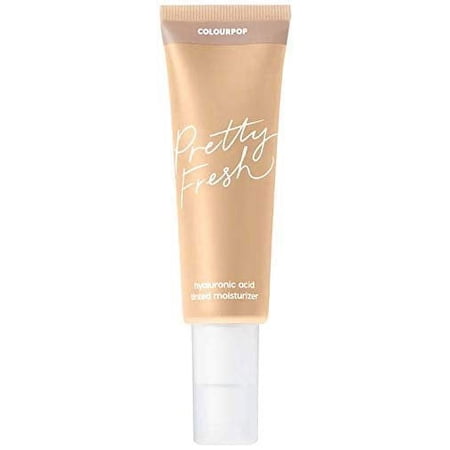



Colourpop Tinted Moisturizer - Light 5N Neutral Tone - 1.45 oz
Analysis updated October 2026 · How Scout scores
At a glance
Summary
This tinted moisturizer contains beneficial ingredients like sodium hyaluronate, apple fruit extract, and coconut derivatives, which provide hydration and nourishment to the skin. However, the presence of phenoxyethanol, a preservative that can cause irritation, and several synthetic compounds like PEG/PPG dimethicones, slightly lowers its safety profile. The product is moderately processed with a mix of natural and synthetic ingredients, resulting in a balanced score.
Key ingredients 26
Sodium HyaluronateGood
Sodium Hyaluronate is a form of hyaluronic acid known for its excellent moisture-retaining properties. It helps to hydrate and plump the skin. It is highly beneficial for maintaining skin moisture levels.
Risks
Generally considered safe with minimal risk.
Benefits
Provides deep hydration and improves skin elasticity.
Pyrus Malus (apple) Fruit ExtractGood
Apple Fruit Extract is rich in antioxidants and vitamins, providing nourishment to the skin. It helps to soothe and protect the skin from environmental stressors. It is considered beneficial for skin health.
Risks
Rarely, it may cause irritation in sensitive individuals.
Benefits
Offers antioxidant protection and soothes the skin.
Cocos Nucifera (coconut) Fruit JuiceGood
Coconut Fruit Juice is known for its hydrating and nourishing properties. It helps to moisturize and soothe the skin. It is considered beneficial for maintaining skin hydration.
Risks
May cause allergic reactions in individuals sensitive to coconut.
Benefits
Provides hydration and nourishment to the skin.
Cocos Nucifera (coconut) WaterGood
Coconut Water is a natural hydrator, rich in vitamins and minerals. It helps to replenish moisture and soothe the skin. It is beneficial for maintaining skin hydration and health.
Risks
Potential for allergic reactions in coconut-sensitive individuals.
Benefits
Hydrates and replenishes the skin with essential nutrients.
GlycerinGood
Glycerin is a humectant that attracts moisture to the skin, helping to keep it hydrated. It is widely used in cosmetics for its moisturizing properties. It is considered beneficial for maintaining skin hydration.
Risks
Generally considered safe with minimal risk.
Benefits
Provides excellent hydration and helps to maintain skin moisture balance.
CyclopentasiloxaneNeutral
Cyclopentasiloxane is a silicone-based compound used for its smooth application and quick-drying properties. It is generally considered safe for use in cosmetics. However, it can be an environmental concern due to its persistence.
Risks
There are concerns about its environmental impact and potential bioaccumulation.
Benefits
It provides a silky texture and helps in even application of the product.
WaterNeutral
Water is a common solvent in cosmetics, used to dissolve other ingredients. It is essential for the formulation of emulsions. It poses no direct risks or benefits in this context.
Benefits
Acts as a solvent and helps in the distribution of other ingredients.
Butylene GlycolNeutral
Butylene Glycol is used as a solvent and conditioning agent in cosmetics. It helps in retaining moisture and improving the texture of the product. It is generally considered safe for use.
Risks
May cause irritation in sensitive skin types.
Benefits
Helps in moisture retention and improves product spreadability.
Cetearyl AlcoholNeutral
Cetearyl Alcohol is a fatty alcohol used as an emollient and thickening agent. It helps to stabilize and thicken formulations. It is generally well-tolerated by the skin.
Risks
Rarely, it may cause irritation in very sensitive skin.
Benefits
Provides moisturizing properties and improves product texture.
TrimethylsiloxysilicateNeutral
Trimethylsiloxysilicate is a silicone used to form a water-resistant film on the skin. It enhances the longevity of the product. It is considered safe for use in cosmetics.
Risks
May cause build-up on the skin with prolonged use.
Benefits
Improves product wear time and provides a smooth finish.
Peg/ppg-18/18-dimethiconeNeutral
This is a silicone-based surfactant used to improve the spreadability of the product. It helps in forming a uniform layer on the skin. It is generally considered safe for use.
Risks
May cause irritation in sensitive skin types.
Benefits
Enhances product spreadability and provides a smooth finish.
Cetyl Peg/ppg-10/1 DimethiconeNeutral
This ingredient is a silicone-based surfactant that aids in the even distribution of the product. It is used to improve the texture and feel of the formulation. It is considered safe for use in cosmetics.
Risks
Potential for skin irritation in sensitive individuals.
Benefits
Improves product texture and application.
PolypropylsilsesquioxaneNeutral
Polypropylsilsesquioxane is a silicone used to enhance the texture and durability of cosmetic products. It forms a flexible film on the skin. It is generally considered safe for use.
Risks
May cause build-up on the skin with prolonged use.
Benefits
Improves product durability and provides a smooth finish.
Silica SilylateNeutral
Silica Silylate is used as a thickening agent and to provide a matte finish. It helps in oil absorption and improves the texture of the product. It is considered safe for use in cosmetics.
Risks
Inhalation of fine silica particles can be harmful.
Benefits
Provides a matte finish and helps in oil control.
Polysorbate 20Neutral
Polysorbate 20 is an emulsifier used to stabilize formulations. It helps to mix oil and water-based ingredients. It is considered safe for use in cosmetics.
Risks
Potential for skin irritation in sensitive individuals.
Benefits
Stabilizes formulations and improves texture.
Disteardimonium HectoriteNeutral
Disteardimonium Hectorite is a thickening agent used to improve the texture of cosmetic products. It helps to stabilize emulsions and suspensions. It is generally considered safe for use.
Risks
May cause irritation in sensitive skin types.
Benefits
Improves product texture and stability.
TribeheninNeutral
Tribehenin is an emollient used to condition and soften the skin. It helps to improve the texture and feel of the product. It is considered safe for use in cosmetics.
Risks
Rarely, it may cause irritation in sensitive individuals.
Benefits
Conditions and softens the skin, improving texture.
Sodium ChlorideNeutral
Sodium Chloride is used as a thickening agent and to adjust the viscosity of formulations. It is commonly used in cosmetics and is considered safe. It poses no significant risks or benefits.
Benefits
Helps to adjust product viscosity and improve texture.
Propylene CarbonateNeutral
Propylene Carbonate is a solvent used to dissolve other ingredients in cosmetic formulations. It helps to improve the texture and spreadability of the product. It is considered safe for use.
Risks
May cause irritation in sensitive skin types.
Benefits
Improves product texture and spreadability.
Caprylyl GlycolNeutral
Caprylyl Glycol is used as a skin conditioning agent and preservative. It helps to improve the texture and moisture content of the skin. It is generally considered safe for use.
Risks
May cause irritation in sensitive skin types.
Benefits
Conditions the skin and improves moisture retention.
Hexylene GlycolNeutral
Hexylene Glycol is used as a solvent and viscosity agent in cosmetics. It helps to improve the texture and spreadability of the product. It is generally considered safe for use.
Risks
May cause irritation in sensitive skin types.
Benefits
Improves product texture and enhances spreadability.
Iron Oxides (CI 77491, CI 77492, CI 77499)Neutral
Iron Oxides are used as colorants in cosmetics, providing pigmentation. They are considered safe and are commonly used in makeup products. They pose no significant risks or benefits.
Benefits
Provide pigmentation and color to the product.
Titanium Dioxide (CI 77891)Neutral
Titanium Dioxide is used as a pigment and UV filter in cosmetics. It provides opacity and sun protection. It is considered safe for use in cosmetics.
Risks
Inhalation of fine particles can be harmful.
Benefits
Provides pigmentation and offers UV protection.
DimethiconeBad
Occlusive silicone film-former — flagged under clean-beauty doctrine.
Risks
Can cause build-up on the skin, potentially leading to clogged pores.
Benefits
Provides a smooth application and helps in moisture retention.
Potassium SorbateBad
Synthetic preservative — flagged in daily-use products.
Risks
May cause irritation in sensitive skin types.
Benefits
Prevents microbial growth and extends product shelf life.
PhenoxyethanolBad
Phenoxyethanol is a preservative used to prevent microbial growth in cosmetics. It is effective but can cause irritation in some individuals. It is considered a moderate risk ingredient.
Risks
Potential for skin irritation and allergic reactions.
Benefits
Prevents microbial growth and extends product shelf life.
Get the full breakdown in the Scout appTake Scout shopping
Scan any product to see lab results, healthy alternatives, and your personalized analysis.
Download on theApp Store GET IT ONGoogle PlayAmazon pricing & content
CERTAIN CONTENT THAT APPEARS ON THIS SITE COMES FROM AMAZON. THIS CONTENT IS PROVIDED “AS IS” AND IS SUBJECT TO CHANGE OR REMOVAL AT ANY TIME.