
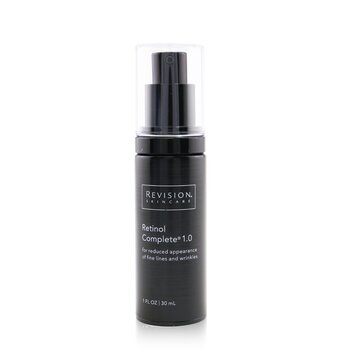

Revision Skincare Retinol Complete 1.0
Analysis updated July 2026 · How Scout scores
At a glance
Summary
This skincare product contains beneficial ingredients like retinol, which is known for its anti-aging properties, and other skin actives that promote skin health. However, it also includes synthetic preservatives and potential irritants that could affect sensitive skin. The presence of these synthetic components and the level of processing involved in the formulation prevent it from achieving a higher score.
Key ingredients 16
RetinolVery Good
Retinol is a form of Vitamin A that is widely used for its anti-aging benefits. It helps to improve skin texture, reduce fine lines, and promote cell turnover. It is considered highly effective in skincare.
Risks
Retinol can cause irritation, redness, and peeling, especially in sensitive skin or when used excessively.
Benefits
It promotes collagen production and improves skin tone and texture.
Tetrahexyldecyl AscorbateVery Good
Tetrahexyldecyl Ascorbate is a stable form of Vitamin C that helps brighten the skin and reduce signs of aging. It is effective in promoting collagen synthesis and improving skin tone. It is considered safe and beneficial for most skin types.
Risks
There are minimal risks associated with this ingredient, primarily related to potential skin irritation in sensitive individuals.
Benefits
It brightens the skin and supports collagen production.
SqualaneVery Good
Squalane is a highly effective emollient and natural antioxidant. It helps to moisturize the skin and improve its elasticity. It is considered safe and beneficial for most skin types.
Risks
There are minimal risks associated with squalane, though it may cause irritation in very sensitive skin.
Benefits
It provides deep hydration and improves skin texture.
GlycerinGood
Glycerin is a humectant that attracts moisture to the skin, helping to keep it hydrated. It is widely used in skincare for its moisturizing properties. It is considered safe and beneficial for most skin types.
Risks
There are minimal risks associated with glycerin, though it may cause irritation in very sensitive skin.
Benefits
It helps maintain skin hydration and improves skin barrier function.
UbiquinoneGood
Ubiquinone, also known as Coenzyme Q10, is an antioxidant that helps protect the skin from oxidative stress. It is beneficial in reducing the signs of aging. It is considered safe for use in cosmetics.
Risks
There are minimal risks associated with ubiquinone, though it may cause irritation in very sensitive skin.
Benefits
It helps reduce oxidative damage and supports skin health.
Ophiopogon Japonicus Root ExtractGood
This botanical extract is known for its moisturizing and soothing properties. It helps to calm the skin and reduce irritation. It is considered safe for use in cosmetics.
Risks
There are minimal risks associated with this ingredient, primarily related to potential skin irritation in sensitive individuals.
Benefits
It soothes the skin and provides hydration.
TocopherolGood
Tocopherol, or Vitamin E, is a powerful antioxidant that helps protect the skin from free radical damage. It is beneficial in moisturizing and improving skin elasticity. It is considered safe for use in cosmetics.
Risks
There are minimal risks associated with tocopherol, though it may cause irritation in very sensitive skin.
Benefits
It protects the skin from oxidative stress and supports skin health.
Water (Aqua)Neutral
Water is a common solvent used in cosmetic formulations. It helps dissolve other ingredients and provides a base for the product. It does not have any direct benefits or risks.
Risks
There are no significant risks associated with water in cosmetic products.
Benefits
Water acts as a solvent and helps in the application of the product.
Glyceryl StearateNeutral
Glyceryl Stearate is an emulsifier that helps blend water and oils in formulations. It is generally considered safe and non-irritating. It does not provide significant active benefits.
Risks
There are minimal risks associated with Glyceryl Stearate, primarily related to potential skin irritation in sensitive individuals.
Benefits
It helps stabilize emulsions and improves the texture of the product.
Allyl Methacrylates CrosspolymerNeutral
This ingredient is used as a film-forming agent and thickener in cosmetics. It provides texture and consistency to the product. It is generally considered safe for use.
Risks
There are no significant risks associated with this ingredient in cosmetic formulations.
Benefits
It enhances the texture and application of the product.
Isosorbide DicaprylateNeutral
Isosorbide Dicaprylate is an emollient that helps to soften and smooth the skin. It is considered safe for use in cosmetics. It does not have significant active benefits.
Risks
There are minimal risks associated with this ingredient, primarily related to potential skin irritation in sensitive individuals.
Benefits
It provides a smooth and soft feel to the skin.
CyclopentasiloxaneNeutral
Cyclopentasiloxane is a silicone-based compound used to provide a silky texture and improve spreadability. It is generally considered safe for use in cosmetics. It does not provide significant active benefits.
Risks
There are minimal risks associated with this ingredient, primarily related to potential skin irritation in sensitive individuals.
Benefits
It enhances the texture and application of the product.
Ethylhexyl PalmitateNeutral
Ethylhexyl Palmitate is an emollient that helps to soften and smooth the skin. It is considered safe for use in cosmetics. It does not have significant active benefits.
Risks
There are minimal risks associated with this ingredient, primarily related to potential skin irritation in sensitive individuals.
Benefits
It provides a smooth and soft feel to the skin.
Glyceryl CaprylateNeutral
Glyceryl Caprylate is used as an emulsifier and skin conditioning agent. It helps to stabilize formulations and improve skin feel. It is generally considered safe for use.
Risks
There are minimal risks associated with this ingredient, primarily related to potential skin irritation in sensitive individuals.
Benefits
It helps stabilize emulsions and improves the texture of the product.
DisodiumNeutral
Disodium is often used as a chelating agent in cosmetics to improve stability. It helps bind metal ions and prevent product degradation. It is generally considered safe for use.
Risks
There are minimal risks associated with disodium, primarily related to potential skin irritation in sensitive individuals.
Benefits
It enhances product stability and prevents degradation.
PhenoxyethanolBad
Phenoxyethanol is a preservative used to prevent microbial growth in cosmetics. It is effective but can cause irritation and allergic reactions in some individuals. It is considered a moderate risk ingredient.
Risks
Phenoxyethanol can cause skin irritation and allergic reactions, especially in sensitive individuals.
Benefits
It helps preserve the product and prevent microbial contamination.
Get the full breakdown in the Scout appTake Scout shopping
Scan any product to see lab results, healthy alternatives, and your personalized analysis.
Download on theApp Store GET IT ONGoogle PlayAmazon pricing & content
Amazon price as of . Product prices and availability are accurate as of the date/time indicated and are subject to change. Any price and availability information displayed on Amazon.com at the time of purchase will apply to the purchase of this product.
CERTAIN CONTENT THAT APPEARS ON THIS SITE COMES FROM AMAZON. THIS CONTENT IS PROVIDED “AS IS” AND IS SUBJECT TO CHANGE OR REMOVAL AT ANY TIME.