
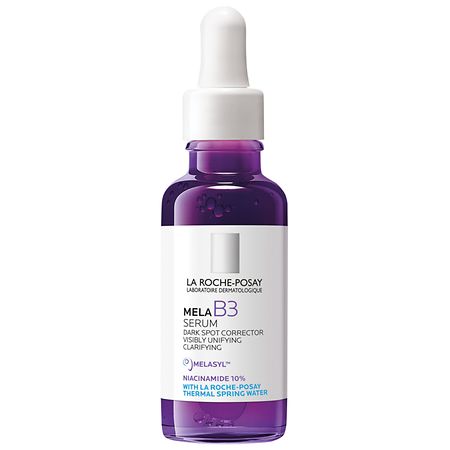
La Roche Posay Mela B3 Dark Spot Serum with Melasyl and 10% Niacinamide - 1 fl oz
Analysis updated August 2026 · How Scout scores
At a glance
Summary
This serum contains beneficial ingredients like niacinamide, glycerin, and sodium hyaluronate, which are known for their moisturizing and anti-aging properties. However, it also includes propylene glycol and phenoxyethanol, which can cause irritation in sensitive skin. The presence of these synthetic ingredients and the overall level of processing prevent it from achieving a higher score.
Key ingredients 30
NiacinamideGood
Niacinamide is a form of Vitamin B3 that is known for its anti-inflammatory properties and ability to improve skin texture. It helps reduce the appearance of pores and fine lines. It is well-tolerated by most skin types.
Risks
Generally considered safe with minimal risk of irritation.
Benefits
Improves skin texture, reduces inflammation, and minimizes pores.
GlycerinGood
Glycerin is a humectant that attracts moisture to the skin, helping to keep it hydrated. It is widely used in skincare for its moisturizing properties. It is generally safe and well-tolerated.
Risks
Very low risk of irritation or allergic reaction.
Benefits
Helps maintain skin hydration and improves moisture retention.
Cystoseira Tamariscifolia ExtractGood
Cystoseira Tamariscifolia Extract is a marine botanical extract known for its antioxidant properties. It helps protect the skin from environmental stressors and supports skin health. It is generally well-tolerated.
Risks
Minimal risk of irritation or allergic reaction.
Benefits
Provides antioxidant protection and supports skin health.
Sodium HyaluronateGood
Sodium Hyaluronate is a form of hyaluronic acid that is highly effective at retaining moisture in the skin. It helps to hydrate and plump the skin, reducing the appearance of fine lines. It is well-tolerated by most skin types.
Risks
Very low risk of irritation or allergic reaction.
Benefits
Deeply hydrates the skin and reduces fine lines.
CarnosineGood
Carnosine is a dipeptide with antioxidant properties that helps protect the skin from oxidative stress. It may also have anti-aging benefits by reducing the appearance of fine lines. It is generally well-tolerated.
Risks
Minimal risk of irritation or allergic reaction.
Benefits
Provides antioxidant protection and may reduce fine lines.
Dipotassium GlycyrrhizateGood
Dipotassium Glycyrrhizate is derived from licorice root and is known for its soothing and anti-inflammatory properties. It helps to calm irritated skin and reduce redness. It is generally well-tolerated by most skin types.
Risks
Minimal risk of irritation or allergic reaction.
Benefits
Soothes irritated skin and reduces redness.
Caprylic/Capric TriglycerideGood
Caprylic/Capric Triglyceride is an emollient derived from coconut oil and glycerin. It helps to moisturize and soften the skin without leaving a greasy residue. It is generally well-tolerated and non-comedogenic.
Risks
Minimal risk of irritation or allergic reaction.
Benefits
Moisturizes and softens the skin effectively.
Capryloyl Salicylic AcidGood
Capryloyl Salicylic Acid is a derivative of salicylic acid that provides gentle exfoliation and helps to unclog pores. It is effective in improving skin texture and reducing acne. It is generally well-tolerated by most skin types.
Risks
Potential for mild irritation in sensitive skin.
Benefits
Provides gentle exfoliation and improves skin texture.
Retinyl PalmitateGood
Retinyl Palmitate is a derivative of Vitamin A that is used for its anti-aging properties. It helps to improve skin texture and reduce the appearance of fine lines. It is generally well-tolerated by most skin types.
Risks
Potential for mild irritation in sensitive skin.
Benefits
Improves skin texture and reduces fine lines.
TocopherolGood
Tocopherol, also known as Vitamin E, is an antioxidant that helps protect the skin from oxidative stress. It supports skin health and improves moisture retention. It is generally well-tolerated by most skin types.
Risks
Minimal risk of irritation or allergic reaction.
Benefits
Provides antioxidant protection and supports skin health.
Aqua/WaterNeutral
Water is a common solvent used in cosmetic formulations. It helps dissolve other ingredients and provides a base for the product. It does not have any direct benefits or risks.
Risks
There are no known risks associated with water in cosmetic products.
Benefits
Water acts as a solvent and helps in the application of the product.
Polysilicone-11Neutral
Polysilicone-11 is a silicone-based ingredient used to provide a silky texture and smooth application. It helps to fill in fine lines and create a matte finish. It is generally considered safe for use in cosmetics.
Risks
May cause buildup on the skin with prolonged use.
Benefits
Provides a smooth, matte finish and improves product texture.
SilicaNeutral
Silica is used in cosmetics to improve texture and absorb excess oil. It provides a matte finish and helps to blur imperfections. It is generally considered safe for topical use.
Risks
Inhalation of silica particles can be harmful, but this is not a concern in topical applications.
Benefits
Improves texture, absorbs oil, and provides a matte finish.
Bis-PEG/PPG-16/16 PEG/PPG-16/16 DimethiconeNeutral
This is a silicone-based surfactant that helps to stabilize emulsions and improve product spreadability. It is commonly used in skincare for its texture-enhancing properties. It is generally considered safe.
Risks
May cause buildup on the skin with prolonged use.
Benefits
Improves product spreadability and stabilizes emulsions.
2-Mercaptonicotinoyl GlycineNeutral
2-Mercaptonicotinoyl Glycine is used in cosmetics for its potential skin-brightening effects. It may help reduce the appearance of dark spots and improve skin tone. It is generally considered safe for use.
Risks
Limited data on long-term safety and efficacy.
Benefits
May help brighten skin and reduce dark spots.
PEG-20 Methyl Glucose SesquistearateNeutral
This ingredient is an emulsifier that helps blend oil and water-based components in formulations. It improves the texture and stability of the product. It is generally considered safe for use in cosmetics.
Risks
Potential for mild irritation in sensitive individuals.
Benefits
Improves product stability and texture.
Sodium HydroxideNeutral
Sodium Hydroxide is used to adjust the pH of cosmetic formulations. It is effective in small amounts to ensure product stability. It is generally considered safe when used in low concentrations.
Risks
Can be irritating in high concentrations, but typically used in safe amounts.
Benefits
Helps maintain product stability by adjusting pH.
Sodium ThiosulfateNeutral
Sodium Thiosulfate is used in cosmetics as an antioxidant and stabilizer. It helps to prevent the degradation of other ingredients. It is generally considered safe for use in skincare products.
Risks
Minimal risk of irritation or allergic reaction.
Benefits
Acts as an antioxidant and stabilizer in formulations.
Poloxamer 338Neutral
Poloxamer 338 is a surfactant used to improve the texture and spreadability of cosmetic products. It helps to stabilize emulsions and is generally considered safe for use. It is non-irritating to the skin.
Risks
Minimal risk of irritation or allergic reaction.
Benefits
Improves product texture and stabilizes emulsions.
Ammonium Polyacryloyldimethyl TaurateNeutral
This ingredient is a thickening agent used to improve the texture and consistency of cosmetic formulations. It helps to stabilize emulsions and is generally considered safe for use. It is non-irritating to the skin.
Risks
Minimal risk of irritation or allergic reaction.
Benefits
Improves product texture and stabilizes emulsions.
Caprylyl GlycolNeutral
Caprylyl Glycol is a humectant and skin conditioning agent that helps to retain moisture in the skin. It also has antimicrobial properties that can enhance product preservation. It is generally considered safe for use.
Risks
Minimal risk of irritation or allergic reaction.
Benefits
Helps retain moisture and enhances product preservation.
Citric AcidNeutral
Citric Acid is used to adjust the pH of cosmetic formulations and can also provide mild exfoliation. It helps to maintain product stability and improve skin texture. It is generally considered safe when used in low concentrations.
Risks
Can be irritating in high concentrations, but typically used in safe amounts.
Benefits
Helps maintain product stability and provides mild exfoliation.
Trisodium Ethylenediamine DisuccinateNeutral
This ingredient is a chelating agent that helps to stabilize cosmetic formulations by binding metal ions. It improves product stability and is generally considered safe for use. It is non-irritating to the skin.
Risks
Minimal risk of irritation or allergic reaction.
Benefits
Improves product stability by binding metal ions.
Xanthan GumNeutral
Xanthan Gum is a natural thickening agent used to improve the texture and consistency of cosmetic products. It helps to stabilize emulsions and is generally considered safe for use. It is non-irritating to the skin.
Risks
Minimal risk of irritation or allergic reaction.
Benefits
Improves product texture and stabilizes emulsions.
Pentylene GlycolNeutral
Pentylene Glycol is a humectant and solvent that helps to retain moisture in the skin and improve product texture. It also has antimicrobial properties that can enhance product preservation. It is generally considered safe for use.
Risks
Minimal risk of irritation or allergic reaction.
Benefits
Helps retain moisture and enhances product preservation.
OctyldodecanolNeutral
Octyldodecanol is an emollient used to improve the texture and spreadability of cosmetic products. It helps to soften and smooth the skin. It is generally considered safe for use.
Risks
Minimal risk of irritation or allergic reaction.
Benefits
Softens and smooths the skin effectively.
Pentaerythrityl Tetra-Di-T-Butyl HydroxyhydrocinnamateNeutral
This ingredient is an antioxidant used to stabilize cosmetic formulations and prevent the degradation of other ingredients. It is generally considered safe for use in skincare products. It is non-irritating to the skin.
Risks
Minimal risk of irritation or allergic reaction.
Benefits
Stabilizes formulations and prevents ingredient degradation.
DimethiconeBad
Occlusive silicone film-former — flagged under clean-beauty doctrine.
Risks
Potential for skin buildup and may cause breakouts in sensitive individuals.
Benefits
Provides a smooth application and helps retain skin moisture.
Propylene GlycolBad
Propylene Glycol is a synthetic humectant used to improve texture and moisture retention. It can cause irritation in sensitive skin and has been associated with contact dermatitis. It is generally considered safe in low concentrations.
Risks
Potential for skin irritation and allergic reactions in sensitive individuals.
Benefits
Improves product texture and helps retain moisture.
PhenoxyethanolBad
Phenoxyethanol is a preservative used to prevent microbial growth in cosmetic products. It can cause irritation in sensitive skin and has been associated with allergic reactions. It is generally considered safe in low concentrations.
Risks
Potential for skin irritation and allergic reactions in sensitive individuals.
Benefits
Prevents microbial growth and extends product shelf life.
Processing
Processed Foods
Get the full breakdown in the Scout appTake Scout shopping
Scan any product to see lab results, healthy alternatives, and your personalized analysis.
Download on theApp Store GET IT ONGoogle PlayAmazon pricing & content
Amazon price as of . Product prices and availability are accurate as of the date/time indicated and are subject to change. Any price and availability information displayed on Amazon.com at the time of purchase will apply to the purchase of this product.
CERTAIN CONTENT THAT APPEARS ON THIS SITE COMES FROM AMAZON. THIS CONTENT IS PROVIDED “AS IS” AND IS SUBJECT TO CHANGE OR REMOVAL AT ANY TIME.