
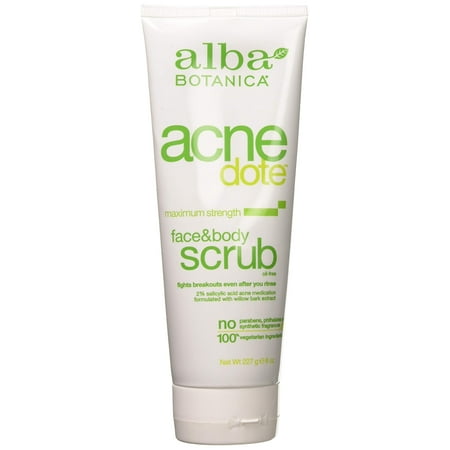
Alba Botanica Acnedote Face and Body Scrub 8 Ounce - 2 Pack
Analysis updated July 2026 · How Scout scores
At a glance
Summary
The Alba Botanica Acnedote Face and Body Scrub contains natural exfoliants and botanical extracts, which are beneficial for skin health. However, it includes synthetic fragrance, which can be a skin irritant and is generally discouraged in clean beauty products. The presence of this ingredient, along with the potential for other synthetic additives, affects its overall safety profile and processing level.
Key ingredients 26
Aloe Barbadensis Leaf JuiceVery Good
Aloe vera is known for its soothing and moisturizing properties. It can help calm irritated skin and provide hydration. It is a beneficial ingredient in skincare products.
Risks
Rarely, aloe vera can cause allergic reactions in sensitive individuals.
Benefits
Aloe vera provides soothing and moisturizing benefits, making it ideal for sensitive or irritated skin.
Glycyrrhiza Glabra (Licorice) Rhizome/RootVery Good
Licorice root extract is known for its skin-brightening and anti-inflammatory properties. It can help reduce hyperpigmentation and soothe irritated skin. It is a valuable ingredient for improving skin tone and clarity.
Risks
May cause irritation in very sensitive skin types.
Benefits
Helps to brighten the skin and reduce inflammation.
Salix Alba (Willow) Bark ExtractVery Good
Willow bark extract contains salicin, a natural precursor to salicylic acid. It provides gentle exfoliation and helps to unclog pores. It is beneficial for acne-prone skin.
Risks
May cause irritation in sensitive skin if used excessively.
Benefits
Offers gentle exfoliation and helps to clear pores, improving skin clarity.
AllantoinVery Good
Allantoin is known for its soothing and skin-conditioning properties. It helps to calm irritated skin and promote healing. It is a beneficial ingredient for sensitive or damaged skin.
Risks
Generally considered safe with no significant risks.
Benefits
Soothes and conditions the skin, promoting healing and comfort.
PanthenolVery Good
Panthenol, also known as provitamin B5, is a moisturizing and skin-conditioning agent. It helps to improve skin hydration and elasticity. It is a beneficial ingredient for maintaining healthy skin.
Risks
Generally considered safe with no significant risks.
Benefits
Enhances skin hydration and improves elasticity.
GlycerinGood
Glycerin is a humectant that attracts moisture to the skin. It helps to keep the skin hydrated and soft. It is a well-regarded ingredient in skincare for its moisturizing properties.
Risks
Generally considered safe with no significant risks.
Benefits
Helps to maintain skin hydration and improve skin barrier function.
Spiraea Ulmaria ExtractGood
Spiraea ulmaria, also known as meadowsweet, has anti-inflammatory and astringent properties. It can help soothe the skin and reduce redness. It is beneficial for calming irritated skin.
Risks
Rare allergic reactions may occur in sensitive individuals.
Benefits
Provides anti-inflammatory benefits and helps to calm the skin.
Lens Esculenta (Lentil) Fruit ExtractGood
Lentil extract is rich in antioxidants and can help improve skin texture. It provides hydration and helps to balance oil production. It is a beneficial ingredient for maintaining healthy skin.
Benefits
Offers antioxidant protection and helps to hydrate and balance the skin.
Hamamelis Virginiana (Witch Hazel) ExtractGood
Witch hazel is a natural astringent that helps to tighten pores and reduce inflammation. It is often used to soothe irritated skin and reduce redness. It is beneficial for oily and acne-prone skin.
Risks
Overuse can lead to dryness or irritation in some individuals.
Benefits
Provides astringent and anti-inflammatory benefits, helping to calm and clarify the skin.
Aqua (Water)Neutral
Water is a common solvent used in cosmetic formulations. It helps dissolve other ingredients and provides a base for the product. It does not have any direct benefits or risks.
Risks
There are no significant risks associated with water in cosmetic products.
Benefits
Water acts as a solvent and helps in the application of the product.
Sodium Laurylglucosides HydroxypropylsulfonateNeutral
This is a mild surfactant used to help cleanse the skin. It is considered less irritating than traditional sulfates. It is generally well-tolerated in skincare formulations.
Risks
May cause mild irritation in very sensitive skin types.
Benefits
Provides gentle cleansing without the harshness of traditional sulfates.
Cocamidopropyl BetaineNeutral
Cocamidopropyl betaine is a mild surfactant derived from coconut oil. It helps to create foam and cleanse the skin. It is generally considered safe for use in cosmetics.
Risks
Can cause irritation or allergic reactions in some individuals.
Benefits
Helps to cleanse the skin gently and effectively.
Juglans Regia (Walnut) Shell PowderNeutral
Walnut shell powder is used as a physical exfoliant in skincare products. It helps to remove dead skin cells and improve skin texture. However, it can be abrasive if not used carefully.
Risks
Overuse can lead to micro-tears in the skin due to its abrasive nature.
Benefits
Provides exfoliation, helping to smooth and refresh the skin.
Citrus Aurantium Bergamia (Bergamot) Fruit OilNeutral
Bergamot oil is used for its fragrance and potential antibacterial properties. It can help to refresh the skin and provide a pleasant scent. However, it can be photosensitizing if not used carefully.
Risks
Can cause photosensitivity, leading to skin irritation when exposed to sunlight.
Benefits
Provides a refreshing scent and may offer antibacterial benefits.
Citrus Aurantium Dulcis (Orange) Peel OilNeutral
Orange peel oil is used for its fragrance and potential antioxidant properties. It can help to refresh the skin and provide a pleasant scent. However, it can be irritating to sensitive skin.
Risks
May cause irritation or photosensitivity in sensitive skin.
Benefits
Provides a refreshing scent and may offer antioxidant benefits.
Mentha Piperita (Peppermint) OilNeutral
Peppermint oil is used for its cooling and refreshing properties. It can help to invigorate the skin and provide a pleasant scent. However, it can be irritating to sensitive skin.
Risks
May cause irritation or allergic reactions in sensitive skin.
Benefits
Provides a cooling sensation and refreshing scent.
AlginNeutral
Algin is a thickening agent derived from algae. It helps to stabilize formulations and improve texture. It is generally considered safe for use in cosmetics.
Benefits
Improves product texture and stability.
Citric AcidNeutral
Citric acid is used to adjust the pH of cosmetic formulations. It can also provide mild exfoliation. It is generally considered safe in small amounts.
Risks
May cause irritation in sensitive skin if used in high concentrations.
Benefits
Helps to balance pH and can provide mild exfoliation.
Cellulose GumNeutral
Cellulose gum is used as a thickening and stabilizing agent in cosmetics. It helps to improve the texture and consistency of products. It is generally considered safe for use.
Benefits
Improves product texture and stability.
Sclerotium GumNeutral
Sclerotium gum is a natural thickening agent derived from fermentation. It helps to stabilize formulations and improve texture. It is generally considered safe for use in cosmetics.
Benefits
Enhances product texture and stability.
Xanthan GumNeutral
Xanthan gum is a common thickening and stabilizing agent in cosmetics. It helps to improve the texture and consistency of products. It is generally considered safe for use.
Benefits
Improves product texture and stability.
EthylhexylglycerinNeutral
Ethylhexylglycerin is used as a preservative and skin-conditioning agent. It helps to enhance the efficacy of other preservatives. It is generally considered safe for use in cosmetics.
Risks
May cause mild irritation in sensitive individuals.
Benefits
Enhances preservative efficacy and conditions the skin.
PhenoxyethanolBad
Phenoxyethanol is a common preservative used in cosmetics. It helps to prevent microbial growth and extend product shelf life. However, it can cause irritation and allergic reactions in some individuals.
Risks
May cause irritation or allergic reactions, particularly in sensitive skin.
Benefits
Provides effective preservation against microbial growth.
CitralBad
Processed additive flagged under Scout's ingredient doctrine.
Risks
May cause irritation or allergic reactions in sensitive individuals.
Benefits
Provides a pleasant citrus scent to products.
LimoneneBad
Processed additive flagged under Scout's ingredient doctrine.
Risks
May cause irritation or allergic reactions in sensitive individuals.
Benefits
Provides a fresh citrus scent to products.
LinaloolBad
Processed additive flagged under Scout's ingredient doctrine.
Risks
May cause irritation or allergic reactions in sensitive individuals.
Benefits
Provides a pleasant floral scent to products.
Get the full breakdown in the Scout appTake Scout shopping
Scan any product to see lab results, healthy alternatives, and your personalized analysis.
Download on theApp Store GET IT ONGoogle PlayAmazon pricing & content
Amazon price as of . Product prices and availability are accurate as of the date/time indicated and are subject to change. Any price and availability information displayed on Amazon.com at the time of purchase will apply to the purchase of this product.
CERTAIN CONTENT THAT APPEARS ON THIS SITE COMES FROM AMAZON. THIS CONTENT IS PROVIDED “AS IS” AND IS SUBJECT TO CHANGE OR REMOVAL AT ANY TIME.