


At a glance
Summary
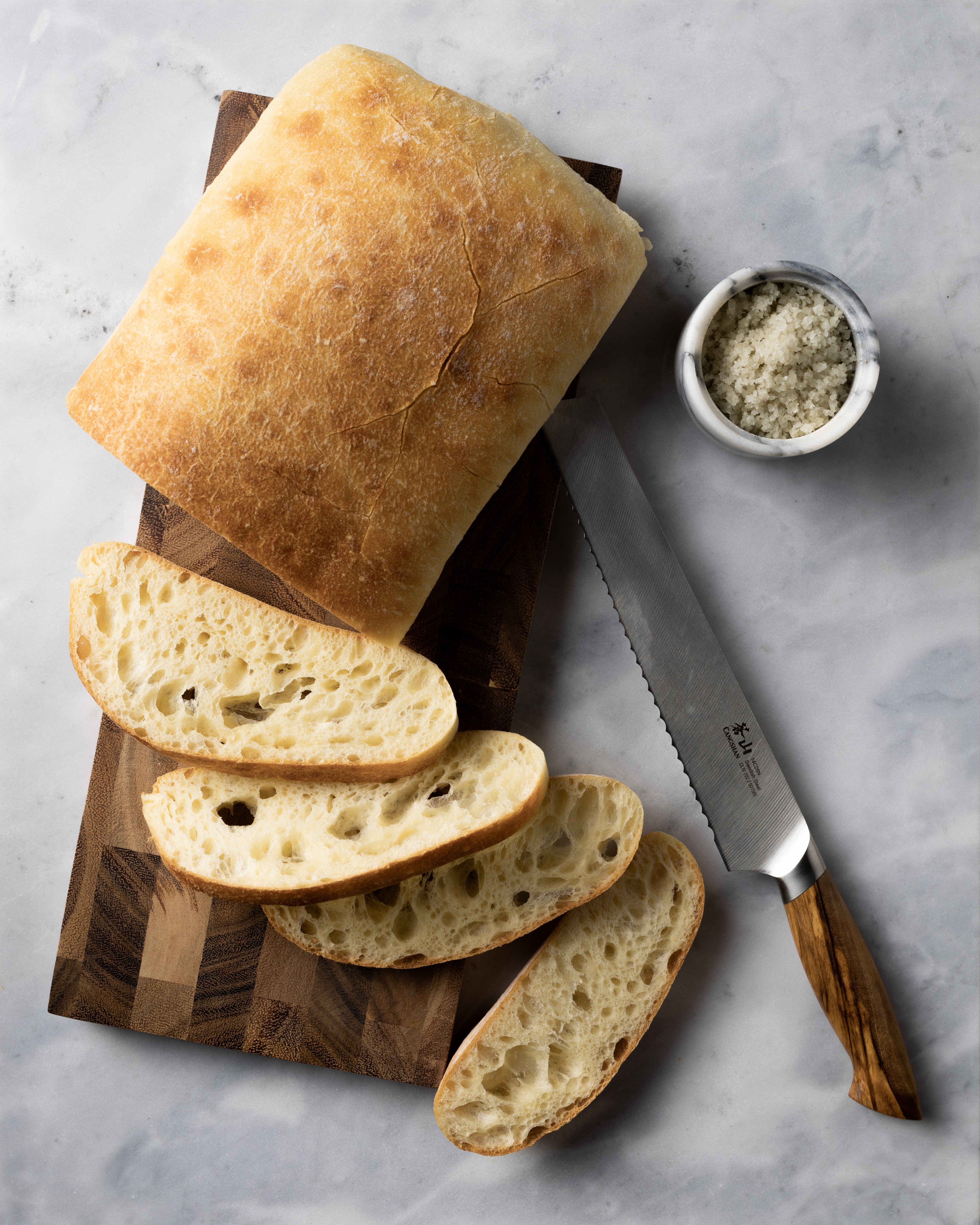
This ciabatta bread is made with a simple and clean ingredient list, featuring whole grain flours, sea salt, and yeast, which contribute to its nutritional value and flavor. The use of whole grains provides fiber and nutrients, while the absence of harmful additives or seed oils enhances its health profile. Despite being processed, the bread maintains a high score due to its minimal and wholesome ingredients.
Key ingredients 6
sea saltGood
Beneficial ingredient — whole-food or functional value in this product class.
See more about sea salt →waterNeutral
Water is essential for dough formation and hydration, serving as a neutral component without nutritional impact.
See more about water →whole grain flours (rye and whole wheat)Neutral
Whole grain flours add some fiber and nutrients, but in this product, they are part of processed ingredients without significant health claims.
yeastNeutral
Yeast is used for fermentation and leavening, contributing to bread texture without notable health effects.
See more about yeast →malted barley flourNeutral
Malted barley flour adds flavor and aids fermentation, but it is a processed ingredient with no significant health benefits.
See more about malted barley flour →Wheat flourBad
Refined grain flour stripped of bran and germ.
See more about Wheat flour →Processing
Processed Foods
Get the full breakdown in the Scout appTake Scout shopping
Scan any product to see lab results, healthy alternatives, and your personalized analysis.
Download on theApp Store GET IT ONGoogle Play