
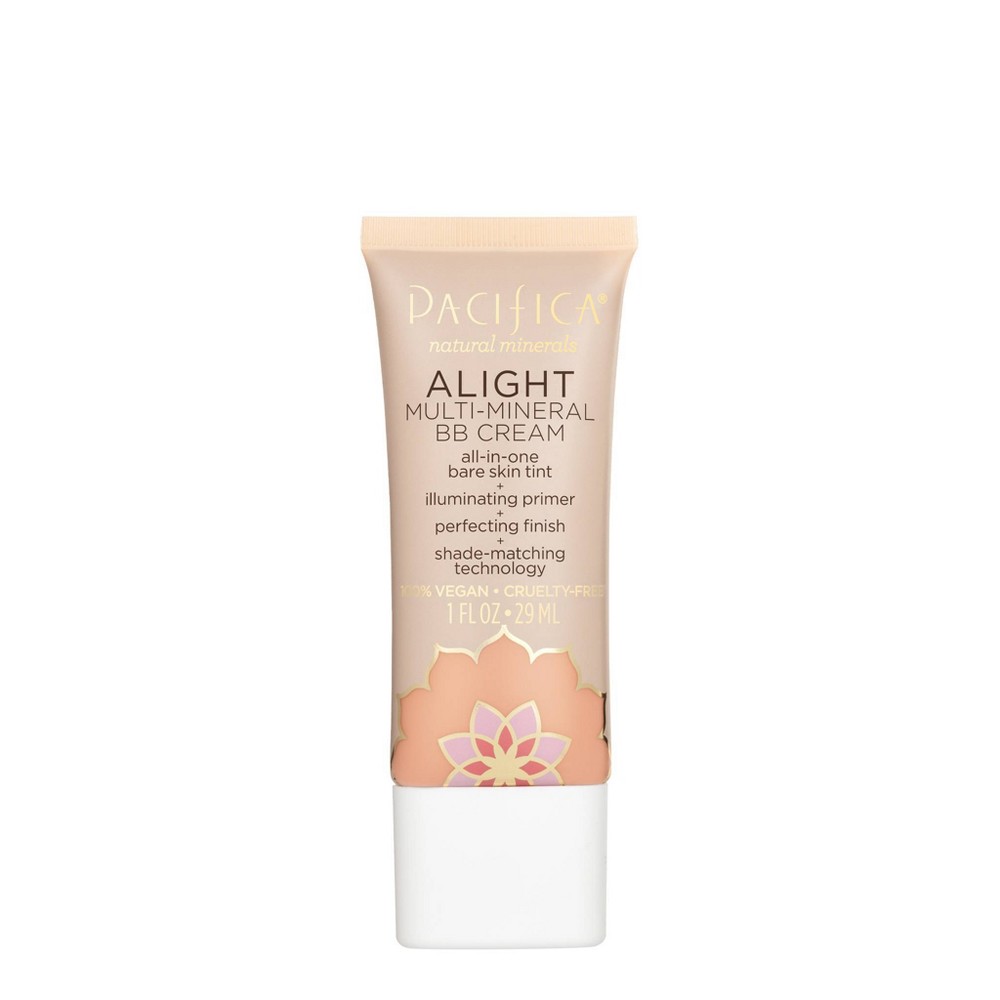
Pacifica Alight Multi-Mineral BB Cream - Shade 2 - 1 fl oz: Paraben-Free, Contains Hyaluronic Acid, Vegan
Analysis updated July 2026 · How Scout scores
At a glance
Summary
This BB cream features a range of beneficial ingredients such as jojoba esters, hyaluronic acid, and various plant extracts that provide hydration and nourishment to the skin. The presence of natural fragrance, however, can be a potential irritant for sensitive skin, which slightly impacts the overall safety profile. Despite being processed, the product maintains a relatively clean ingredient list with minimal synthetic additives.
Key ingredients 26
Simmondsia Chinensis (Jojoba) EstersVery Good
Jojoba esters are derived from jojoba oil and are known for their moisturizing properties. They mimic the skin's natural oils, making them excellent for hydration. They are non-comedogenic and suitable for all skin types.
Risks
There are minimal risks associated with jojoba esters.
Benefits
They help to balance oil production and provide long-lasting moisture.
Carthamus Tinctorius (Safflower) Seed OilVery Good
Safflower Seed Oil is rich in linoleic acid, which helps to maintain the skin's barrier function. It is an excellent moisturizer and is non-comedogenic. It is suitable for all skin types.
Risks
There are minimal risks associated with safflower seed oil.
Benefits
It provides deep hydration and supports skin barrier health.
Camellia Sinensis (White Tea) ExtractVery Good
White Tea Extract is rich in antioxidants and helps to protect the skin from oxidative stress. It has anti-aging properties and is suitable for all skin types. It is considered safe for topical use.
Risks
There are minimal risks associated with white tea extract.
Benefits
It provides antioxidant protection and helps to maintain youthful skin.
Aloe Barbadensis Leaf JuiceVery Good
Aloe Vera is known for its soothing and hydrating properties. It helps to calm irritated skin and provides moisture. It is suitable for all skin types and is non-irritating.
Risks
There are minimal risks associated with aloe vera.
Benefits
It soothes and hydrates the skin, promoting healing.
Caprylic/Capric TriglycerideGood
Caprylic/Capric Triglyceride is derived from coconut oil and glycerin, and is used as an emollient. It helps to smooth and soften the skin. It is well-tolerated by most skin types and is non-greasy.
Risks
Rarely, it may cause irritation in sensitive individuals.
Benefits
It provides a lightweight, non-greasy barrier that helps to retain moisture in the skin.
Glycerin (Vegetable)Good
Glycerin is a humectant that attracts moisture to the skin, helping to keep it hydrated. It is derived from vegetable oils and is safe for most skin types. It enhances the skin's natural barrier function.
Risks
In rare cases, it may cause irritation if used in high concentrations.
Benefits
It improves skin hydration and resilience.
Cetearyl OlivateGood
Cetearyl Olivate is an emulsifier derived from olive oil, used to blend water and oil components. It is gentle on the skin and helps to improve texture. It is considered safe and non-irritating.
Risks
There are minimal risks associated with this ingredient.
Benefits
It helps to maintain skin hydration and improve product spreadability.
MicaGood
Beneficial ingredient — whole-food or functional value in this product class.
Risks
Inhalation of mica particles can be a concern in loose powder forms.
Benefits
It provides a natural shimmer and enhances the appearance of the skin.
Iris Pallida (Sweet Iris) Leaf Cell ExtractGood
Sweet Iris Leaf Cell Extract is known for its anti-aging properties. It helps to improve skin elasticity and reduce the appearance of wrinkles. It is considered safe for topical use.
Risks
There are minimal risks associated with this botanical extract.
Benefits
It supports skin firmness and smoothness.
Rosa Damascena (Damascus Rose) Leaf Cell ExtractGood
Damascus Rose Leaf Cell Extract is valued for its soothing and anti-inflammatory properties. It helps to calm irritated skin and reduce redness. It is safe for most skin types.
Risks
Rarely, it may cause allergic reactions in sensitive individuals.
Benefits
It provides antioxidant protection and enhances skin radiance.
Cocos Nucifera (Coconut) WaterGood
Coconut Water is hydrating and rich in nutrients. It helps to refresh and moisturize the skin. It is suitable for all skin types and is non-irritating.
Risks
There are minimal risks associated with coconut water in cosmetics.
Benefits
It provides hydration and essential nutrients to the skin.
Laminaria Hyperborea (Kelp) Extract BlendGood
Kelp Extract is rich in minerals and antioxidants, providing nourishment to the skin. It helps to improve skin texture and hydration. It is considered safe for topical use.
Risks
There are minimal risks associated with kelp extract.
Benefits
It supports skin health and provides antioxidant protection.
Hyaluronic AcidGood
Hyaluronic Acid is a powerful humectant that attracts and retains moisture in the skin. It helps to plump and hydrate the skin, reducing the appearance of fine lines. It is suitable for all skin types and is non-irritating.
Risks
There are minimal risks associated with hyaluronic acid.
Benefits
It provides intense hydration and improves skin elasticity.
Withania Somnifera Root (Ginseng) ExtractGood
Ginseng Extract is known for its revitalizing and anti-aging properties. It helps to improve skin tone and reduce signs of fatigue. It is safe for most skin types.
Risks
There are minimal risks associated with ginseng extract.
Benefits
It enhances skin vitality and radiance.
Iron OxidesGood
Beneficial ingredient — whole-food or functional value in this product class.
Risks
There are minimal risks associated with iron oxides.
Benefits
They provide natural color and are suitable for sensitive skin.
Punica Granatum (Pomegranate) ExtractGood
Pomegranate Extract is rich in antioxidants and helps to protect the skin from environmental damage. It has anti-inflammatory properties and is suitable for most skin types. It is considered safe for topical use.
Risks
There are minimal risks associated with pomegranate extract.
Benefits
It provides antioxidant protection and supports skin health.
AquaNeutral
Aqua, or water, is a common solvent used in cosmetics to dissolve other ingredients. It is essential for the formulation but does not provide direct skin benefits. It is generally considered safe and non-irritating.
Risks
There are no significant risks associated with water in cosmetics.
Benefits
Water helps to hydrate the skin by providing moisture.
Sorbitan SesquioleateNeutral
Sorbitan Sesquioleate is an emulsifier that helps to stabilize formulations. It is derived from sorbitol and oleic acid. It is generally considered safe for use in cosmetics.
Risks
It may cause irritation in sensitive skin types.
Benefits
It helps to maintain the consistency and stability of the product.
Potassium Cetyl PhosphateNeutral
Potassium Cetyl Phosphate is an emulsifier that helps to stabilize formulations. It is derived from fatty acids and is considered safe for use in cosmetics. It does not provide direct skin benefits.
Risks
There are minimal risks associated with this ingredient.
Benefits
It helps to maintain the consistency and stability of the product.
HydroxyethylcelluloseNeutral
Hydroxyethylcellulose is a thickening agent used to improve the texture of cosmetic products. It is derived from cellulose and is considered safe for use. It does not provide direct skin benefits.
Risks
There are minimal risks associated with this ingredient.
Benefits
It helps to improve the texture and application of the product.
Titanium DioxideNeutral
Titanium Dioxide is a mineral used as a pigment and sunscreen agent in cosmetics. It provides UV protection and is considered safe for topical use. It is non-irritating and suitable for sensitive skin.
Risks
Inhalation of titanium dioxide particles can be a concern in powder forms.
Benefits
It provides broad-spectrum UV protection and enhances product opacity.
Sodium DehydroacetateNeutral
Sodium Dehydroacetate is a preservative used to inhibit microbial growth in cosmetics. It is considered safe for use in low concentrations. It does not provide direct skin benefits.
Risks
There are minimal risks associated with this preservative.
Benefits
It helps to maintain product safety and stability.
Citric AcidNeutral
Citric Acid is used to adjust the pH of cosmetic formulations. It is derived from citrus fruits and is considered safe for use. It does not provide direct skin benefits.
Risks
In high concentrations, it may cause irritation.
Benefits
It helps to maintain the stability and effectiveness of the product.
Potassium SorbateBad
Synthetic preservative — flagged in daily-use products.
Risks
In rare cases, it may cause irritation in sensitive individuals.
Benefits
It helps to extend the shelf life of the product by preventing spoilage.
Sodium BenzoateBad
Synthetic preservative that can form benzene in the presence of vitamin C.
Risks
In rare cases, it may cause irritation in sensitive individuals.
Benefits
It helps to extend the shelf life of the product by preventing spoilage.
Parfum (Natural)Bad
Fragrance, even when labeled as natural, can cause irritation and allergic reactions in sensitive individuals. It is often a mixture of various aromatic compounds. It does not provide direct skin benefits.
Risks
It may cause skin irritation or allergic reactions.
Benefits
It provides a pleasant scent to the product.
Processing
Processed Foods
Get the full breakdown in the Scout appTake Scout shopping
Scan any product to see lab results, healthy alternatives, and your personalized analysis.
Download on theApp Store GET IT ONGoogle Play