
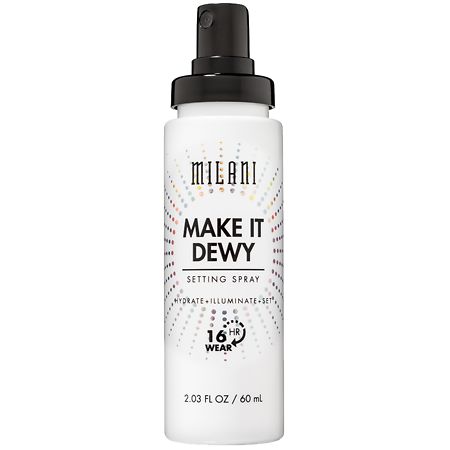
Milani Make It Last Dewy Finish Setting Spray - 2.03 fl oz: Aluminum-Free, Paraben-Free, For Normal Skin
Analysis updated August 2026 · How Scout scores
At a glance
Summary
This setting spray contains mostly safe ingredients, with water and silicones providing a smooth application. However, the presence of phenoxyethanol, a preservative that can cause irritation, slightly lowers its safety profile. The product is processed, which limits its maximum potential score, but it remains free from major harmful chemicals like parabens and aluminum.
Key ingredients 8
WATER / AQUA / EAUNeutral
Water is a common solvent used in cosmetics to dissolve other ingredients. It is generally considered safe and non-reactive. It does not provide any direct benefits or risks.
Risks
There are no significant risks associated with water in cosmetics.
Benefits
Water helps in dissolving other ingredients and provides a base for the formulation.
CYCLOPENTASILOXANENeutral
Cyclopentasiloxane is a silicone used to provide a smooth application and silky feel. It is generally considered safe for use in cosmetics. However, it does not offer any direct skin benefits.
Risks
There are concerns about environmental persistence and bioaccumulation.
Benefits
It helps in providing a smooth texture and enhances the spreadability of the product.
BUTYLENE GLYCOLNeutral
Butylene glycol is a common humectant that helps to retain moisture in the skin. It is generally considered safe for use in cosmetics. It does not have significant risks or benefits.
Risks
In rare cases, it may cause irritation in sensitive skin.
Benefits
It helps in maintaining skin hydration by attracting moisture.
METHYL TRIMETHICONENeutral
Methyl trimethicone is a silicone used to improve the texture and spreadability of cosmetic products. It is considered safe for use in cosmetics. It does not provide direct skin benefits.
Risks
There are minimal risks associated with its use in cosmetics.
Benefits
It enhances the product's texture and application.
PENTYLENE GLYCOLNeutral
Pentylene glycol is used as a humectant and solvent in cosmetics. It is generally considered safe and effective for maintaining moisture. It does not have significant risks or benefits.
Risks
It may cause mild irritation in sensitive individuals.
Benefits
It helps in retaining moisture and improving the product's texture.
SODIUM CHLORIDENeutral
Sodium chloride is used as a thickening agent in cosmetics. It is generally considered safe and non-reactive. It does not provide direct skin benefits.
Risks
There are no significant risks associated with sodium chloride in cosmetics.
Benefits
It helps in adjusting the viscosity of the product.
CAFFEINENeutral
Caffeine is used in cosmetics for its potential antioxidant properties and ability to reduce puffiness. It is generally considered safe for topical use. It does not have significant risks.
Risks
There are minimal risks associated with caffeine in cosmetics.
Benefits
It may help in reducing puffiness and providing antioxidant benefits.
PHENOXYETHANOLBad
Phenoxyethanol is a preservative used to prevent microbial growth in cosmetics. It is considered safe in low concentrations but can cause irritation. It is not beneficial for the skin.
Risks
It may cause skin irritation and allergic reactions in some individuals.
Benefits
It helps in preserving the product by preventing microbial contamination.
Processing
Processed Foods
Get the full breakdown in the Scout appTake Scout shopping
Scan any product to see lab results, healthy alternatives, and your personalized analysis.
Download on theApp Store GET IT ONGoogle PlayAmazon pricing & content
Amazon price as of . Product prices and availability are accurate as of the date/time indicated and are subject to change. Any price and availability information displayed on Amazon.com at the time of purchase will apply to the purchase of this product.
CERTAIN CONTENT THAT APPEARS ON THIS SITE COMES FROM AMAZON. THIS CONTENT IS PROVIDED “AS IS” AND IS SUBJECT TO CHANGE OR REMOVAL AT ANY TIME.