
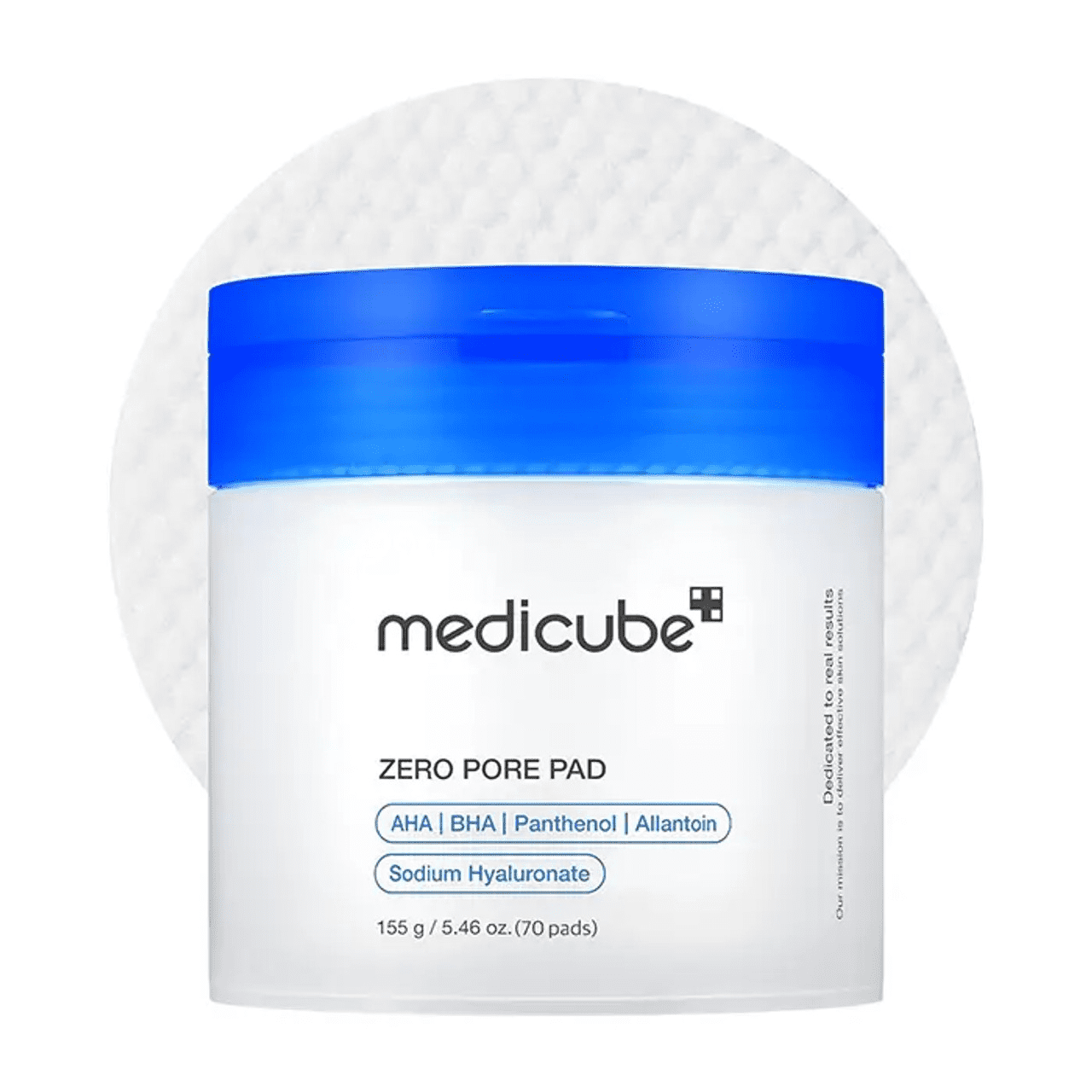
Medicube - Zero Pore Pad 2.0 70pcs (155g)
Analysis updated August 2026 · How Scout scores
At a glance
Summary
This product contains beneficial ingredients like lactic acid, panthenol, and salicylic acid, which are known for their exfoliating and moisturizing properties. However, the presence of denatured alcohol, which can be drying and irritating to the skin, lowers its overall safety profile. The formulation includes a mix of natural extracts and synthetic compounds, resulting in a moderate processing level.
Key ingredients 45
PanthenolVery Good
Panthenol is a form of Vitamin B5 used for its moisturizing and soothing properties. It helps to improve skin hydration and reduce inflammation. It is beneficial for maintaining healthy skin.
Risks
Rarely causes irritation.
Benefits
Enhances skin hydration and soothes irritation.
Salicylic AcidVery Good
Salicylic Acid is a beta hydroxy acid (BHA) known for its exfoliating and anti-inflammatory properties. It helps to unclog pores and reduce acne. It is beneficial for oily and acne-prone skin.
Risks
Can cause dryness or irritation, especially in sensitive skin.
Benefits
Reduces acne and improves skin clarity.
Centella Asiatica ExtractVery Good
Centella Asiatica Extract is known for its soothing and healing properties. It helps to calm irritated skin and promote wound healing. It is beneficial for sensitive and damaged skin.
Risks
Rarely causes irritation.
Benefits
Soothes and heals irritated skin.
BetaineGood
Betaine is a natural amino acid derivative used for its moisturizing properties. It helps to maintain skin hydration and improve texture. It is beneficial for all skin types.
Risks
Rarely causes irritation.
Benefits
Enhances skin hydration and smoothness.
GlycerinGood
Glycerin is a well-known humectant used for its moisturizing properties. It helps to draw moisture into the skin and improve hydration. It is beneficial for maintaining skin moisture balance.
Risks
Rarely causes irritation.
Benefits
Enhances skin hydration and moisture retention.
AllantoinGood
Allantoin is used for its soothing and skin-protecting properties. It helps to calm irritated skin and promote healing. It is beneficial for sensitive and irritated skin.
Risks
Rarely causes irritation.
Benefits
Soothes and protects irritated skin.
Sodium HyaluronateGood
Sodium Hyaluronate is a form of hyaluronic acid known for its excellent moisturizing properties. It helps to retain moisture in the skin and improve elasticity. It is beneficial for maintaining skin hydration and plumpness.
Risks
Rarely causes irritation.
Benefits
Enhances skin hydration and elasticity.
Betaine SalicylateGood
Betaine Salicylate is a combination of betaine and salicylic acid used for its exfoliating and moisturizing properties. It helps to unclog pores and improve skin texture. It is beneficial for oily and acne-prone skin.
Risks
Can cause irritation in sensitive skin.
Benefits
Exfoliates and moisturizes the skin.
Vitis Vinifera (Grape) Fruit ExtractGood
Grape Fruit Extract is used for its antioxidant properties. It helps to protect the skin from oxidative stress and environmental damage. It is beneficial for maintaining healthy skin.
Risks
Rarely causes irritation.
Benefits
Provides antioxidant protection and supports skin health.
Pyrus Malus (Apple) Fruit ExtractGood
Apple Fruit Extract is used for its antioxidant and moisturizing properties. It helps to protect the skin from oxidative stress and improve hydration. It is beneficial for maintaining healthy and hydrated skin.
Risks
Rarely causes irritation.
Benefits
Provides antioxidant protection and enhances skin hydration.
Salix Alba (Willow) Bark ExtractGood
Willow Bark Extract is used for its exfoliating and anti-inflammatory properties. It helps to unclog pores and reduce acne. It is beneficial for oily and acne-prone skin.
Risks
Can cause irritation in sensitive skin.
Benefits
Exfoliates and reduces acne.
Lactobacillus/Soybean Ferment ExtractGood
This ferment extract is used for its moisturizing and skin-conditioning properties. It helps to improve skin texture and hydration. It is beneficial for maintaining healthy and balanced skin.
Risks
Rarely causes irritation.
Benefits
Enhances skin hydration and texture.
Scutellaria Baicalensis Root ExtractGood
Scutellaria Baicalensis Root Extract is used for its antioxidant and anti-inflammatory properties. It helps to protect the skin from oxidative stress and reduce inflammation. It is beneficial for maintaining healthy and calm skin.
Risks
Rarely causes irritation.
Benefits
Provides antioxidant protection and reduces inflammation.
Portulaca Oleracea ExtractGood
Portulaca Oleracea Extract is used for its soothing and antioxidant properties. It helps to calm irritated skin and protect against oxidative stress. It is beneficial for sensitive and irritated skin.
Risks
Rarely causes irritation.
Benefits
Soothes and protects irritated skin.
Oenothera Biennis (Evening Primrose) Flower ExtractGood
Evening Primrose Flower Extract is used for its moisturizing and soothing properties. It helps to improve skin hydration and calm irritation. It is beneficial for maintaining healthy and balanced skin.
Risks
Rarely causes irritation.
Benefits
Enhances skin hydration and soothes irritation.
WaterNeutral
Water is a common solvent used in cosmetics to dissolve other ingredients. It is essential for the formulation but does not provide direct benefits or risks. It acts as a carrier for other active ingredients.
Risks
There are no significant risks associated with water in cosmetics.
Benefits
Water helps in the application and absorption of other ingredients.
MethylpropanediolNeutral
Methylpropanediol is used as a solvent and penetration enhancer in cosmetics. It helps other ingredients to penetrate the skin more effectively. It is generally considered safe for use in cosmetics.
Risks
Potential skin irritation in sensitive individuals.
Benefits
Improves the efficacy of active ingredients by enhancing their penetration.
TromethamineNeutral
Tromethamine is used to adjust the pH of cosmetic formulations. It ensures the product remains stable and effective. It is generally safe for use in cosmetics.
Risks
May cause irritation if used in high concentrations.
Benefits
Helps maintain the stability and effectiveness of the product.
Lactic AcidNeutral
Standard formulation ingredient — neither beneficial nor harmful at typical use.
Risks
Can cause irritation or sensitivity, especially in high concentrations.
Benefits
Improves skin texture and promotes cell turnover.
1, 2-HexanediolNeutral
1, 2-Hexanediol is used as a solvent and preservative in cosmetics. It helps to stabilize the formulation and prevent microbial growth. It is generally considered safe for use in cosmetics.
Risks
Minimal risk of irritation.
Benefits
Stabilizes the formulation and extends shelf life.
Glycereth-26Neutral
Glycereth-26 is used as a humectant and emollient in cosmetics. It helps to retain moisture in the skin and improve texture. It is generally considered safe for use in cosmetics.
Risks
Low risk of irritation.
Benefits
Improves skin hydration and texture.
Ammonium Acryloyldimethyltaurate/VP CopolymerNeutral
This copolymer is used as a thickening agent in cosmetics. It helps to stabilize emulsions and improve product texture. It is generally considered safe for use in cosmetics.
Risks
Minimal risk of irritation.
Benefits
Improves product texture and stability.
TrehaloseNeutral
Trehalose is a sugar used for its moisturizing and antioxidant properties. It helps to protect the skin from dehydration and oxidative stress. It is generally considered safe for use in cosmetics.
Risks
Low risk of irritation.
Benefits
Protects skin from dehydration and oxidative damage.
Polyglyceryl-10 LaurateNeutral
Polyglyceryl-10 Laurate is used as an emulsifier in cosmetics. It helps to blend oil and water-based ingredients. It is generally considered safe for use in cosmetics.
Risks
Minimal risk of irritation.
Benefits
Improves product consistency and stability.
EthylhexylglycerinNeutral
Ethylhexylglycerin is used as a preservative and skin conditioning agent. It helps to enhance the efficacy of other preservatives. It is generally considered safe for use in cosmetics.
Risks
Low risk of irritation.
Benefits
Enhances preservation and skin conditioning.
Polyglyceryl-10 MyristateNeutral
Polyglyceryl-10 Myristate is used as an emulsifier in cosmetics. It helps to blend oil and water-based ingredients. It is generally considered safe for use in cosmetics.
Risks
Minimal risk of irritation.
Benefits
Improves product consistency and stability.
Butylene GlycolNeutral
Butylene Glycol is used as a solvent and humectant in cosmetics. It helps to improve product texture and enhance moisture retention. It is generally considered safe for use in cosmetics.
Risks
Low risk of irritation.
Benefits
Improves product texture and skin hydration.
Citrus Aurantium Dulcis (Orange) Peel OilNeutral
Orange Peel Oil is used for its fragrance and potential antioxidant properties. It adds a pleasant scent to the product. It is generally considered safe for use in cosmetics.
Risks
May cause photosensitivity or irritation in some individuals.
Benefits
Provides a natural fragrance and potential antioxidant benefits.
Citrus Limon (Lemon) Peel OilNeutral
Lemon Peel Oil is used for its fragrance and potential antioxidant properties. It adds a refreshing scent to the product. It is generally considered safe for use in cosmetics.
Risks
May cause photosensitivity or irritation in some individuals.
Benefits
Provides a natural fragrance and potential antioxidant benefits.
Citrus Grandis (Grapefruit) Peel OilNeutral
Grapefruit Peel Oil is used for its fragrance and potential antioxidant properties. It adds a citrus scent to the product. It is generally considered safe for use in cosmetics.
Risks
May cause photosensitivity or irritation in some individuals.
Benefits
Provides a natural fragrance and potential antioxidant benefits.
Citrus Aurantium Bergamia (Bergamot) Fruit OilNeutral
Bergamot Fruit Oil is used for its fragrance and potential antioxidant properties. It adds a pleasant scent to the product. It is generally considered safe for use in cosmetics.
Risks
May cause photosensitivity or irritation in some individuals.
Benefits
Provides a natural fragrance and potential antioxidant benefits.
Rosmarinus Officinalis (Rosemary) Leaf OilNeutral
Rosemary Leaf Oil is used for its fragrance and potential antioxidant properties. It adds a herbal scent to the product. It is generally considered safe for use in cosmetics.
Risks
May cause irritation in sensitive individuals.
Benefits
Provides a natural fragrance and potential antioxidant benefits.
Eucalyptus Globulus Leaf OilNeutral
Eucalyptus Leaf Oil is used for its fragrance and potential antimicrobial properties. It adds a refreshing scent to the product. It is generally considered safe for use in cosmetics.
Risks
May cause irritation in sensitive individuals.
Benefits
Provides a natural fragrance and potential antimicrobial benefits.
Lavandula Angustifolia (Lavender) OilNeutral
Lavender Oil is used for its fragrance and potential calming properties. It adds a soothing scent to the product. It is generally considered safe for use in cosmetics.
Risks
May cause irritation in sensitive individuals.
Benefits
Provides a natural fragrance and potential calming benefits.
Citrus Aurantifolia (Lime) Fruit ExtractNeutral
Lime Fruit Extract is used for its fragrance and potential antioxidant properties. It adds a citrus scent to the product. It is generally considered safe for use in cosmetics.
Risks
May cause photosensitivity or irritation in some individuals.
Benefits
Provides a natural fragrance and potential antioxidant benefits.
Citrus Limon (Lemon) Fruit ExtractNeutral
Lemon Fruit Extract is used for its fragrance and potential antioxidant properties. It adds a refreshing scent to the product. It is generally considered safe for use in cosmetics.
Risks
May cause photosensitivity or irritation in some individuals.
Benefits
Provides a natural fragrance and potential antioxidant benefits.
Origanum Vulgare Leaf ExtractNeutral
Oregano Leaf Extract is used for its antimicrobial and antioxidant properties. It helps to protect the skin from microbial growth and oxidative stress. It is generally considered safe for use in cosmetics.
Risks
May cause irritation in sensitive individuals.
Benefits
Provides antimicrobial and antioxidant protection.
Chamaecyparis Obtusa Leaf ExtractNeutral
Chamaecyparis Obtusa Leaf Extract is used for its antimicrobial and soothing properties. It helps to calm irritated skin and protect against microbial growth. It is generally considered safe for use in cosmetics.
Risks
Rarely causes irritation.
Benefits
Soothes skin and provides antimicrobial protection.
Cinnamomum Cassia Bark ExtractNeutral
Cinnamon Bark Extract is used for its antimicrobial and antioxidant properties. It helps to protect the skin from microbial growth and oxidative stress. It is generally considered safe for use in cosmetics.
Risks
May cause irritation in sensitive individuals.
Benefits
Provides antimicrobial and antioxidant protection.
Pinus Palustris Leaf ExtractNeutral
Pine Leaf Extract is used for its antioxidant and antimicrobial properties. It helps to protect the skin from oxidative stress and microbial growth. It is generally considered safe for use in cosmetics.
Risks
May cause irritation in sensitive individuals.
Benefits
Provides antioxidant and antimicrobial protection.
Ulmus Davidiana Root ExtractNeutral
Ulmus Davidiana Root Extract is used for its soothing and moisturizing properties. It helps to calm irritated skin and improve hydration. It is generally considered safe for use in cosmetics.
Risks
Rarely causes irritation.
Benefits
Soothes and moisturizes the skin.
Pueraria Lobata Root ExtractNeutral
Pueraria Lobata Root Extract is used for its antioxidant and skin-conditioning properties. It helps to protect the skin from oxidative stress and improve texture. It is generally considered safe for use in cosmetics.
Risks
Rarely causes irritation.
Benefits
Provides antioxidant protection and enhances skin texture.
Disodium EDTABad
Processed additive flagged under Scout's ingredient doctrine.
Risks
Low risk of irritation.
Benefits
Stabilizes formulations and enhances product longevity.
LimoneneBad
Processed additive flagged under Scout's ingredient doctrine.
Risks
May cause irritation or sensitization in some individuals.
Benefits
Provides a natural citrus fragrance.
Alcohol Denat.Very Bad
Alcohol Denat. is used as a solvent and astringent in cosmetics. It can be drying and irritating to the skin, especially in high concentrations. It is often used to enhance the penetration of other ingredients.
Risks
Can cause dryness and irritation, particularly for sensitive skin.
Benefits
Acts as a solvent and can enhance the penetration of active ingredients.
Get the full breakdown in the Scout appTake Scout shopping
Scan any product to see lab results, healthy alternatives, and your personalized analysis.
Download on theApp Store GET IT ONGoogle PlayAmazon pricing & content
Amazon price as of . Product prices and availability are accurate as of the date/time indicated and are subject to change. Any price and availability information displayed on Amazon.com at the time of purchase will apply to the purchase of this product.
CERTAIN CONTENT THAT APPEARS ON THIS SITE COMES FROM AMAZON. THIS CONTENT IS PROVIDED “AS IS” AND IS SUBJECT TO CHANGE OR REMOVAL AT ANY TIME.