
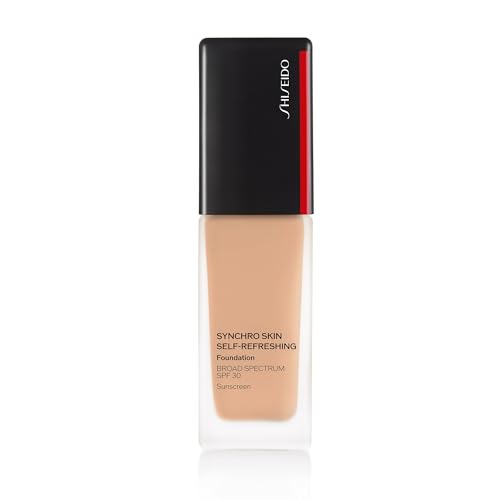


Shiseido Synchro Skin Self-Refreshing Foundation, 1.0 oz
Summary
This foundation contains a mix of safe and concerning ingredients. While it includes beneficial components like hyaluronic acid, it also contains synthetic fragrance, which can be irritating and is a common allergen. The presence of synthetic preservatives and emulsifiers contributes to its processed nature, impacting its overall safety profile.
At a glance
Key ingredients 36
Octinoxate
Octinoxate is a chemical sunscreen agent that absorbs UVB rays, protecting the skin from sun damage. It is commonly used in cosmetic products for its effectiveness in preventing sunburn. However, it can be a potential endocrine disruptor.
Risks
There are concerns about its potential to disrupt hormones and its environmental impact on aquatic life.
Benefits
It provides effective protection against UVB rays, helping to prevent sunburn and skin damage.
Titanium Dioxide
Titanium Dioxide is a mineral sunscreen agent that provides broad-spectrum UV protection. It is often used in cosmetics for its ability to reflect and scatter UV radiation. It is considered safe and effective for sun protection.
Risks
Inhalation of its nanoparticles can be a concern, but it is generally safe when used in creams and lotions.
Benefits
It offers broad-spectrum protection against UV rays and is gentle on the skin, making it suitable for sensitive skin types.
Dimethicone
Dimethicone is a silicone-based polymer used in cosmetics for its smoothing and moisturizing properties. It forms a barrier on the skin, preventing moisture loss and improving texture. It is non-comedogenic and widely used in skincare products.
Risks
While generally safe, it can sometimes cause irritation or allergic reactions in sensitive individuals.
Benefits
It helps to smooth and hydrate the skin, improving the appearance of fine lines and creating a silky texture.
Water
Water is a universal solvent used in cosmetics as a base for formulations. It helps to dissolve other ingredients and provides hydration to the skin. It is essential for the consistency and application of many cosmetic products.
Risks
There are no significant risks associated with water in cosmetics.
Benefits
It hydrates the skin and helps to deliver other active ingredients effectively.
Glycerin
Glycerin is a humectant that attracts moisture to the skin, keeping it hydrated. It is commonly used in skincare products for its ability to improve skin barrier function. It is safe and effective for all skin types.
Risks
There are minimal risks associated with glycerin, though it can sometimes cause irritation in very sensitive skin.
Benefits
It helps to maintain skin hydration and improve the skin's natural barrier, making it softer and smoother.
Trifluoropropyldimethyl/Trimethylsiloxysilicate
This ingredient is a silicone-based compound used for its film-forming properties in cosmetics. It helps to provide long-lasting wear and water resistance in makeup products. It is generally considered safe for use in cosmetics.
Risks
There are minimal risks, though it can cause irritation in sensitive skin types.
Benefits
It enhances the longevity and water resistance of makeup, providing a smooth finish.
PEG-10 Dimethicone
PEG-10 Dimethicone is a silicone-based polymer used as an emulsifier and conditioning agent in cosmetics. It helps to improve the texture and spreadability of products. It is generally considered safe for use in cosmetics.
Risks
There is a potential risk of contamination with ethylene oxide and 1,4-dioxane during manufacturing.
Benefits
It enhances the texture and application of cosmetic products, providing a smooth and even finish.
Butylene Glycol
Butylene Glycol is a common solvent and conditioning agent in cosmetics. It helps to improve the texture and spreadability of products. It is generally considered safe for use in cosmetics.
Risks
It can cause irritation in sensitive skin types, though it is generally well-tolerated.
Benefits
It enhances the texture and application of cosmetic products, providing a smooth and even finish.
Phenyl Trimethicone
Phenyl Trimethicone is a silicone-based compound used for its conditioning and smoothing properties in cosmetics. It helps to improve the texture and spreadability of products. It is generally considered safe for use in cosmetics.
Risks
There are minimal risks, though it can cause irritation in sensitive skin types.
Benefits
It enhances the texture and application of cosmetic products, providing a smooth and even finish.
Dimethicone Crosspolymer
Dimethicone Crosspolymer is a silicone-based compound used for its thickening and stabilizing properties in cosmetics. It helps to improve the texture and spreadability of products. It is generally considered safe for use in cosmetics.
Risks
There are minimal risks, though it can cause irritation in sensitive skin types.
Benefits
It enhances the texture and application of cosmetic products, providing a smooth and even finish.
Bis-Butyldimethicone Polyglyceryl-3
This ingredient is a silicone-based compound used for its emulsifying and conditioning properties in cosmetics. It helps to improve the texture and spreadability of products. It is generally considered safe for use in cosmetics.
Risks
There are minimal risks, though it can cause irritation in sensitive skin types.
Benefits
It enhances the texture and application of cosmetic products, providing a smooth and even finish.
Sorbitan Sesquiisostearate
Sorbitan Sesquiisostearate is an emulsifier used in cosmetics to stabilize formulations. It helps to blend oil and water-based ingredients. It is generally considered safe for use in cosmetics.
Risks
There are minimal risks, though it can cause irritation in sensitive skin types.
Benefits
It helps to stabilize cosmetic formulations, ensuring a consistent texture and application.
Isopropyl Myristate
Isopropyl Myristate is an emollient used in cosmetics to enhance the absorption of active ingredients. It helps to improve the texture and spreadability of products. It is generally considered safe for use in cosmetics.
Risks
It can cause irritation or acne in sensitive or acne-prone skin types.
Benefits
It enhances the absorption of active ingredients and improves the texture of cosmetic products.
Dimethicone/Vinyl Dimethicone Crosspolymer
This ingredient is a silicone-based compound used for its thickening and stabilizing properties in cosmetics. It helps to improve the texture and spreadability of products. It is generally considered safe for use in cosmetics.
Risks
There are minimal risks, though it can cause irritation in sensitive skin types.
Benefits
It enhances the texture and application of cosmetic products, providing a smooth and even finish.
Nacre Powder
Nacre Powder, also known as mother-of-pearl, is used in cosmetics for its light-reflecting properties. It helps to create a luminous and radiant finish in makeup products. It is generally considered safe for use in cosmetics.
Risks
There are minimal risks associated with nacre powder.
Benefits
It provides a luminous and radiant finish, enhancing the appearance of the skin.
Magnesium Aluminometasilicate
Magnesium Aluminometasilicate is a mineral used in cosmetics as a thickening agent and absorbent. It helps to improve the texture and stability of products. It is generally considered safe for use in cosmetics.
Risks
There are minimal risks associated with this ingredient.
Benefits
It enhances the texture and stability of cosmetic products, ensuring a consistent application.
Polyquaternium-51
Polyquaternium-51 is a conditioning agent used in cosmetics for its moisturizing properties. It helps to improve the texture and hydration of the skin. It is generally considered safe for use in cosmetics.
Risks
There are minimal risks associated with this ingredient.
Benefits
It provides moisturizing benefits, improving the hydration and texture of the skin.
Thymus Serpyllum Extract
Thymus Serpyllum Extract, also known as wild thyme extract, is used in cosmetics for its antioxidant and antimicrobial properties. It helps to protect the skin from environmental damage and improve skin health. It is generally considered safe for use in cosmetics.
Risks
There are minimal risks associated with this ingredient.
Benefits
It provides antioxidant and antimicrobial benefits, protecting the skin from environmental damage.
Sodium Acetylated Hyaluronate
Sodium Acetylated Hyaluronate is a derivative of hyaluronic acid used in cosmetics for its moisturizing properties. It helps to improve skin hydration and elasticity. It is generally considered safe for use in cosmetics.
Risks
There are minimal risks associated with this ingredient.
Benefits
It provides excellent moisturizing benefits, improving skin hydration and elasticity.
Aluminum Hydroxide
Aluminum Hydroxide is used in cosmetics as a thickening agent and opacifier. It helps to improve the texture and opacity of products. It is generally considered safe for use in cosmetics.
Risks
There are minimal risks associated with this ingredient.
Benefits
It enhances the texture and opacity of cosmetic products, ensuring a consistent application.
Stearic Acid
Stearic Acid is a fatty acid used in cosmetics as an emulsifier and thickening agent. It helps to stabilize formulations and improve texture. It is generally considered safe for use in cosmetics.
Risks
There are minimal risks associated with this ingredient.
Benefits
It helps to stabilize cosmetic formulations, ensuring a consistent texture and application.
Cyclopentasiloxane
Cyclopentasiloxane is a silicone-based compound used in cosmetics for its smoothing and conditioning properties. It helps to improve the texture and spreadability of products. It is generally considered safe for use in cosmetics.
Risks
There are minimal risks, though it can cause irritation in sensitive skin types.
Benefits
It enhances the texture and application of cosmetic products, providing a smooth and even finish.
Disteardimonium Hectorite
Disteardimonium Hectorite is a clay-derived thickening agent used in cosmetics. It helps to improve the texture and stability of products. It is generally considered safe for use in cosmetics.
Risks
There are minimal risks associated with this ingredient.
Benefits
It enhances the texture and stability of cosmetic products, ensuring a consistent application.
Polymethylsilsesquioxane
Polymethylsilsesquioxane is a silicone-based compound used in cosmetics for its film-forming and smoothing properties. It helps to improve the texture and longevity of products. It is generally considered safe for use in cosmetics.
Risks
There are minimal risks, though it can cause irritation in sensitive skin types.
Benefits
It enhances the texture and longevity of cosmetic products, providing a smooth and even finish.
Polysilicone-2
Polysilicone-2 is a silicone-based compound used in cosmetics for its film-forming and smoothing properties. It helps to improve the texture and longevity of products. It is generally considered safe for use in cosmetics.
Risks
There are minimal risks, though it can cause irritation in sensitive skin types.
Benefits
It enhances the texture and longevity of cosmetic products, providing a smooth and even finish.
Trimethylsiloxysilylcarbamoyl Pullulan
This ingredient is a silicone-based compound used in cosmetics for its film-forming and smoothing properties. It helps to improve the texture and longevity of products. It is generally considered safe for use in cosmetics.
Risks
There are minimal risks, though it can cause irritation in sensitive skin types.
Benefits
It enhances the texture and longevity of cosmetic products, providing a smooth and even finish.
Lithium Magnesium Sodium Silicate
Lithium Magnesium Sodium Silicate is a mineral used in cosmetics as a thickening agent and absorbent. It helps to improve the texture and stability of products. It is generally considered safe for use in cosmetics.
Risks
There are minimal risks associated with this ingredient.
Benefits
It enhances the texture and stability of cosmetic products, ensuring a consistent application.
PEG/PPG-19/19 Dimethicone
PEG/PPG-19/19 Dimethicone is a silicone-based polymer used as an emulsifier and conditioning agent in cosmetics. It helps to improve the texture and spreadability of products. It is generally considered safe for use in cosmetics.
Risks
There is a potential risk of contamination with ethylene oxide and 1,4-dioxane during manufacturing.
Benefits
It enhances the texture and application of cosmetic products, providing a smooth and even finish.
Citric Acid
Citric Acid is used in cosmetics as a pH adjuster and exfoliant. It helps to balance the pH of formulations and provide mild exfoliation. It is generally considered safe for use in cosmetics.
Risks
It can cause irritation in sensitive skin types, especially in high concentrations.
Benefits
It helps to balance the pH of cosmetic formulations and provides mild exfoliation, improving skin texture.
Sodium Citrate
Sodium Citrate is used in cosmetics as a buffering agent and pH adjuster. It helps to stabilize formulations and balance pH levels. It is generally considered safe for use in cosmetics.
Risks
There are minimal risks associated with this ingredient.
Benefits
It helps to stabilize cosmetic formulations and balance pH levels, ensuring product efficacy.
BHT
BHT is a synthetic antioxidant used in cosmetics to prevent the oxidation of ingredients. It helps to extend the shelf life of products. There are some concerns about its safety, but it is generally considered safe in low concentrations.
Risks
There are concerns about its potential to cause skin irritation and its environmental impact.
Benefits
It helps to prevent the oxidation of ingredients, extending the shelf life of cosmetic products.
Silica
Silica is a mineral used in cosmetics as an absorbent and texturizing agent. It helps to improve the texture and mattify the skin. It is generally considered safe for use in cosmetics.
Risks
Inhalation of its fine particles can be a concern, but it is generally safe when used in creams and lotions.
Benefits
It helps to mattify the skin and improve the texture of cosmetic products.
Tocopherol
Tocopherol, also known as Vitamin E, is an antioxidant used in cosmetics for its skin-conditioning properties. It helps to protect the skin from environmental damage and improve skin health. It is generally considered safe for use in cosmetics.
Risks
There are minimal risks associated with this ingredient.
Benefits
It provides antioxidant benefits, protecting the skin from environmental damage and improving skin health.
Phenoxyethanol
Phenoxyethanol is a preservative used in cosmetics to prevent the growth of bacteria and mold. It helps to extend the shelf life of products. It is generally considered safe for use in cosmetics, though there are some concerns about its potential to cause irritation.
Risks
It can cause irritation in sensitive skin types, especially in high concentrations.
Benefits
It helps to preserve cosmetic formulations, preventing the growth of bacteria and mold.
Iron Oxides
Iron Oxides are pigments used in cosmetics to provide color. They are commonly used in makeup products for their safety and stability. They are generally considered safe for use in cosmetics.
Risks
There are minimal risks associated with this ingredient.
Benefits
They provide safe and stable color to cosmetic products, enhancing their appearance.
Mica
Mica is a mineral used in cosmetics for its shimmering and light-reflecting properties. It helps to create a luminous and radiant finish in makeup products. It is generally considered safe for use in cosmetics.
Risks
There are minimal risks associated with this ingredient.
Benefits
It provides a luminous and radiant finish, enhancing the appearance of the skin.
Processing
Processed Foods
Get the full breakdown in the Scout app
Scan any product to see lab results, healthy alternatives, and your personalized analysis.
Download on theApp Store