

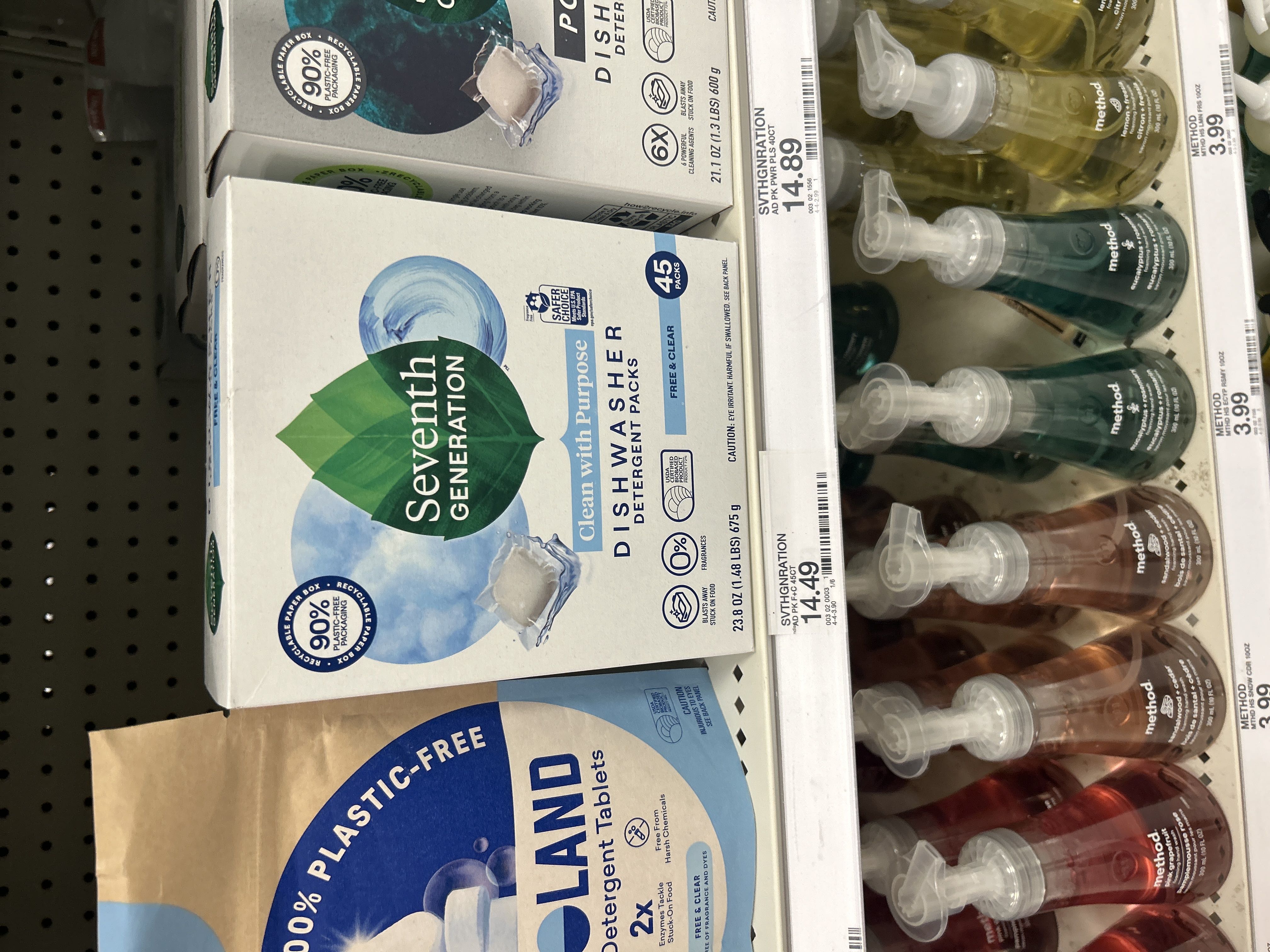


Seventh Generation Dishwasher Detergent Gel Lemon Scent 42 oz
Summary
This dishwasher detergent gel is primarily composed of plant-derived and mineral-based ingredients, which are generally safer for indoor use and have a lower environmental impact. However, the presence of synthetic preservatives like benzisothiazolinone and methylisothiazolinone, along with a synthetic fragrance, slightly detracts from its overall safety profile. The product's formulation avoids harsh surfactants like SLS and SLES, which is a positive aspect.
At a glance
Key ingredients 11
Water
Water is used as a solvent in many cleaning products. It helps dissolve other ingredients and facilitates the cleaning process. In this product, it acts as a base for the formulation.
Risks
There are no significant risks associated with water in cleaning products.
Benefits
Water is essential for dissolving and distributing cleaning agents effectively.
Sodium citrate
Sodium citrate is a plant-derived water softener. It helps to bind metal ions in water, preventing them from interfering with the cleaning process. This enhances the effectiveness of the detergent.
Risks
Sodium citrate is generally considered safe with minimal risks.
Benefits
It improves cleaning efficiency by softening water and is biodegradable.
C12-16 alcohols ethoxylated propoxylated
This is a plant-based cleaning agent used for its surfactant properties. It helps to break down and remove grease and grime. It is derived from natural alcohols and modified for enhanced cleaning power.
Risks
There may be mild skin irritation with prolonged exposure.
Benefits
It is effective in cleaning and is derived from renewable resources.
Xanthan gum
Xanthan gum is a plant-derived thickener used to stabilize and thicken the detergent formula. It helps maintain the consistency of the product. This ensures even distribution during use.
Risks
Xanthan gum is generally safe with low risk of irritation.
Benefits
It is biodegradable and helps maintain product stability.
Sodium silicate
Sodium silicate is a mineral-based alkalinity builder. It helps to maintain the pH level of the detergent, enhancing its cleaning power. It also provides corrosion protection for metal parts in dishwashers.
Risks
High concentrations can be irritating to skin and eyes.
Benefits
It enhances cleaning efficiency and protects dishwasher components.
Citric acid
Citric acid is a plant-derived pH adjuster. It helps to break down hard water deposits and improve cleaning performance. It is commonly used for its natural descaling properties.
Risks
Citric acid can cause mild skin irritation in concentrated forms.
Benefits
It is biodegradable and enhances the removal of mineral deposits.
Protease enzyme blend
Protease enzymes are plant-based cleaning agents that break down protein-based stains. They enhance the cleaning power of the detergent by targeting specific types of residues. This makes them effective in removing food particles.
Risks
Enzymes can cause allergic reactions in sensitive individuals.
Benefits
They are biodegradable and improve stain removal efficiency.
Amylase enzyme blend
Amylase enzymes are plant-based cleaning agents that target starch-based stains. They work by breaking down complex carbohydrates into simpler sugars. This enhances the detergent's ability to clean starchy residues.
Risks
Enzymes may cause allergic reactions in some individuals.
Benefits
They are effective in removing starchy stains and are biodegradable.
Benzisothiazolinone
Benzisothiazolinone is a synthetic preservative used to prevent microbial growth in the product. It helps extend the shelf life of the detergent. This ensures the product remains effective over time.
Risks
It can cause skin irritation and allergic reactions in sensitive individuals.
Benefits
It effectively prevents spoilage and microbial contamination.
Methylisothiazolinone
Methylisothiazolinone is a synthetic preservative used to inhibit microbial growth. It helps maintain the product's integrity by preventing spoilage. This ensures the detergent remains effective during its shelf life.
Risks
It is a known skin sensitizer and can cause allergic reactions.
Benefits
It is effective in preserving the product against microbial contamination.
Plant-derived fragrance: citrus limon (lemon) peel oil
Lemon peel oil is a plant-derived fragrance used to impart a fresh scent to the detergent. It is derived from the peel of lemons and adds a pleasant aroma. This enhances the user experience during cleaning.
Risks
Essential oils can cause skin irritation in sensitive individuals.
Benefits
It provides a natural fragrance and is derived from renewable resources.
Processing
Ultra-Processed Foods
Get the full breakdown in the Scout app
Scan any product to see lab results, healthy alternatives, and your personalized analysis.
Download on theApp Store