
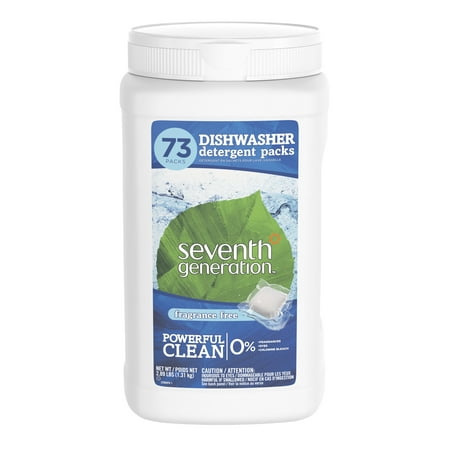

Seventh Generation Dishwasher Detergent Packs for sparkling dishes Free & Clear Dishwasher Tabs 73 Count
Summary
This dishwasher detergent is primarily plant-based and free from synthetic fragrances, which is beneficial for indoor air quality and reduces potential allergens. It avoids harsh chemicals like sodium lauryl sulfate and quaternary ammonium compounds, making it safer for both users and the environment. The product's biodegradable ingredients and eco-friendly certification further enhance its environmental profile, although it is still a processed product.
At a glance
Key ingredients 10
Water
Water is used as a solvent and carrier for other ingredients. It helps to dissolve and distribute the active components evenly. In cleaning products, it is essential for forming the base of the formula.
Risks
There are no significant risks associated with water in cleaning products.
Benefits
Water is a safe and natural ingredient that poses no health risks.
Sodium Citrate
Sodium citrate acts as a water softener and pH regulator in cleaning products. It helps to enhance the cleaning efficiency by binding with metal ions. This ingredient is commonly used in eco-friendly formulations.
Risks
Sodium citrate is generally considered safe with minimal risks.
Benefits
It is biodegradable and helps improve the effectiveness of the detergent.
C12-16 Alcohols, ethoxylated propoxylated
This ingredient is a nonionic surfactant used to reduce surface tension and improve cleaning performance. It is derived from fatty alcohols and is often used in detergents. Its role is to help remove grease and dirt from surfaces.
Risks
There is a potential for skin irritation with prolonged exposure.
Benefits
It is effective in breaking down oils and is biodegradable.
Xanthan Gum
Xanthan gum is used as a thickening agent and stabilizer in cleaning products. It helps to maintain the consistency and stability of the formula. This ingredient is derived from natural sources.
Risks
Xanthan gum is generally safe with no significant risks.
Benefits
It is biodegradable and helps improve the texture of the product.
Sodium Silicate
Sodium silicate acts as a corrosion inhibitor and builder in detergents. It helps to prevent metal parts from rusting and enhances cleaning efficiency. This ingredient is commonly used in dishwasher detergents.
Risks
Sodium silicate can be irritating to the skin and eyes.
Benefits
It is effective in preventing corrosion and improving cleaning performance.
Citric Acid
Citric acid is used as a chelating agent and pH adjuster in cleaning products. It helps to break down mineral deposits and enhance cleaning power. This ingredient is derived from citrus fruits and is biodegradable.
Risks
Citric acid can cause mild skin irritation in sensitive individuals.
Benefits
It is a natural and effective ingredient that enhances cleaning efficiency.
Protease Enzyme
Protease enzyme is used to break down protein-based stains in cleaning products. It enhances the cleaning power by targeting specific types of stains. This enzyme is derived from natural sources.
Risks
Protease enzymes can cause allergic reactions in some individuals.
Benefits
It is effective in removing protein stains and is biodegradable.
Amylase Enzyme Blend
Amylase enzyme blend is used to break down starch-based stains in cleaning products. It enhances the cleaning power by targeting specific types of stains. This enzyme is derived from natural sources.
Risks
Amylase enzymes can cause allergic reactions in some individuals.
Benefits
It is effective in removing starch stains and is biodegradable.
Benzisothiazolinone
Benzisothiazolinone is a preservative used to prevent microbial growth in cleaning products. It helps to extend the shelf life of the product. This ingredient is commonly used in household cleaners.
Risks
Benzisothiazolinone can cause skin irritation and allergic reactions.
Benefits
It is effective in preserving the product and preventing spoilage.
Methylisothiazolinone
Methylisothiazolinone is a preservative used to prevent microbial growth in cleaning products. It helps to extend the shelf life of the product. This ingredient is commonly used in household cleaners.
Risks
Methylisothiazolinone is a known skin sensitizer and can cause allergic reactions.
Benefits
It is effective in preserving the product and preventing spoilage.
Processing
Processed Foods
Get the full breakdown in the Scout app
Scan any product to see lab results, healthy alternatives, and your personalized analysis.
Download on theApp Store