
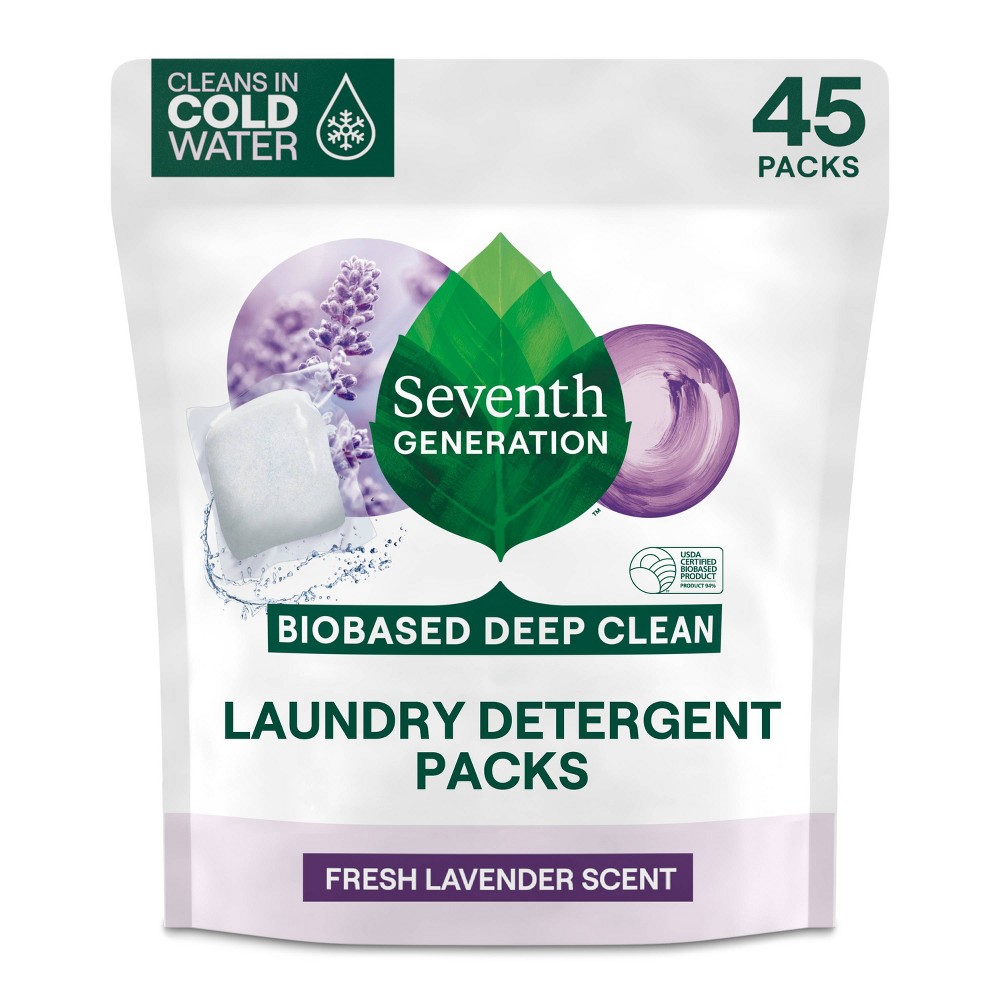

Seventh Generation Laundry Detergent Packs Fresh Lavender - 45ct/31.7oz: Resealable Bag, Hypoallergenic, Phosphate-Free
At a glance
Summary
This laundry detergent is formulated with a variety of plant-based and biodegradable ingredients, such as coconut oil and enzyme blends, which enhance cleaning performance while being environmentally friendly. It avoids harsh chemicals like phosphates and synthetic fragrances, opting instead for natural essential oils for scent. The product's minimal processing and use of safe, effective ingredients contribute to its high rating.
Key ingredients 19
cocos nucifera oilGood
Cocos nucifera oil, or coconut oil, is used as a natural surfactant and moisturizer in cleaning products. It is derived from coconuts and is biodegradable and environmentally friendly. It helps to enhance the cleaning power of detergents while being gentle on the skin.
Risks
Generally considered safe with minimal risk when used in cleaning products.
Benefits
It provides natural cleaning power and is gentle on the skin, making it suitable for sensitive users.
protease enzyme blendGood
Protease enzymes break down protein-based stains, such as blood and food residues, making them easier to remove. They are biodegradable and effective in low-temperature washes. They enhance the cleaning power of detergents by targeting specific types of stains.
Risks
Inhalation of enzyme dust can cause respiratory irritation, but they are generally safe in formulated products.
Benefits
They effectively remove protein-based stains and are biodegradable.
amylase enzyme blendGood
Amylase enzymes break down starch-based stains, such as those from pasta and potatoes. They are biodegradable and enhance the cleaning power of detergents. They are effective in removing specific types of stains, improving overall cleaning performance.
Risks
Inhalation of enzyme dust can cause respiratory irritation, but they are generally safe in formulated products.
Benefits
They effectively remove starch-based stains and are biodegradable.
mannanase enzyme blendGood
Mannanase enzymes break down mannan-based stains, such as those from guar gum and other thickeners. They are biodegradable and enhance the cleaning power of detergents. They target specific types of stains, improving overall cleaning performance.
Risks
Inhalation of enzyme dust can cause respiratory irritation, but they are generally safe in formulated products.
Benefits
They effectively remove mannan-based stains and are biodegradable.
cellulase enzyme blendGood
Cellulase enzymes break down cellulose-based stains, such as those from grass and mud. They are biodegradable and enhance the cleaning power of detergents. They target specific types of stains, improving overall cleaning performance.
Risks
Inhalation of enzyme dust can cause respiratory irritation, but they are generally safe in formulated products.
Benefits
They effectively remove cellulose-based stains and are biodegradable.
citrus aurantium dulcis peel oilGood
Citrus aurantium dulcis peel oil, or orange peel oil, is used for its natural fragrance and cleaning properties. It is derived from oranges and is biodegradable. It provides a pleasant scent and enhances the cleaning power of detergents.
Risks
Generally considered safe, though it can cause skin irritation in sensitive individuals.
Benefits
It provides a natural fragrance and enhances cleaning power.
lavandula angustifolia oilGood
Lavandula angustifolia oil, or lavender oil, is used for its natural fragrance and calming properties. It is derived from lavender plants and is biodegradable. It provides a pleasant scent and is often used for its soothing effects.
Risks
Generally considered safe, though it can cause skin irritation in sensitive individuals.
Benefits
It provides a natural fragrance and has calming properties.
lavandula hybrida oilGood
Lavandula hybrida oil is used for its natural fragrance and is derived from hybrid lavender plants. It is biodegradable and provides a pleasant scent. It is often used in cleaning products for its soothing and aromatic properties.
Risks
Generally considered safe, though it can cause skin irritation in sensitive individuals.
Benefits
It provides a natural fragrance and has soothing properties.
mentha viridis leaf oilGood
Mentha viridis leaf oil, or spearmint oil, is used for its natural fragrance and antibacterial properties. It is derived from spearmint leaves and is biodegradable. It provides a refreshing scent and enhances the cleaning power of detergents.
Risks
Generally considered safe, though it can cause skin irritation in sensitive individuals.
Benefits
It provides a natural fragrance and has antibacterial properties.
pelargonium graveolens flower oilGood
Pelargonium graveolens flower oil, or geranium oil, is used for its natural fragrance and is derived from geranium flowers. It is biodegradable and provides a pleasant scent. It is often used in cleaning products for its aromatic properties.
Risks
Generally considered safe, though it can cause skin irritation in sensitive individuals.
Benefits
It provides a natural fragrance and has aromatic properties.
pogostemon cablin oilGood
Pogostemon cablin oil, or patchouli oil, is used for its natural fragrance and is derived from patchouli plants. It is biodegradable and provides a distinctive scent. It is often used in cleaning products for its aromatic and soothing properties.
Risks
Generally considered safe, though it can cause skin irritation in sensitive individuals.
Benefits
It provides a natural fragrance and has soothing properties.
sodium carbonateNeutral
Standard formulation ingredient — neither beneficial nor harmful at typical use.
Risks
In high concentrations, it can cause skin irritation or eye irritation.
Benefits
It helps to remove stains and improve the effectiveness of the detergent.
sodium citrateNeutral
Standard formulation ingredient — neither beneficial nor harmful at typical use.
Risks
Generally considered safe with minimal risk when used in cleaning products.
Benefits
It enhances the cleaning power of detergents by softening water and is biodegradable.
laureth-6Neutral
Laureth-6 is a surfactant used to help mix water with oils and dirt, allowing them to be rinsed away. It is less harsh than sodium lauryl sulfate but can still cause mild irritation. It is often used in cleaning products for its effective emulsifying properties.
Risks
May cause mild skin or eye irritation in sensitive individuals.
Benefits
It helps to effectively remove oils and dirt from surfaces.
sodium bicarbonateNeutral
Standard formulation ingredient — neither beneficial nor harmful at typical use.
Risks
Generally safe with minimal risk, though excessive inhalation of dust can cause respiratory irritation.
Benefits
It neutralizes odors and provides gentle scrubbing action without scratching surfaces.
sodium sulfateNeutral
Sodium sulfate is used as a filler in powdered detergents to help distribute the active ingredients evenly. It is generally considered safe and non-toxic in cleaning applications. It helps to improve the texture and flow of powdered products.
Risks
Minimal risk when used in cleaning products, though excessive exposure can cause irritation.
Benefits
It helps to evenly distribute detergent ingredients and improve product consistency.
polyvinyl alcoholNeutral
Polyvinyl alcohol is a water-soluble synthetic polymer used to form the film of detergent pods. It dissolves in water, releasing the detergent inside. It is considered safe for use in cleaning products and is biodegradable.
Risks
Generally safe, though ingestion or inhalation of large amounts can be harmful.
Benefits
It provides a convenient and mess-free way to deliver detergent in pod form.
hydrated silicaNeutral
Hydrated silica is used as a mild abrasive and thickening agent in cleaning products. It is safe for use and helps to enhance the cleaning power of detergents. It is often used to provide scrubbing action without scratching surfaces.
Risks
Inhalation of dust can cause respiratory irritation, but it is generally safe in formulated products.
Benefits
It provides gentle abrasive action to help remove tough stains and residues.
linaloolBad
Processed additive flagged under Scout's ingredient doctrine.
Risks
Can cause allergic reactions or skin irritation in sensitive individuals.
Benefits
It provides a pleasant floral scent to cleaning products.
Get the full breakdown in the Scout appTake Scout shopping
Scan any product to see lab results, healthy alternatives, and your personalized analysis.
Download on theApp Store GET IT ONGoogle PlayAmazon pricing & content
Amazon price as of . Product prices and availability are accurate as of the date/time indicated and are subject to change. Any price and availability information displayed on Amazon.com at the time of purchase will apply to the purchase of this product.
CERTAIN CONTENT THAT APPEARS ON THIS SITE COMES FROM AMAZON. THIS CONTENT IS PROVIDED “AS IS” AND IS SUBJECT TO CHANGE OR REMOVAL AT ANY TIME.