
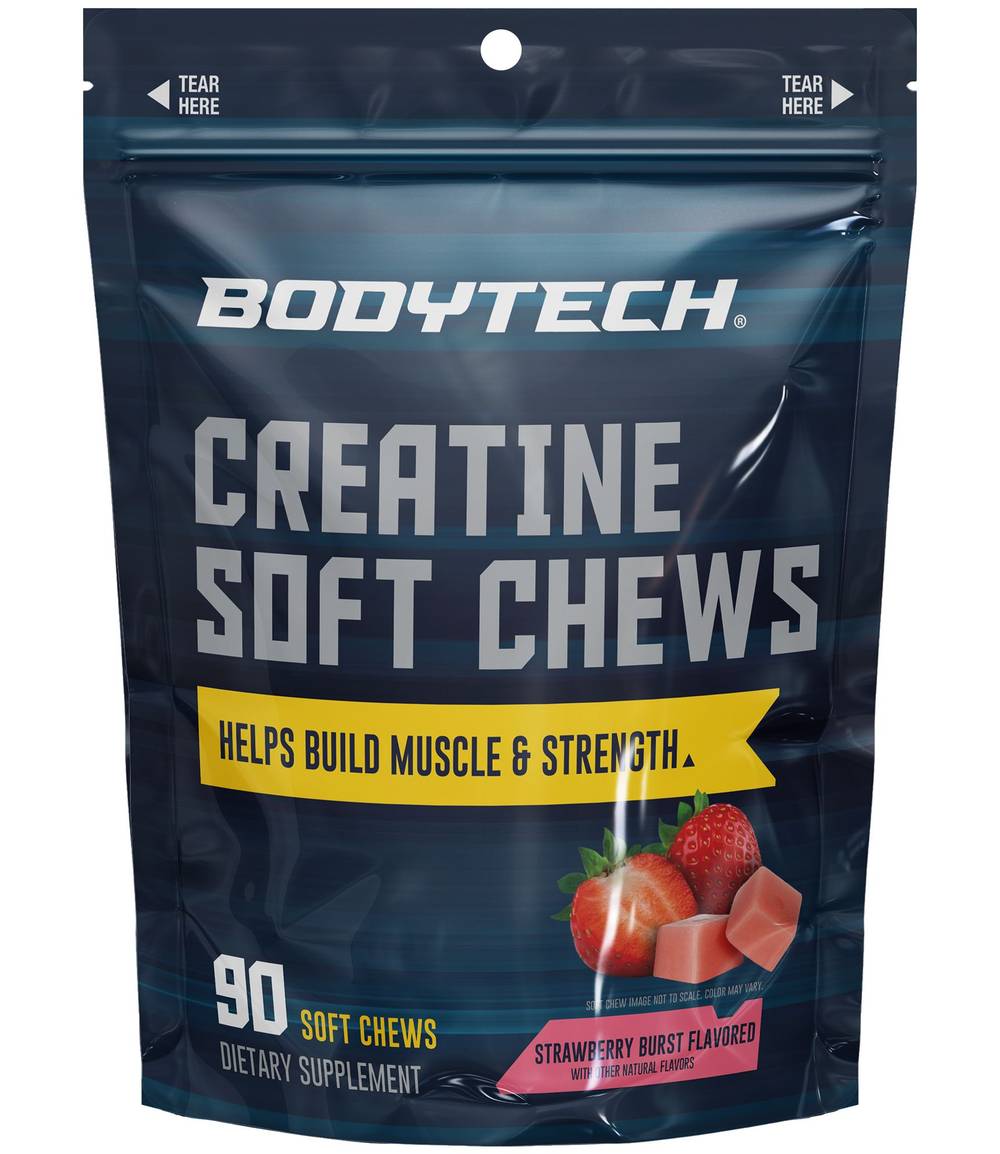


BodyTech Creatine Chews
Analysis updated August 2026 · How Scout scores
At a glance
Summary
The Creatine Chews contain beneficial ingredients like xylitol and erythritol, which are natural non-caloric sweeteners, and stevia extract, which is a natural sweetener. The product avoids artificial sweeteners and dyes, which is a positive aspect. However, the presence of soluble tapioca fiber syrup and citric acid, while not harmful, indicates a moderate level of processing, which slightly affects the overall score.
Key ingredients 7
XylitolGood
Xylitol is a natural sugar alcohol that provides sweetness without raising blood sugar levels, making it a healthier alternative to regular sugar.
See more about Xylitol →ErythritolNeutral
Standard formulation ingredient — neither beneficial nor harmful at typical use.
See more about Erythritol →Soluble Tapioca Fiber SyrupNeutral
This ingredient acts as a carbohydrate source and binder, with no significant positive or negative health effects.
Natural ColorNeutral
Natural colorings are used to enhance product appearance without synthetic additives, generally considered safe.
Citric acidNeutral
Citric acid is a common food additive that provides tartness and acts as a preservative, with no major health concerns when consumed in moderation.
See more about Citric acid →Stevia extractNeutral
Stevia extract is a natural sweetener that offers sweetness without calories, making it a popular sugar substitute.
See more about Stevia extract →Purified waterNeutral
Purified water is essential for formulation and hydration, with no health risks associated.
See more about Purified water →Processing
Processed Foods
Get the full breakdown in the Scout appTake Scout shopping
Scan any product to see lab results, healthy alternatives, and your personalized analysis.
Download on theApp Store GET IT ONGoogle PlayAmazon pricing & content
Amazon price as of . Product prices and availability are accurate as of the date/time indicated and are subject to change. Any price and availability information displayed on Amazon.com at the time of purchase will apply to the purchase of this product.
CERTAIN CONTENT THAT APPEARS ON THIS SITE COMES FROM AMAZON. THIS CONTENT IS PROVIDED “AS IS” AND IS SUBJECT TO CHANGE OR REMOVAL AT ANY TIME.