
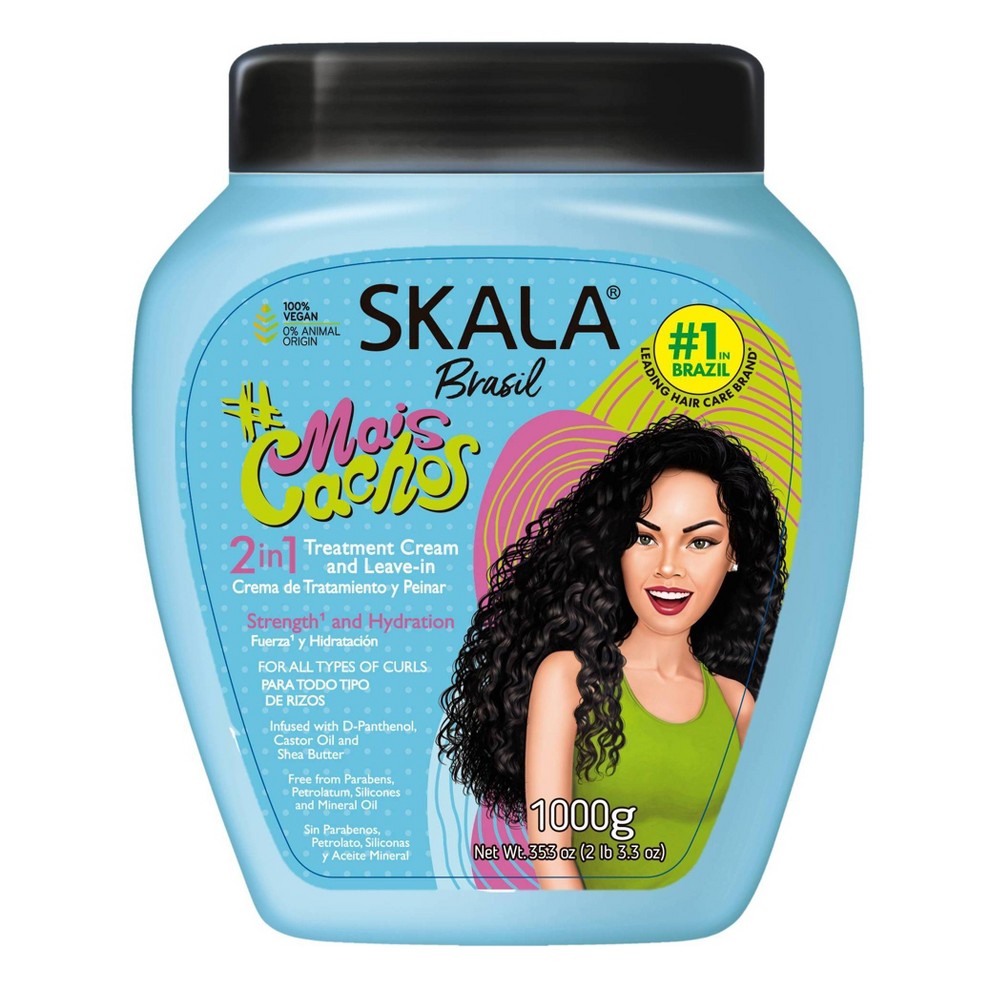


SKALA Cachos 2-in-1 Treatment Hair Cream - 35.2oz
Analysis updated August 2026 · How Scout scores
At a glance
Summary
This hair cream contains beneficial ingredients like shea butter, castor oil, and argan oil, which provide moisturizing and nourishing properties. However, the presence of synthetic fragrance and preservatives such as methylchloroisothiazolinone and methylisothiazolinone, which are known for causing skin sensitization, lowers its overall safety profile. The product is moderately processed, which also impacts its rating.
Key ingredients 21
Shea Butter Cetyl EstersVery Good
Shea Butter Cetyl Esters are derived from shea butter and provide moisturizing and conditioning benefits. They help to soften and smooth the hair. This ingredient is highly regarded for its nourishing properties.
Risks
There are minimal risks associated with this ingredient.
Benefits
It deeply moisturizes and nourishes the hair, improving its overall health.
Ricinus Communis (Castor) Seed OilVery Good
Castor Seed Oil is a natural oil known for its moisturizing and conditioning properties. It helps to strengthen and nourish the hair. It is highly valued for its ability to promote hair health.
Risks
There are minimal risks associated with castor oil.
Benefits
It provides deep conditioning and promotes healthy hair growth.
Argania Spinosa Kernel OilVery Good
Argan Oil is a natural oil rich in essential fatty acids and vitamin E. It is known for its nourishing and moisturizing properties. It is highly regarded for its ability to improve hair health and shine.
Risks
There are minimal risks associated with argan oil.
Benefits
It deeply nourishes and conditions the hair, enhancing its shine and softness.
GlycerinGood
Glycerin is a humectant that attracts moisture to the hair and skin. It is widely used in cosmetics for its hydrating properties. It is considered safe and beneficial for maintaining moisture balance.
Risks
There are minimal risks associated with glycerin.
Benefits
It helps to keep the hair hydrated and prevents dryness.
Tocopheryl AcetateGood
Tocopheryl Acetate is a form of Vitamin E used for its antioxidant properties. It helps to protect the hair and skin from damage caused by free radicals. It is considered beneficial for maintaining healthy hair.
Risks
There are minimal risks associated with tocopheryl acetate.
Benefits
It provides antioxidant protection and helps to maintain hair health.
PanthenolGood
Panthenol is a provitamin of B5 known for its moisturizing and conditioning properties. It helps to improve hair elasticity and strength. It is widely used in hair care products for its beneficial effects.
Risks
There are minimal risks associated with panthenol.
Benefits
It enhances hair moisture and improves its overall texture and appearance.
AquaNeutral
Aqua, or water, is a common solvent used in cosmetic formulations. It helps to dissolve other ingredients and provides a base for the product. It is generally considered safe and non-irritating.
Risks
There are no significant risks associated with water in cosmetic products.
Benefits
Water helps to hydrate and distribute other ingredients evenly across the hair.
Cetearyl AlcoholNeutral
Cetearyl Alcohol is a fatty alcohol used as an emollient and thickener in cosmetics. It helps to soften and smooth the hair. It is generally considered safe for use in personal care products.
Risks
Rarely, it may cause minor irritation in sensitive individuals.
Benefits
It provides moisturizing properties and improves the texture of the product.
Stearamidopropyl DimethylamineNeutral
Stearamidopropyl Dimethylamine is a conditioning agent that helps to detangle and soften hair. It is derived from vegetable oil and is considered safe for use in cosmetics. It is effective in improving hair texture.
Risks
It may cause mild irritation if used in high concentrations.
Benefits
It provides conditioning benefits and helps to maintain hair health.
Citric AcidNeutral
Citric Acid is used to adjust the pH of cosmetic products. It helps to maintain the stability and effectiveness of the formulation. It is generally considered safe for use in cosmetics.
Risks
In high concentrations, it may cause irritation to the skin or eyes.
Benefits
It helps to balance the pH of the product, ensuring its stability.
CoumarinNeutral
Coumarin is a fragrance ingredient used to impart a sweet scent to cosmetic products. It is generally considered safe in low concentrations. It is used to enhance the sensory experience of the product.
Risks
In high concentrations, it may cause skin irritation or allergic reactions.
Benefits
It provides a pleasant fragrance to the product.
Hexyl CinnamalNeutral
Hexyl Cinnamal is a fragrance ingredient used to impart a floral scent to cosmetic products. It is commonly used in personal care products for its pleasant aroma. It is generally considered safe in low concentrations.
Risks
It may cause skin irritation or allergic reactions in sensitive individuals.
Benefits
It enhances the fragrance profile of the product.
Cetrimonium ChlorideBad
Processed additive flagged under Scout's ingredient doctrine.
Risks
In high concentrations, it may cause irritation to the skin or eyes.
Benefits
It enhances the softness and smoothness of the hair.
ParfumBad
Parfum, or fragrance, is used to impart scent to cosmetic products. It can be composed of many different chemicals, some of which may cause allergic reactions. It is often criticized for its potential to cause irritation.
Risks
Fragrance can cause skin irritation and allergic reactions in sensitive individuals.
Benefits
It provides a pleasant scent to the product.
MethylchloroisothiazolinoneBad
Methylchloroisothiazolinone is a preservative used to prevent microbial growth in cosmetics. It is effective but can cause skin sensitization and allergic reactions. It is often criticized for its potential to cause irritation.
Risks
It can cause allergic reactions and skin irritation in some individuals.
Benefits
It helps to preserve the product and extend its shelf life.
LinaloolBad
Processed additive flagged under Scout's ingredient doctrine.
Risks
It may cause skin irritation or allergic reactions in sensitive individuals.
Benefits
It enhances the fragrance profile of the product.
Benzyl AlcoholBad
Processed additive flagged under Scout's ingredient doctrine.
Risks
In high concentrations, it may cause skin irritation or allergic reactions.
Benefits
It helps to preserve the product and provides a pleasant fragrance.
PhenoxyethanolBad
Processed additive flagged under Scout's ingredient doctrine.
Risks
In high concentrations, it may cause skin irritation or allergic reactions.
Benefits
It helps to maintain the product's integrity by preventing microbial contamination.
LimoneneBad
Processed additive flagged under Scout's ingredient doctrine.
Risks
It may cause skin irritation or allergic reactions in sensitive individuals.
Benefits
It provides a refreshing citrus fragrance to the product.
VanillinBad
Processed additive flagged under Scout's ingredient doctrine.
Risks
It may cause skin irritation or allergic reactions in sensitive individuals.
Benefits
It provides a sweet vanilla fragrance to the product.
MethylisothiazolinoneVery Bad
Methylisothiazolinone is a preservative used to inhibit microbial growth in cosmetic products. It is effective but has been associated with skin sensitization and allergic reactions. It is often criticized for its potential to cause irritation.
Risks
It can cause allergic reactions and skin irritation in some individuals.
Benefits
It helps to maintain the product's integrity by preventing microbial contamination.
Get the full breakdown in the Scout appTake Scout shopping
Scan any product to see lab results, healthy alternatives, and your personalized analysis.
Download on theApp Store GET IT ONGoogle PlayAmazon pricing & content
Amazon price as of . Product prices and availability are accurate as of the date/time indicated and are subject to change. Any price and availability information displayed on Amazon.com at the time of purchase will apply to the purchase of this product.
CERTAIN CONTENT THAT APPEARS ON THIS SITE COMES FROM AMAZON. THIS CONTENT IS PROVIDED “AS IS” AND IS SUBJECT TO CHANGE OR REMOVAL AT ANY TIME.