
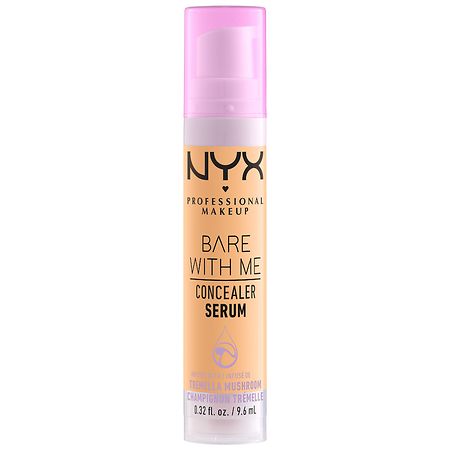


NYX Professional Makeup Bare With Me Serum Concealer - 0.32 fl oz - 05 Light Golden: Concealing, Cream, Buildable Coverage, Face Use
Analysis updated August 2026 · How Scout scores
At a glance
Summary
This concealer contains several beneficial ingredients such as glycerin, green tea extract, and sunflower seed oil, which provide moisturizing and soothing benefits. However, the presence of phenoxyethanol, a preservative that can cause irritation in some individuals, slightly detracts from its overall safety profile. The product is moderately processed, which also influences its rating.
Key ingredients 25
Camellia Sinensis Leaf ExtractVery Good
Camellia Sinensis Leaf Extract, or green tea extract, is rich in antioxidants and has anti-inflammatory properties. It helps protect the skin from environmental damage and soothes irritation. It is considered highly beneficial in skincare.
Risks
There are no significant risks associated with this ingredient.
Benefits
It provides antioxidant protection and soothes the skin.
Helianthus Annuus Seed OilVery Good
Helianthus Annuus Seed Oil, or sunflower seed oil, is a natural emollient rich in vitamins A, D, and E. It helps moisturize and nourish the skin. It is considered safe and beneficial for all skin types.
Risks
There are no significant risks associated with this ingredient.
Benefits
It moisturizes and nourishes the skin with essential vitamins.
Tremella Fuciformis PolysaccharideVery Good
Tremella Fuciformis Polysaccharide, derived from a type of mushroom, is a natural moisturizer that helps retain water in the skin. It is known for its hydrating and anti-aging properties. It is considered safe and beneficial for skincare.
Risks
There are no significant risks associated with this ingredient.
Benefits
It provides excellent hydration and has anti-aging benefits.
Centella Asiatica ExtractVery Good
Centella Asiatica Extract is a botanical ingredient known for its healing and soothing properties. It helps repair the skin barrier and reduce inflammation. It is considered highly beneficial in skincare formulations.
Risks
There are no significant risks associated with this ingredient.
Benefits
It heals and soothes the skin, reducing inflammation.
AllantoinVery Good
Allantoin is a skin-soothing agent that helps protect and heal the skin. It is used to reduce irritation and promote skin regeneration. It is considered safe and beneficial for sensitive skin.
Risks
There are no significant risks associated with this ingredient.
Benefits
It soothes and protects the skin, promoting healing.
TocopherolVery Good
Tocopherol, or Vitamin E, is an antioxidant that helps protect the skin from environmental damage. It is used to nourish and moisturize the skin. It is considered highly beneficial in skincare formulations.
Risks
There are no significant risks associated with this ingredient.
Benefits
It provides antioxidant protection and nourishes the skin.
GlycerinGood
Glycerin is a humectant that attracts moisture to the skin, keeping it hydrated. It is a natural compound found in lipids and is widely used in skincare for its moisturizing properties. It is considered safe and beneficial for all skin types.
Risks
There are no significant risks associated with glycerin.
Benefits
It provides excellent moisturizing benefits and helps maintain skin hydration.
AquaNeutral
Aqua, or water, is a common solvent used in cosmetics. It helps dissolve other ingredients and provides a base for the formulation. It is generally considered safe and non-irritating.
Risks
There are no significant risks associated with water in cosmetics.
Benefits
Water acts as a solvent and helps in the application of the product.
Hydrogenated PolyisobuteneNeutral
Hydrogenated Polyisobutene is a synthetic polymer used as an emollient and moisturizer. It provides a smooth application and helps in moisture retention. It is generally considered safe for use in cosmetics.
Risks
There are minimal risks associated with this ingredient, though it is synthetic.
Benefits
It helps in providing a smooth texture and retains moisture on the skin.
Hydrogenated PolydeceneNeutral
Hydrogenated Polydecene is a synthetic emollient that provides a silky feel to the skin. It is used to improve the texture and spreadability of cosmetic products. It is considered safe for use in cosmetics.
Risks
There are minimal risks, primarily related to its synthetic nature.
Benefits
It enhances the texture and spreadability of the product.
Polyglyceryl-3 DiisostearateNeutral
Polyglyceryl-3 Diisostearate is an emulsifier that helps blend oil and water-based ingredients. It is derived from natural sources and is considered safe for use in cosmetics. It helps in stabilizing the formulation.
Risks
There are minimal risks associated with this ingredient.
Benefits
It aids in emulsifying and stabilizing the product formulation.
TrimethylsiloxysilicateNeutral
Trimethylsiloxysilicate is a silicone-based ingredient that forms a film on the skin, providing water resistance. It is used to enhance the longevity of makeup products. It is generally considered safe for use in cosmetics.
Risks
There are minimal risks, primarily related to potential buildup on the skin.
Benefits
It provides water resistance and enhances the longevity of the product.
Isononyl IsononanoateNeutral
Isononyl Isononanoate is an emollient that provides a smooth application and a non-greasy feel. It is used to improve the texture of cosmetic products. It is considered safe for use in cosmetics.
Risks
There are minimal risks associated with this ingredient.
Benefits
It enhances the texture and provides a smooth, non-greasy feel.
Disteardimonium HectoriteNeutral
Disteardimonium Hectorite is a thickening agent used to stabilize emulsions. It helps in maintaining the consistency of the product. It is considered safe for use in cosmetics.
Risks
There are minimal risks associated with this ingredient.
Benefits
It stabilizes the product and maintains its consistency.
Butylene GlycolNeutral
Butylene Glycol is a solvent and conditioning agent that helps improve the texture of the product. It is used to enhance the penetration of other ingredients. It is generally considered safe for use in cosmetics.
Risks
There are minimal risks, though it can cause irritation in sensitive individuals.
Benefits
It improves texture and enhances ingredient penetration.
SilicaNeutral
Silica is used as an absorbent and anti-caking agent in cosmetics. It helps control oil and provides a matte finish. It is considered safe for use in cosmetics.
Risks
There are minimal risks, though inhalation of fine particles should be avoided.
Benefits
It controls oil and provides a matte finish.
Sorbitan OlivateNeutral
Sorbitan Olivate is an emulsifier derived from olive oil that helps blend ingredients. It is used to stabilize formulations and improve texture. It is considered safe for use in cosmetics.
Risks
There are minimal risks associated with this ingredient.
Benefits
It stabilizes formulations and improves texture.
Sorbitan SesquiisostearateNeutral
Sorbitan Sesquiisostearate is an emulsifier that helps blend oil and water-based ingredients. It is used to stabilize cosmetic formulations. It is considered safe for use in cosmetics.
Risks
There are minimal risks associated with this ingredient.
Benefits
It aids in emulsifying and stabilizing the product formulation.
Glyceryl Behenate/EicosadioateNeutral
Glyceryl Behenate/Eicosadioate is an emulsifier and thickening agent used in cosmetics. It helps improve the texture and stability of the product. It is considered safe for use in cosmetics.
Risks
There are minimal risks associated with this ingredient.
Benefits
It improves texture and stability of the formulation.
Sodium ChlorideNeutral
Sodium Chloride, or table salt, is used as a thickening agent in cosmetics. It helps improve the viscosity of the product. It is considered safe for use in cosmetics.
Risks
There are minimal risks, though excessive use can be drying.
Benefits
It helps thicken and stabilize the product.
Magnesium SulfateNeutral
Magnesium Sulfate, also known as Epsom salt, is used as a thickening agent and to enhance texture. It is considered safe for use in cosmetics. It helps improve the consistency of the product.
Risks
There are minimal risks associated with this ingredient.
Benefits
It enhances texture and consistency of the formulation.
EthylhexylglycerinNeutral
Ethylhexylglycerin is a conditioning agent and preservative enhancer. It is used to improve the efficacy of preservatives and provide skin conditioning benefits. It is considered safe for use in cosmetics.
Risks
There are minimal risks, though it can cause irritation in sensitive individuals.
Benefits
It enhances preservative efficacy and conditions the skin.
Polyhydroxystearic AcidNeutral
Polyhydroxystearic Acid is an emulsifier and thickening agent used in cosmetics. It helps stabilize formulations and improve texture. It is considered safe for use in cosmetics.
Risks
There are minimal risks associated with this ingredient.
Benefits
It stabilizes formulations and improves texture.
CI 77491, CI 77492, CI 77499, CI 77891Neutral
These are colorants used to provide pigmentation in cosmetics. They are commonly used and considered safe for use in cosmetics. They help achieve the desired color and coverage in the product.
Risks
There are minimal risks associated with these colorants.
Benefits
They provide pigmentation and enhance the appearance of the product.
PhenoxyethanolBad
Phenoxyethanol is a preservative used to prevent microbial growth in cosmetics. It is effective but can cause irritation in some individuals. It is considered safe in low concentrations but has potential sensitizing effects.
Risks
It can cause irritation and allergic reactions in sensitive individuals.
Benefits
It effectively preserves the product by preventing microbial growth.
Processing
Processed Foods
Get the full breakdown in the Scout appTake Scout shopping
Scan any product to see lab results, healthy alternatives, and your personalized analysis.
Download on theApp Store GET IT ONGoogle PlayAmazon pricing & content
Amazon price as of . Product prices and availability are accurate as of the date/time indicated and are subject to change. Any price and availability information displayed on Amazon.com at the time of purchase will apply to the purchase of this product.
CERTAIN CONTENT THAT APPEARS ON THIS SITE COMES FROM AMAZON. THIS CONTENT IS PROVIDED “AS IS” AND IS SUBJECT TO CHANGE OR REMOVAL AT ANY TIME.