
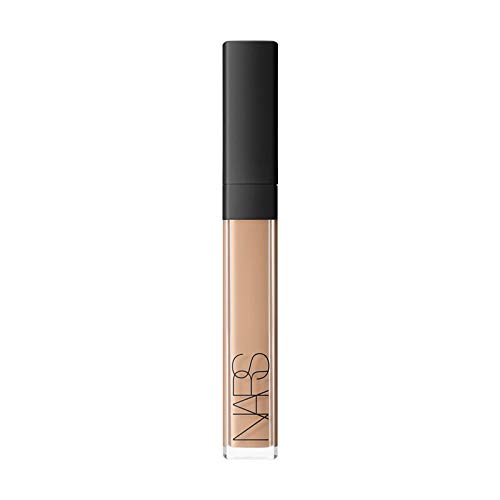



NARS Concealer - Biscuit
Analysis updated September 2026 · How Scout scores
At a glance
Summary
This concealer contains beneficial ingredients like glycerin, lecithin, and various antioxidants that provide moisturizing and protective benefits to the skin. However, the presence of phenoxyethanol, a preservative that can cause irritation, and several synthetic compounds like PEGs and silicones, which are associated with moderate processing, slightly detracts from its overall safety profile. The product balances beneficial natural extracts with some synthetic ingredients, leading to a mixed assessment.
Key ingredients 32
GlycerinGood
Glycerin is a humectant that attracts moisture to the skin, helping to keep it hydrated. It is widely used in cosmetics for its moisturizing properties. It is considered safe and beneficial for most skin types.
Risks
Generally safe with minimal risks.
Benefits
Attracts moisture and helps keep skin hydrated.
Tocopheryl AcetateGood
Tocopheryl Acetate is a form of Vitamin E used for its antioxidant properties. It helps to protect the skin from free radical damage. It is considered beneficial for its skin-protective effects.
Risks
Generally safe with minimal risks.
Benefits
Protects skin from free radical damage.
Magnolia Officinalis Bark ExtractGood
Magnolia Officinalis Bark Extract is a botanical extract used for its anti-inflammatory and antioxidant properties. It helps to soothe the skin and protect against environmental stressors. It is considered beneficial for its calming effects on the skin.
Risks
Generally safe with minimal risks.
Benefits
Soothes skin and protects against environmental stressors.
TocopherolGood
Tocopherol is a form of Vitamin E used for its antioxidant properties. It helps to protect the skin from free radical damage and improve skin health. It is considered beneficial for its protective and moisturizing effects.
Risks
Generally safe with minimal risks.
Benefits
Protects skin from free radical damage and improves skin health.
Vitis Vinifera (Grape) Seed ExtractGood
Grape Seed Extract is a botanical extract known for its antioxidant and anti-inflammatory properties. It helps to protect the skin from oxidative stress and improve skin elasticity. It is considered beneficial for its protective and rejuvenating effects.
Risks
Generally safe with minimal risks.
Benefits
Protects skin from oxidative stress and improves elasticity.
MicaGood
Beneficial ingredient — whole-food or functional value in this product class.
Risks
Minimal risks; generally considered safe.
Benefits
Provides a luminous finish and enhances product appearance.
Water/Aqua/EauNeutral
Water is a common solvent used in cosmetics to dissolve other ingredients. It helps in the application and absorption of the product. It does not have any direct benefits or risks associated with its use in cosmetics.
Benefits
Essential for dissolving and mixing other ingredients.
Hydrogenated PolydeceneNeutral
Hydrogenated Polydecene is a synthetic emollient that provides a silky feel to the skin. It is used to improve the texture and spreadability of the product. It is generally considered safe with minimal risks.
Risks
Minimal risks; generally considered safe for use in cosmetics.
Benefits
Improves texture and provides a silky feel to the skin.
PropanediolNeutral
Propanediol is a glycol used as a solvent and skin-conditioning agent. It enhances the absorption of other ingredients. It is generally well-tolerated by the skin.
Risks
Low risk of irritation; generally well-tolerated.
Benefits
Improves absorption and conditions the skin.
Butylene GlycolNeutral
Butylene Glycol is a common solvent and conditioning agent in cosmetics. It helps to improve the texture and spreadability of products. It is generally considered safe with a low risk of irritation.
Risks
Low risk of irritation; generally considered safe.
Benefits
Improves texture and spreadability of products.
PEG-9 Polydimethylsiloxyethyl DimethiconeNeutral
This ingredient is a silicone-based polymer used for its emollient and conditioning properties. It helps to improve the texture and feel of the product. It is generally considered safe for use in cosmetics.
Risks
Minimal risks; generally considered safe.
Benefits
Improves texture and provides conditioning properties.
Disteardimonium HectoriteNeutral
Disteardimonium Hectorite is a thickening agent used to stabilize emulsions. It helps to improve the consistency and spreadability of the product. It is generally considered safe with minimal risks.
Risks
Minimal risks; generally considered safe.
Benefits
Stabilizes emulsions and improves product consistency.
PEG-10 DimethiconeNeutral
PEG-10 Dimethicone is a silicone-based polymer used for its emollient and conditioning properties. It helps to improve the texture and feel of the product. It is generally considered safe for use in cosmetics.
Risks
Minimal risks; generally considered safe.
Benefits
Improves texture and provides conditioning properties.
Methyl Methacrylate CrosspolymerNeutral
This ingredient is used as a film-forming agent to provide a smooth finish. It helps to improve the texture and longevity of the product. It is generally considered safe for use in cosmetics.
Risks
Minimal risks; generally considered safe.
Benefits
Provides a smooth finish and improves product longevity.
Bis-Butyldimethicone Polyglyceryl-3Neutral
This ingredient is a silicone-based polymer used for its emollient and conditioning properties. It helps to improve the texture and feel of the product. It is generally considered safe for use in cosmetics.
Risks
Minimal risks; generally considered safe.
Benefits
Improves texture and provides conditioning properties.
Sorbitan SesquiisostearateNeutral
Sorbitan Sesquiisostearate is an emulsifier used to stabilize formulations. It helps to blend oil and water-based ingredients. It is generally considered safe with minimal risks.
Risks
Minimal risks; generally considered safe.
Benefits
Stabilizes formulations and blends ingredients.
Isostearic AcidNeutral
Isostearic Acid is a fatty acid used as an emulsifier and thickening agent. It helps to stabilize formulations and improve texture. It is generally considered safe with minimal risks.
Risks
Minimal risks; generally considered safe.
Benefits
Stabilizes formulations and improves texture.
Aluminum HydroxideNeutral
Aluminum Hydroxide is used as a thickening agent and opacifier in cosmetics. It helps to improve the texture and appearance of the product. It is generally considered safe with minimal risks.
Risks
Minimal risks; generally considered safe.
Benefits
Improves texture and appearance of the product.
Polysilicone-2Neutral
Polysilicone-2 is a silicone-based polymer used for its film-forming properties. It helps to provide a smooth finish and improve product longevity. It is generally considered safe for use in cosmetics.
Risks
Minimal risks; generally considered safe.
Benefits
Provides a smooth finish and improves product longevity.
MaltodextrinNeutral
Maltodextrin is a polysaccharide used as a binding and thickening agent. It helps to improve the texture and stability of the product. It is generally considered safe with minimal risks.
Risks
Minimal risks; generally considered safe.
Benefits
Improves texture and stability of the product.
Trisodium EDTANeutral
Trisodium EDTA is a chelating agent used to improve the stability of cosmetics. It binds to metal ions to prevent deterioration of the product. It is generally considered safe with minimal risks.
Risks
Minimal risks; generally considered safe.
Benefits
Improves stability and prevents product deterioration.
SilicaNeutral
Silica is used as an absorbent and anti-caking agent in cosmetics. It helps to improve the texture and mattify the skin. It is generally considered safe with minimal risks.
Risks
Minimal risks; generally considered safe.
Benefits
Improves texture and mattifies the skin.
Tin OxideNeutral
Tin Oxide is used as an opacifying agent in cosmetics. It helps to improve the appearance and opacity of the product. It is generally considered safe with minimal risks.
Risks
Minimal risks; generally considered safe.
Benefits
Improves appearance and opacity of the product.
TriethoxycaprylylsilaneNeutral
Triethoxycaprylylsilane is a silicone-based compound used as a surface modifier. It helps to improve the dispersion of pigments in the product. It is generally considered safe with minimal risks.
Risks
Minimal risks; generally considered safe.
Benefits
Improves dispersion of pigments and product stability.
Sodium MetabisulfiteNeutral
Sodium Metabisulfite is used as a preservative and antioxidant in cosmetics. It helps to prevent oxidation and extend product shelf life. It is generally considered safe with minimal risks.
Risks
Minimal risks; generally considered safe.
Benefits
Prevents oxidation and extends product shelf life.
Titanium Dioxide (CI 77891)Neutral
Titanium Dioxide is used as a pigment and UV filter in cosmetics. It helps to provide coverage and protect the skin from UV radiation. It is generally considered safe with minimal risks.
Risks
Minimal risks; generally considered safe.
Benefits
Provides coverage and UV protection.
Iron Oxides (CI 77491, CI 77492, CI 77499)Neutral
Iron Oxides are pigments used to provide color in cosmetics. They help to achieve the desired shade and coverage in the product. They are generally considered safe with minimal risks.
Risks
Minimal risks; generally considered safe.
Benefits
Provides color and coverage in cosmetics.
Bismuth Oxychloride (CI 77163)Neutral
Bismuth Oxychloride is a pigment used for its shimmering properties in cosmetics. It helps to provide a luminous finish and enhance the appearance of the product. It is generally considered safe with minimal risks.
Risks
Minimal risks; generally considered safe.
Benefits
Provides a luminous finish and enhances product appearance.
DimethiconeBad
Occlusive silicone film-former — flagged under clean-beauty doctrine.
Risks
Potential for skin buildup and may cause irritation in sensitive individuals.
Benefits
Provides a smooth application and helps retain skin moisture.
Dimethicone/Vinyl Dimethicone CrosspolymerBad
Processed additive flagged under Scout's ingredient doctrine.
Risks
Minimal risks; generally considered safe.
Benefits
Improves texture and provides a smooth application.
PhenoxyethanolBad
Phenoxyethanol is a preservative used to prevent microbial growth in cosmetics. It is effective but can cause irritation in some individuals. It is considered a moderate risk ingredient due to potential skin irritation.
Risks
Potential skin irritation and allergic reactions.
Benefits
Prevents microbial growth and extends product shelf life.
LecithinBad
Processed additive flagged under Scout's ingredient doctrine.
Risks
Generally safe with minimal risks.
Benefits
Improves skin hydration and blends ingredients.
Get the full breakdown in the Scout appTake Scout shopping
Scan any product to see lab results, healthy alternatives, and your personalized analysis.
Download on theApp Store GET IT ONGoogle PlayAmazon pricing & content
Amazon price as of . Product prices and availability are accurate as of the date/time indicated and are subject to change. Any price and availability information displayed on Amazon.com at the time of purchase will apply to the purchase of this product.
CERTAIN CONTENT THAT APPEARS ON THIS SITE COMES FROM AMAZON. THIS CONTENT IS PROVIDED “AS IS” AND IS SUBJECT TO CHANGE OR REMOVAL AT ANY TIME.