
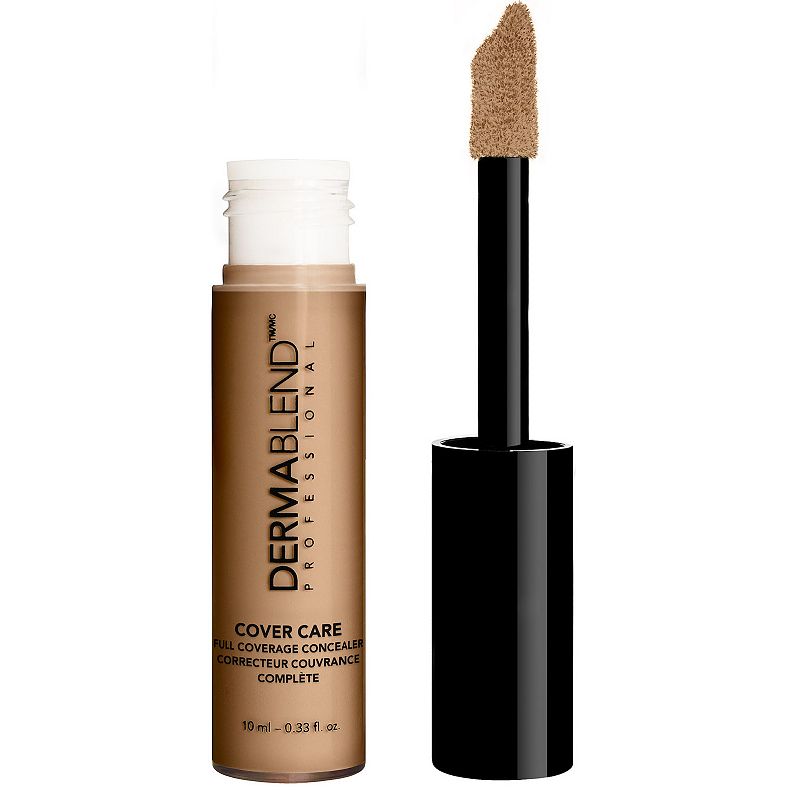

Dermablend Cover Care Full Coverage Concealer, 0.33-oz.
Analysis updated September 2026 · How Scout scores
At a glance
Summary
This concealer contains beneficial ingredients like glycerin, dimethicone, tocopherol, and sunflower seed oil, which provide moisturizing and protective benefits. However, the presence of synthetic polymers and acrylonitrile/methyl methacrylate/vinylidene chloride copolymer indicates a moderate level of processing. Additionally, the use of PEG compounds and synthetic colorants slightly detracts from its overall safety profile.
Key ingredients 31
TocopherolVery Good
Tocopherol, also known as Vitamin E, is an antioxidant that helps to protect the skin from free radical damage. It is widely used in skincare for its protective and moisturizing properties. It is considered safe and beneficial for most skin types.
Risks
Rarely, it may cause irritation in very sensitive skin.
Benefits
Protects the skin from free radical damage and provides moisturizing benefits.
Helianthus Annuus Seed Oil / Sunflower Seed OilVery Good
Sunflower Seed Oil is a natural oil rich in fatty acids and vitamins, providing moisturizing and nourishing benefits to the skin. It is widely used in skincare for its emollient properties. It is considered safe and beneficial for most skin types.
Risks
Rarely, it may cause allergic reactions in individuals with sunflower allergies.
Benefits
Moisturizes and nourishes the skin, improving skin barrier function.
GlycerinGood
Glycerin is a humectant that attracts moisture to the skin, helping to keep it hydrated. It is widely used in skincare for its moisturizing properties. It is considered safe and beneficial for most skin types.
Risks
Rarely, it may cause irritation in very sensitive skin.
Benefits
Helps to maintain skin hydration and improve skin barrier function.
Ci 77491, Ci 77492, Ci 77499 / Iron OxidesGood
Beneficial ingredient — whole-food or functional value in this product class.
Benefits
Provide pigmentation and color to the product.
Aqua / Water / EauNeutral
Water is a common solvent used in cosmetics to dissolve other ingredients. It helps in the application and spreadability of the product. It does not have any direct benefits or risks in this formulation.
Benefits
Provides a base for other ingredients to be mixed and applied smoothly.
UndecaneNeutral
Undecane is a hydrocarbon used as an emollient and solvent in cosmetics. It helps to improve the texture and spreadability of the product. It is generally considered safe for use in cosmetics.
Benefits
Improves the texture and spreadability of the product.
Polyglyceryl-4 IsostearateNeutral
Polyglyceryl-4 Isostearate is an emulsifier that helps to mix oil and water-based ingredients. It is derived from natural sources and is considered safe for use in cosmetics. It does not have significant direct benefits or risks.
Benefits
Helps to stabilize emulsions and improve product consistency.
Synthetic FluorphlogopiteNeutral
Synthetic Fluorphlogopite is a synthetic mica used to add shimmer and improve texture. It is considered safe for use in cosmetics. It does not have significant direct benefits or risks.
Benefits
Adds shimmer and improves the texture of the product.
Pentylene GlycolNeutral
Pentylene Glycol is a synthetic humectant and solvent that helps to retain moisture in the skin. It also acts as a preservative booster. It is generally considered safe for use in cosmetics.
Risks
May cause irritation in very sensitive skin.
Benefits
Helps to retain moisture and improve product preservation.
Butylene GlycolNeutral
Butylene Glycol is a common solvent and conditioning agent in cosmetics. It helps to improve the texture and spreadability of the product. It is generally considered safe for use in cosmetics.
Risks
May cause irritation in very sensitive skin.
Benefits
Improves texture and spreadability of the product.
TridecaneNeutral
Tridecane is a hydrocarbon used as an emollient and solvent in cosmetics. It helps to improve the texture and spreadability of the product. It is generally considered safe for use in cosmetics.
Benefits
Improves the texture and spreadability of the product.
Cetyl Peg/Ppg-10/1 DimethiconeNeutral
Cetyl Peg/Ppg-10/1 Dimethicone is a silicone-based emulsifier that helps to mix oil and water-based ingredients. It provides a smooth application and is generally considered safe for use in cosmetics. It does not have significant direct benefits or risks.
Risks
May cause breakouts in some individuals with very sensitive skin.
Benefits
Provides a smooth application and helps to stabilize emulsions.
Hexyl LaurateNeutral
Hexyl Laurate is an ester used as an emollient and thickening agent in cosmetics. It helps to improve the texture and spreadability of the product. It is generally considered safe for use in cosmetics.
Benefits
Improves the texture and spreadability of the product.
Magnesium SulfateNeutral
Magnesium Sulfate, also known as Epsom salt, is used as a thickening agent in cosmetics. It helps to improve the texture and consistency of the product. It is generally considered safe for use in cosmetics.
Benefits
Improves the texture and consistency of the product.
Polyhydroxystearic AcidNeutral
Polyhydroxystearic Acid is used as a thickening agent and emulsifier in cosmetics. It helps to stabilize emulsions and improve product consistency. It is generally considered safe for use in cosmetics.
Benefits
Stabilizes emulsions and improves product consistency.
OctyldodecanolNeutral
Octyldodecanol is a fatty alcohol used as an emollient and thickening agent in cosmetics. It helps to improve the texture and spreadability of the product. It is generally considered safe for use in cosmetics.
Benefits
Improves the texture and spreadability of the product.
Disteardimonium HectoriteNeutral
Disteardimonium Hectorite is a clay-derived thickening agent used to stabilize emulsions. It helps to improve the texture and consistency of the product. It is generally considered safe for use in cosmetics.
Benefits
Stabilizes emulsions and improves product consistency.
Disodium Stearoyl GlutamateNeutral
Disodium Stearoyl Glutamate is an amino acid-based emulsifier used to stabilize formulations. It helps to improve the texture and consistency of the product. It is generally considered safe for use in cosmetics.
Benefits
Stabilizes formulations and improves product consistency.
SilicaNeutral
Silica is a mineral used as a thickening agent and absorbent in cosmetics. It helps to improve the texture and mattify the product. It is generally considered safe for use in cosmetics.
Risks
Inhalation of fine silica particles can be harmful, but this is not a concern in liquid formulations.
Benefits
Improves texture and provides a mattifying effect.
Cellulose GumNeutral
Cellulose Gum is a thickening agent derived from cellulose. It helps to stabilize emulsions and improve product consistency. It is generally considered safe for use in cosmetics.
Benefits
Stabilizes emulsions and improves product consistency.
EthylhexylglycerinNeutral
Ethylhexylglycerin is a conditioning agent and preservative booster used in cosmetics. It helps to improve the skin feel and enhance the efficacy of preservatives. It is generally considered safe for use in cosmetics.
Risks
May cause irritation in very sensitive skin.
Benefits
Improves skin feel and enhances preservative efficacy.
Silica SilylateNeutral
Silica Silylate is a modified form of silica used to improve texture and provide a mattifying effect. It is generally considered safe for use in cosmetics. It does not have significant direct benefits or risks.
Benefits
Improves texture and provides a mattifying effect.
Acrylonitrile/Methyl Methacrylate/Vinylidene Chloride CopolymerNeutral
This copolymer is used as a film-forming agent in cosmetics to provide long-lasting wear. It helps to improve the durability and water resistance of the product. It is generally considered safe for use in cosmetics.
Benefits
Improves durability and water resistance of the product.
TrihydroxystearinNeutral
Trihydroxystearin is a thickening agent used to stabilize emulsions and improve texture. It is generally considered safe for use in cosmetics. It does not have significant direct benefits or risks.
Benefits
Stabilizes emulsions and improves texture.
Aluminum HydroxideNeutral
Aluminum Hydroxide is used as a colorant and opacifying agent in cosmetics. It helps to improve the opacity and coverage of the product. It is generally considered safe for use in cosmetics.
Benefits
Improves opacity and coverage of the product.
Acetylated Glycol StearateNeutral
Acetylated Glycol Stearate is an emulsifier and thickening agent used to stabilize formulations. It helps to improve the texture and consistency of the product. It is generally considered safe for use in cosmetics.
Benefits
Stabilizes formulations and improves product consistency.
IsobutaneNeutral
Isobutane is a propellant used in aerosol products to help dispense the product. It is generally considered safe for use in cosmetics when used as directed. It does not have significant direct benefits or risks.
Risks
Inhalation of high concentrations can be harmful, but this is not a concern in non-aerosol formulations.
Benefits
Helps to dispense the product in aerosol formulations.
Pentaerythrityl Tetra-Di-T-Butyl HydroxyhydrocinnamateNeutral
This ingredient is an antioxidant used to stabilize formulations and prevent oxidation. It helps to extend the shelf life of the product. It is generally considered safe for use in cosmetics.
Benefits
Stabilizes formulations and prevents oxidation, extending product shelf life.
Ci 77891 / Titanium DioxideNeutral
Titanium Dioxide is used as a colorant and opacifying agent in cosmetics. It helps to improve the opacity and coverage of the product. It is generally considered safe for use in cosmetics.
Risks
Inhalation of fine particles can be harmful, but this is not a concern in liquid formulations.
Benefits
Improves opacity and coverage of the product.
Ci 77007 / UltramarinesNeutral
Ultramarines are used as colorants in cosmetics to provide pigmentation. They are considered safe for use in cosmetics and are widely used in makeup products. They do not have significant direct benefits or risks.
Benefits
Provide pigmentation and color to the product.
DimethiconeBad
Occlusive silicone film-former — flagged under clean-beauty doctrine.
Risks
May cause breakouts in some individuals with very sensitive skin.
Benefits
Provides a smooth application and helps to protect the skin barrier.
Get the full breakdown in the Scout appTake Scout shopping
Scan any product to see lab results, healthy alternatives, and your personalized analysis.
Download on theApp Store GET IT ONGoogle Play