
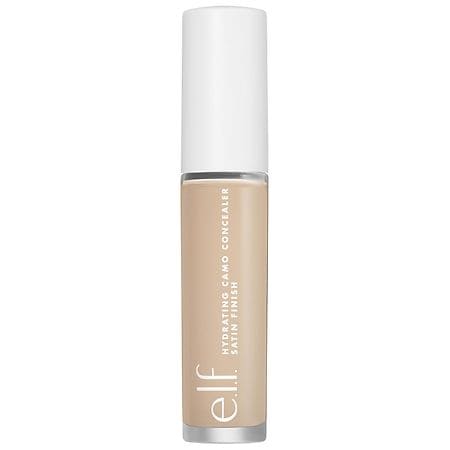

e.l.f. Hydrating Camo Concealer - Medium Sand - 0.203 fl oz: Full Coverage, Satin Finish, Liquid, Face Application
Analysis updated September 2026 · How Scout scores
At a glance
Summary
This concealer contains beneficial ingredients like sodium hyaluronate and rosa damascena flower water, which provide hydration and soothing properties. However, it also includes synthetic compounds such as PEG/PPG and acrylates, which are associated with moderate safety concerns. The presence of phenoxyethanol as a preservative is common but can be irritating to sensitive skin, affecting the overall ingredient safety profile.
Key ingredients 26
Sodium HyaluronateGood
Sodium Hyaluronate is a form of hyaluronic acid that helps to retain moisture in the skin. It is known for its excellent hydrating properties and ability to improve skin texture. It is highly beneficial for maintaining skin hydration.
Risks
There are minimal risks associated with its use.
Benefits
Provides excellent hydration and improves skin texture.
Rosa Damascena Flower WaterGood
Rosa Damascena Flower Water is used for its soothing and anti-inflammatory properties. It helps to calm and hydrate the skin. It is beneficial for sensitive and irritated skin.
Risks
There are minimal risks associated with its use.
Benefits
Soothes and hydrates the skin, providing anti-inflammatory benefits.
Water (Aqua)Neutral
Water is a common solvent used in cosmetics to dissolve other ingredients. It helps in the application and spreadability of the product. It does not provide any direct benefits or risks.
Risks
There are no significant risks associated with water in cosmetics.
Benefits
Water helps in the even distribution of other ingredients.
CyclopentasiloxaneNeutral
Cyclopentasiloxane is a silicone that provides a smooth application and a silky feel. It evaporates quickly, leaving no residue. It is generally considered safe for use in cosmetics.
Risks
There are minimal risks, but it can cause irritation in sensitive individuals.
Benefits
It enhances the texture and spreadability of the product.
Butylene Glycol Dicaprylate/DicaprateNeutral
This ingredient acts as an emollient and helps to improve the texture of the product. It is used to enhance the spreadability and absorption of the product. It is generally considered safe for use in cosmetics.
Risks
There are minimal risks associated with its use.
Benefits
Improves the texture and feel of the product on the skin.
TrimethylsiloxysilicateNeutral
Trimethylsiloxysilicate is a film-forming agent that helps in providing long-lasting wear. It creates a barrier on the skin that helps in moisture retention. It is considered safe for use in cosmetics.
Risks
May cause slight irritation in sensitive skin.
Benefits
Provides long-lasting wear and helps in moisture retention.
Polyglyceryl-4 Diisostearate/Polyhydroxystearate/SebacateNeutral
This ingredient acts as an emulsifier, helping to blend water and oil components. It improves the stability and consistency of the product. It is generally safe for use in cosmetics.
Risks
There are minimal risks associated with its use.
Benefits
Enhances the stability and consistency of the product.
Ethylhexyl HydroxystearateNeutral
Ethylhexyl Hydroxystearate is used as an emollient and thickening agent. It helps to improve the texture and feel of the product. It is considered safe for use in cosmetics.
Risks
There are minimal risks associated with its use.
Benefits
Improves the texture and feel of the product on the skin.
Cetyl PEG/PPG-10/1 DimethiconeNeutral
This ingredient is a silicone-based surfactant that helps in spreading the product evenly. It provides a smooth and silky feel. It is generally considered safe for use in cosmetics.
Risks
May cause irritation in sensitive skin.
Benefits
Enhances the spreadability and feel of the product.
Propylene Glycol DibenzoateNeutral
Propylene Glycol Dibenzoate is used as a plasticizer and emollient. It helps to improve the flexibility and texture of the product. It is generally considered safe for use in cosmetics.
Risks
There are minimal risks associated with its use.
Benefits
Improves the flexibility and texture of the product.
PEG-10 DimethiconeNeutral
PEG-10 Dimethicone is a silicone-based surfactant that helps in spreading the product evenly. It provides a smooth and silky feel. It is generally considered safe for use in cosmetics.
Risks
May cause irritation in sensitive skin.
Benefits
Enhances the spreadability and feel of the product.
Disteardimonium HectoriteNeutral
Disteardimonium Hectorite is a thickening agent that helps to stabilize emulsions. It improves the texture and consistency of the product. It is generally considered safe for use in cosmetics.
Risks
There are minimal risks associated with its use.
Benefits
Enhances the texture and consistency of the product.
Sodium ChlorideNeutral
Sodium Chloride is used as a thickening agent and to adjust the viscosity of the product. It is commonly used in cosmetics and is generally considered safe. It does not provide any direct benefits or risks.
Risks
There are no significant risks associated with sodium chloride in cosmetics.
Benefits
Helps to adjust the viscosity of the product.
Acrylates/Polytrimethylsiloxymethacrylate CopolymerNeutral
This copolymer is used as a film-forming agent to provide long-lasting wear. It helps in creating a smooth and even finish. It is generally considered safe for use in cosmetics.
Risks
There are minimal risks associated with its use.
Benefits
Provides long-lasting wear and a smooth finish.
Perfluorooctyl TriethoxysilaneNeutral
Perfluorooctyl Triethoxysilane is used as a surface modifier to improve the spreadability of the product. It provides a smooth and even application. It is generally considered safe for use in cosmetics.
Risks
There are minimal risks associated with its use.
Benefits
Improves the spreadability and application of the product.
TrihydroxystearinNeutral
Trihydroxystearin is used as a thickening agent to improve the texture of the product. It helps in stabilizing emulsions. It is generally considered safe for use in cosmetics.
Risks
There are minimal risks associated with its use.
Benefits
Improves the texture and stability of the product.
SilicaNeutral
Silica is used as an absorbent and anti-caking agent in cosmetics. It helps to improve the texture and finish of the product. It is generally considered safe for use in cosmetics.
Risks
There are minimal risks associated with its use.
Benefits
Improves the texture and finish of the product.
Caprylyl GlycolNeutral
Caprylyl Glycol is used as a skin conditioning agent and preservative. It helps to improve the moisture content of the skin. It is generally considered safe for use in cosmetics.
Risks
There are minimal risks associated with its use.
Benefits
Improves the moisture content and condition of the skin.
EthylhexylglycerinNeutral
Ethylhexylglycerin is used as a preservative and skin conditioning agent. It helps to improve the moisture content of the skin. It is generally considered safe for use in cosmetics.
Risks
There are minimal risks associated with its use.
Benefits
Improves the moisture content and condition of the skin.
Titanium Dioxide (Ci 77891)Neutral
Titanium Dioxide is used as a pigment and UV filter in cosmetics. It provides coverage and sun protection. It is generally considered safe for use in cosmetics.
Risks
There are minimal risks associated with its use.
Benefits
Provides coverage and sun protection.
Iron Oxides (Ci 77491, Ci 77492, Ci 77499)Neutral
Iron Oxides are used as pigments to provide color in cosmetics. They are stable and non-toxic. They are generally considered safe for use in cosmetics.
Risks
There are minimal risks associated with their use.
Benefits
Provide stable and non-toxic color to the product.
Propylene GlycolBad
Processed additive flagged under Scout's ingredient doctrine.
Risks
May cause irritation or allergic reactions in sensitive individuals.
Benefits
Helps to keep the skin hydrated and smooth.
PhenoxyethanolBad
Processed additive flagged under Scout's ingredient doctrine.
Risks
May cause irritation or allergic reactions in sensitive individuals.
Benefits
Prevents the growth of bacteria and mold, extending the product's shelf life.
DimethiconeBad
Occlusive silicone film-former — flagged under clean-beauty doctrine.
Risks
May cause slight irritation in sensitive skin.
Benefits
Provides a smooth application and helps in moisture retention.
Dimethicone/Vinyl Dimethicone CrosspolymerBad
Processed additive flagged under Scout's ingredient doctrine.
Risks
May cause slight irritation in sensitive skin.
Benefits
Enhances the texture and spreadability of the product.
Disodium EDTABad
Processed additive flagged under Scout's ingredient doctrine.
Risks
There are minimal risks associated with its use.
Benefits
Improves the stability and shelf life of the product.
Get the full breakdown in the Scout appTake Scout shopping
Scan any product to see lab results, healthy alternatives, and your personalized analysis.
Download on theApp Store GET IT ONGoogle Play