
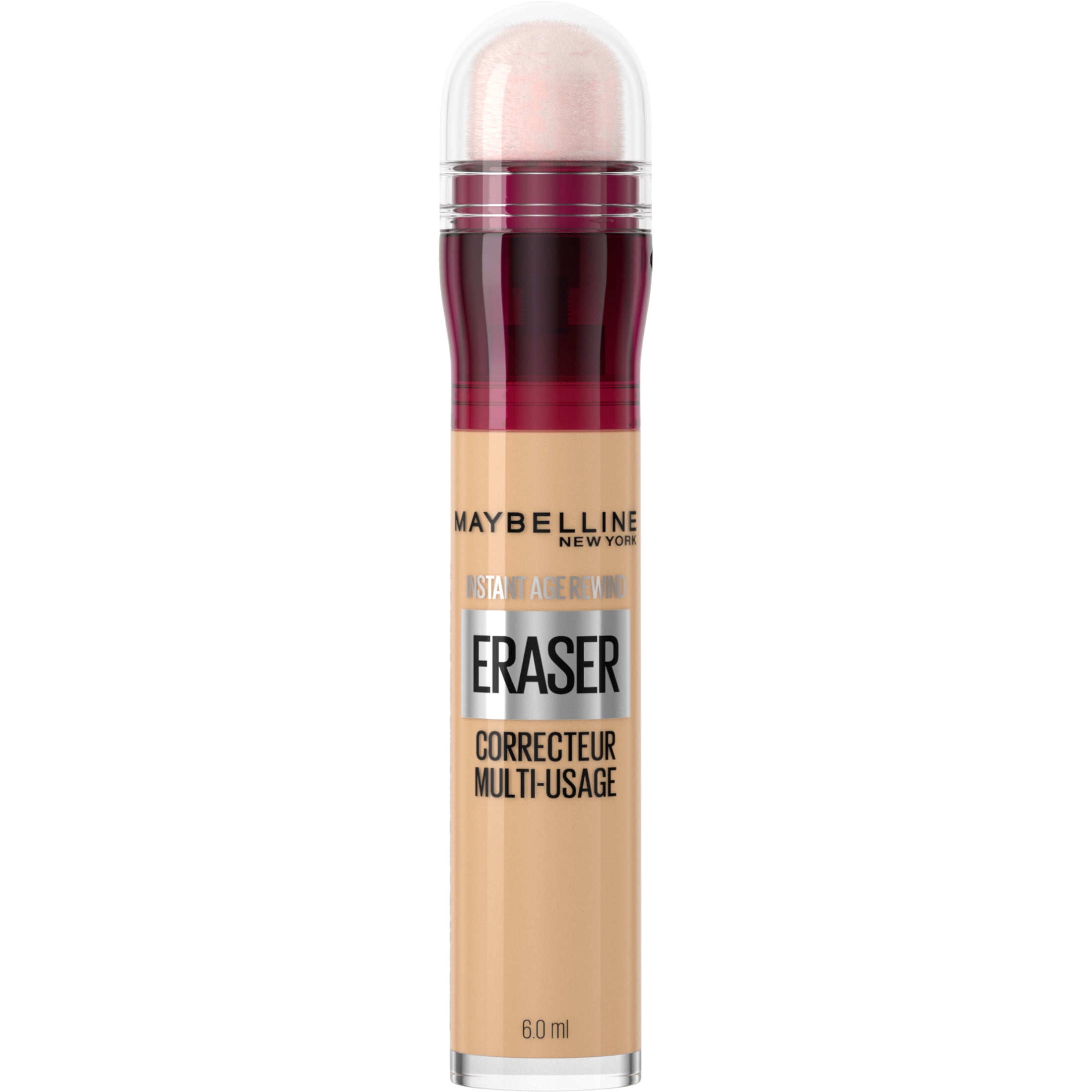

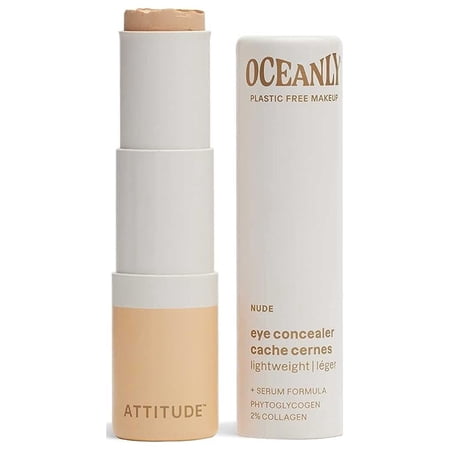

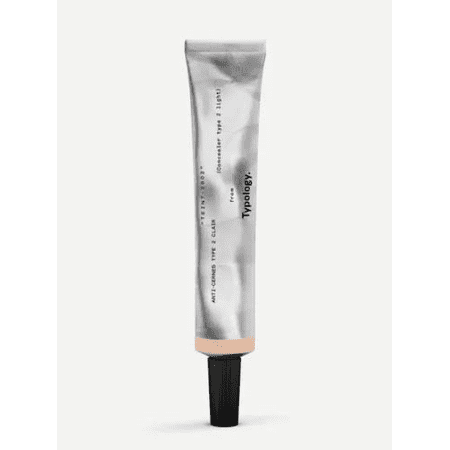
MAYBELLINE Instant Anti-Age Eraser Under Eye Lightweight Concealer *ALL SHADES*
Analysis updated September 2026 · How Scout scores
At a glance
Summary
This concealer contains beneficial ingredients such as glycerin, peptides, and antioxidants that support skin hydration and anti-aging. However, it also includes phenoxyethanol, a preservative that can cause irritation in some individuals, and several PEG compounds, which are synthetic emulsifiers. The presence of these synthetic ingredients and preservatives affects the overall safety profile, leading to a moderate score.
Key ingredients 38
TocopherolVery Good
Tocopherol, also known as Vitamin E, is an antioxidant that helps protect the skin from oxidative stress. It is widely used in skincare for its moisturizing and anti-aging properties. It is considered highly beneficial for skin health.
Risks
Generally safe with minimal risk of irritation.
Benefits
Protects skin from oxidative stress and provides anti-aging benefits.
Palmitoyl Tripeptide-1Very Good
Palmitoyl Tripeptide-1 is a peptide used for its anti-aging properties. It helps in stimulating collagen production and improving skin elasticity. It is considered highly beneficial for reducing the appearance of fine lines and wrinkles.
Risks
Generally safe with minimal risk of irritation.
Benefits
Stimulates collagen production and improves skin elasticity.
Palmitoyl Tetrapeptide-7Very Good
Palmitoyl Tetrapeptide-7 is a peptide used for its anti-inflammatory and anti-aging properties. It helps in reducing skin inflammation and improving skin elasticity. It is considered highly beneficial for skin health.
Risks
Generally safe with minimal risk of irritation.
Benefits
Reduces inflammation and improves skin elasticity.
GlycerinGood
Glycerin is a humectant that attracts moisture to the skin. It is widely used in skincare for its hydrating properties. It helps maintain skin hydration and improves skin barrier function.
Risks
Generally safe with minimal risk of irritation.
Benefits
Excellent for skin hydration and improving skin barrier.
Lycium Barbarum Fruit ExtractGood
Lycium Barbarum Fruit Extract, also known as goji berry extract, is rich in antioxidants. It helps in protecting the skin from oxidative stress and improving skin health. It is considered beneficial for its anti-aging properties.
Benefits
Rich in antioxidants and provides anti-aging benefits.
BiotinGood
Beneficial ingredient — whole-food or functional value in this product class.
Benefits
Improves skin and hair health.
WaterNeutral
Water is a common solvent used in cosmetics to dissolve other ingredients. It helps in forming the base of the product. It does not provide any direct benefits or risks.
Benefits
Acts as a solvent and helps in the application of the product.
IsododecaneNeutral
Isododecane is a hydrocarbon used to enhance the spreadability of products. It evaporates quickly, leaving a lightweight feel. It is non-comedogenic and safe for most skin types.
Benefits
Improves spreadability and provides a lightweight feel.
PEG-9 Polydimethylsiloxyethyl DimethiconeNeutral
This ingredient is a silicone-based polymer used for its conditioning properties. It helps in providing a smooth application. It is considered safe for use in cosmetics.
Risks
May cause irritation in very sensitive skin.
Benefits
Improves texture and provides conditioning effects.
Disteardimonium HectoriteNeutral
Disteardimonium Hectorite is a thickening agent used to stabilize emulsions. It helps in maintaining the consistency of the product. It is considered safe for use in cosmetics.
Benefits
Stabilizes emulsions and maintains product consistency.
SilicaNeutral
Silica is used as an absorbent and anti-caking agent in cosmetics. It helps in controlling shine and improving the texture of the product. It is generally considered safe for use.
Risks
Inhalation of fine silica particles can be harmful.
Benefits
Controls shine and improves product texture.
Dimethicone CrosspolymerNeutral
Dimethicone Crosspolymer is used to provide a smooth, silky feel to the product. It helps in improving the spreadability and texture. It is considered safe for use in cosmetics.
Risks
May cause mild irritation in sensitive skin.
Benefits
Enhances texture and spreadability of the product.
PEG-10 DimethiconeNeutral
PEG-10 Dimethicone is a silicone-based polymer used for its conditioning properties. It helps in providing a smooth application and is considered safe for use in cosmetics.
Risks
May cause irritation in very sensitive skin.
Benefits
Improves texture and provides conditioning effects.
Cetyl PEG/PPG-10/1 DimethiconeNeutral
This ingredient is used as an emulsifier and conditioning agent. It helps in stabilizing formulations and providing a smooth application. It is generally considered safe for use.
Risks
May cause mild irritation in sensitive skin.
Benefits
Stabilizes formulations and improves application.
Sodium ChlorideNeutral
Sodium Chloride is used as a thickening agent in cosmetics. It helps in adjusting the viscosity of the product. It is generally considered safe for use.
Benefits
Adjusts viscosity and improves product texture.
Polyglyceryl-4 IsostearateNeutral
This ingredient is an emulsifier used to stabilize formulations. It helps in blending oil and water components. It is considered safe for use in cosmetics.
Benefits
Stabilizes formulations and improves texture.
Caprylyl GlycolNeutral
Caprylyl Glycol is used as a skin conditioning agent and preservative. It helps in moisturizing the skin and enhancing the efficacy of other preservatives. It is generally considered safe for use.
Risks
May cause mild irritation in sensitive skin.
Benefits
Moisturizes skin and enhances preservative efficacy.
Disodium Stearoyl GlutamateNeutral
This ingredient is used as an emulsifier and skin conditioning agent. It helps in stabilizing formulations and providing a smooth application. It is considered safe for use in cosmetics.
Benefits
Stabilizes formulations and conditions the skin.
EthylhexylglycerinNeutral
Ethylhexylglycerin is used as a skin conditioning agent and preservative enhancer. It helps in improving the efficacy of preservatives and conditioning the skin. It is generally considered safe for use.
Risks
May cause mild irritation in sensitive skin.
Benefits
Enhances preservative efficacy and conditions the skin.
ChlorphenesinNeutral
Chlorphenesin is a preservative used to prevent microbial growth in cosmetics. It is effective in low concentrations and is considered safe for use. It helps in extending the shelf life of the product.
Risks
Potential skin irritant and allergen.
Benefits
Prevents microbial growth and extends product shelf life.
Aluminum HydroxideNeutral
Aluminum Hydroxide is used as an opacifying agent and skin protectant. It helps in providing opacity and improving the texture of the product. It is generally considered safe for use.
Benefits
Provides opacity and improves product texture.
Steareth-20Neutral
Steareth-20 is used as an emulsifier to stabilize formulations. It helps in blending oil and water components and is considered safe for use in cosmetics.
Risks
May cause mild irritation in sensitive skin.
Benefits
Stabilizes formulations and improves texture.
Chlorhexidine DigluconateNeutral
Chlorhexidine Digluconate is used as a preservative and antimicrobial agent. It helps in preventing microbial growth and is effective in low concentrations. It is generally considered safe for use.
Risks
Potential skin irritant and allergen.
Benefits
Prevents microbial growth and extends product shelf life.
N-HydroxysuccinimideNeutral
N-Hydroxysuccinimide is used as a skin conditioning agent. It helps in improving the appearance of dark circles and is considered safe for use in cosmetics.
Benefits
Improves the appearance of dark circles.
Lactic AcidNeutral
Standard formulation ingredient — neither beneficial nor harmful at typical use.
Risks
May cause irritation in sensitive skin if used in high concentrations.
Benefits
Exfoliates and improves skin texture.
Sodium CitrateNeutral
Sodium Citrate is used as a buffering agent to maintain the pH of the product. It helps in stabilizing formulations and is considered safe for use in cosmetics.
Benefits
Maintains pH balance and stabilizes formulations.
ChrysinNeutral
Chrysin is a flavonoid used for its antioxidant properties. It helps in protecting the skin from oxidative stress and is considered safe for use in cosmetics.
Benefits
Provides antioxidant protection for the skin.
Pentaerythrityl Tetra-Di-T-Butyl HydroxyhydrocinnamateNeutral
This ingredient is an antioxidant used to stabilize formulations and prevent oxidation. It helps in extending the shelf life of the product and is considered safe for use.
Benefits
Stabilizes formulations and prevents oxidation.
Citric AcidNeutral
Citric Acid is used as a pH adjuster and exfoliant in cosmetics. It helps in maintaining the pH balance and improving skin texture. It is generally considered safe for use.
Risks
May cause irritation in sensitive skin if used in high concentrations.
Benefits
Maintains pH balance and improves skin texture.
CI 77891Neutral
CI 77891, also known as Titanium Dioxide, is used as a pigment and opacifying agent. It helps in providing coverage and opacity to the product. It is generally considered safe for use in cosmetics.
Risks
Inhalation of fine particles can be harmful.
Benefits
Provides coverage and opacity to the product.
CI 77491Neutral
CI 77491, also known as Iron Oxide Red, is used as a pigment in cosmetics. It helps in providing color and is considered safe for use.
Benefits
Provides color to the product.
CI 77492Neutral
CI 77492, also known as Iron Oxide Yellow, is used as a pigment in cosmetics. It helps in providing color and is considered safe for use.
Benefits
Provides color to the product.
CI 77499Neutral
CI 77499, also known as Iron Oxide Black, is used as a pigment in cosmetics. It helps in providing color and is considered safe for use.
Benefits
Provides color to the product.
DimethiconeBad
Occlusive silicone film-former — flagged under clean-beauty doctrine.
Risks
May cause breakouts in some individuals with sensitive skin.
Benefits
Provides a smooth texture and helps in moisture retention.
Propylene GlycolBad
Processed additive flagged under Scout's ingredient doctrine.
Risks
May cause irritation in sensitive skin types.
Benefits
Helps in moisture retention and improves product texture.
PhenoxyethanolBad
Phenoxyethanol is a preservative used to prevent microbial growth. It is effective in low concentrations but can cause irritation in some individuals. It is considered safe in concentrations up to 1%.
Risks
Potential skin irritant and allergen.
Benefits
Prevents microbial growth and extends product shelf life.
Sodium BenzoateBad
Synthetic preservative that can form benzene in the presence of vitamin C.
Risks
Potential skin irritant and allergen.
Benefits
Prevents microbial growth and extends product shelf life.
Potassium SorbateBad
Synthetic preservative — flagged in daily-use products.
Risks
Potential skin irritant and allergen.
Benefits
Prevents microbial growth and extends product shelf life.
Get the full breakdown in the Scout appTake Scout shopping
Scan any product to see lab results, healthy alternatives, and your personalized analysis.
Download on theApp Store GET IT ONGoogle Play