
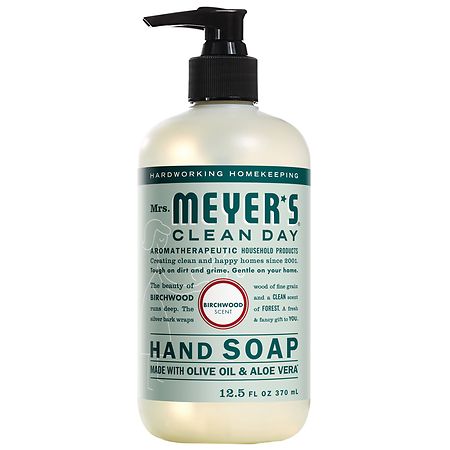

Mrs. Meyer’s Clean Day Hand Soap Birchwood Scent 12.5 Fl Oz Bottle
Analysis updated July 2026 · How Scout scores
At a glance
Summary
Mrs. Meyer’s Clean Day Hand Soap contains synthetic fragrance, which can be a concern due to potential skin irritation and undisclosed chemical components. However, it does not include harsh surfactants like SLS or SLES, which is a positive aspect. The product is moderately processed with a mix of natural and synthetic ingredients, leading to a balanced score.
Key ingredients 15
Olea Europaea (Olive) Fruit OilVery Good
Olive oil is a natural oil rich in antioxidants and fatty acids. It is used in cosmetics for its moisturizing and nourishing properties. It is considered safe and beneficial for most skin types.
Risks
There are no significant risks associated with olive oil.
Benefits
Helps to moisturize and nourish the skin, improving its texture and appearance.
Aloe Barbadensis Leaf JuiceVery Good
Aloe vera juice is known for its soothing and hydrating properties. It is widely used in skincare for its ability to calm irritated skin. It is considered safe and beneficial for all skin types.
Risks
There are no significant risks associated with aloe vera juice.
Benefits
Provides soothing and hydrating effects, making it ideal for sensitive or irritated skin.
GlycerinGood
Glycerin is a humectant that attracts moisture to the skin. It is widely used in skincare for its hydrating properties. It is considered safe and beneficial for all skin types.
Risks
There are no significant risks associated with glycerin.
Benefits
Helps to maintain skin hydration and improve skin barrier function.
Lavandula Hybrida (Lavandin) OilGood
Lavandin oil is an essential oil known for its calming and aromatic properties. It is used in cosmetics for its fragrance and potential skin-soothing effects. It is generally considered safe when used in appropriate concentrations.
Risks
May cause irritation or allergic reactions in sensitive individuals.
Benefits
Provides a pleasant scent and may have calming effects on the skin.
Pogostemon Cablin (Patchouli) OilGood
Patchouli oil is an essential oil with a distinctive earthy aroma. It is used in cosmetics for its fragrance and potential skin benefits. It is generally considered safe when used in appropriate concentrations.
Risks
May cause irritation or allergic reactions in sensitive individuals.
Benefits
Provides a unique scent and may have skin-soothing properties.
WaterNeutral
Water is a common solvent used in cosmetic formulations. It helps dissolve other ingredients and provides a base for the product. It is generally considered safe and non-irritating.
Risks
There are no significant risks associated with water in cosmetics.
Benefits
Water helps to hydrate the skin and is essential for the formulation of many cosmetic products.
Cocamidopropyl HydroxysultaineNeutral
Cocamidopropyl Hydroxysultaine is a surfactant and foam booster derived from coconut oil. It is used to improve the texture and cleansing ability of the product. It is generally considered mild and non-irritating.
Risks
In rare cases, it may cause skin irritation or allergic reactions.
Benefits
It helps to cleanse the skin by removing dirt and oil without being overly harsh.
Sodium Methyl 2-SulfolaurateNeutral
Sodium Methyl 2-Sulfolaurate is a surfactant used for its cleansing properties. It is considered milder than traditional sulfates. It is generally regarded as safe for use in cosmetics.
Risks
May cause mild irritation in sensitive individuals.
Benefits
Provides effective cleansing while being gentler on the skin compared to harsher sulfates.
Piper Nigrum (Black Pepper) OilNeutral
Black pepper oil is used in cosmetics for its fragrance and potential antioxidant properties. It is generally considered safe when used in small amounts. It adds a spicy note to the product's scent profile.
Risks
May cause irritation or allergic reactions in sensitive individuals.
Benefits
May provide antioxidant benefits and enhance the product's fragrance.
Disodium 2-SulfolaurateNeutral
Disodium 2-Sulfolaurate is a surfactant used for its cleansing properties. It is considered milder than traditional sulfates. It is generally regarded as safe for use in cosmetics.
Risks
May cause mild irritation in sensitive individuals.
Benefits
Provides effective cleansing while being gentler on the skin compared to harsher sulfates.
Citric AcidNeutral
Citric acid is used to adjust the pH of cosmetic products. It is also known for its mild exfoliating properties. It is generally considered safe when used in appropriate concentrations.
Risks
May cause irritation in sensitive skin if used in high concentrations.
Benefits
Helps to maintain the product's pH balance and can provide mild exfoliation.
Sodium ChlorideNeutral
Sodium chloride, or table salt, is used as a thickening agent in cosmetics. It helps to improve the texture and stability of the product. It is generally considered safe and non-irritating.
Risks
There are no significant risks associated with sodium chloride in cosmetics.
Benefits
Improves product texture and stability.
Fragrance (Benzyl Salicylate, D-Limonene, Linalool)Bad
Fragrance components like Benzyl Salicylate, D-Limonene, and Linalool are used to impart scent to products. They are common allergens and can cause skin irritation. Fragrances are often criticized for their potential to cause allergic reactions.
Risks
May cause skin irritation, allergic reactions, or sensitization.
Benefits
Provides a pleasant scent to the product.
Potassium SorbateBad
Synthetic preservative — flagged in daily-use products.
Risks
May cause mild irritation in sensitive individuals.
Benefits
Prevents spoilage and extends the product's shelf life.
Sodium BenzoateBad
Synthetic preservative that can form benzene in the presence of vitamin C.
Risks
May cause mild irritation in sensitive individuals.
Benefits
Ensures product safety by preventing microbial contamination.
Get the full breakdown in the Scout appTake Scout shopping
Scan any product to see lab results, healthy alternatives, and your personalized analysis.
Download on theApp Store GET IT ONGoogle PlayAmazon pricing & content
Amazon price as of . Product prices and availability are accurate as of the date/time indicated and are subject to change. Any price and availability information displayed on Amazon.com at the time of purchase will apply to the purchase of this product.
CERTAIN CONTENT THAT APPEARS ON THIS SITE COMES FROM AMAZON. THIS CONTENT IS PROVIDED “AS IS” AND IS SUBJECT TO CHANGE OR REMOVAL AT ANY TIME.