
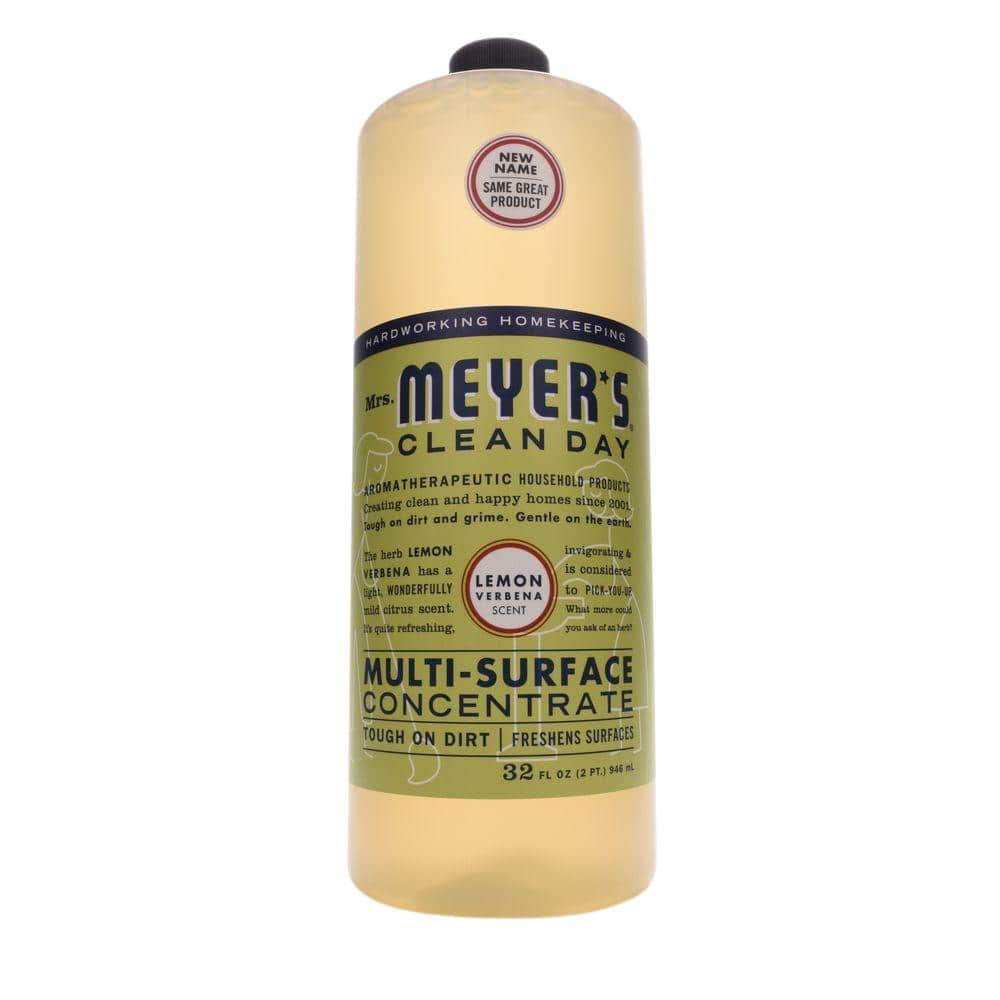


Mrs. Meyer's Clean Day Lemon Verbena Multi-Surface Concentrate Cleaner - 32 fl oz
Analysis updated July 2026 · How Scout scores
At a glance
Summary
This cleaner contains plant-derived surfactants like decyl glucoside and lauryl glucoside, which are generally considered safer and more environmentally friendly. However, the presence of synthetic fragrance and preservatives such as methylisothiazolinone and benzisothiazolinone, which can cause skin irritation and have environmental concerns, lowers its overall safety and environmental impact score. The product is moderately processed, which also affects its rating.
Key ingredients 15
Water
Water is a universal solvent used to dissolve other ingredients and facilitate cleaning. It is essential for the formulation of liquid cleaning products. It helps in diluting other components to ensure even distribution.
Risks
There are no significant risks associated with water in cleaning products.
Benefits
Water is safe and non-toxic, making it a beneficial base for cleaning solutions.
Sodium Methyl 2-Sulfolaurate
Sodium Methyl 2-Sulfolaurate is a surfactant used to lower the surface tension of water, enhancing cleaning efficiency. It is derived from natural sources and is biodegradable. It helps in breaking down and removing dirt and grease.
Risks
There are minimal risks associated with this ingredient, though it may cause mild irritation in sensitive individuals.
Benefits
It is considered a mild and effective surfactant, contributing to the product's cleaning power without harsh effects.
Decyl Glucoside
Decyl Glucoside is a plant-derived surfactant known for its mildness and effectiveness. It is used to help mix oil and water, allowing for better cleaning. It is biodegradable and considered environmentally friendly.
Risks
There are minimal risks, but it may cause mild irritation in very sensitive skin.
Benefits
It is gentle on the skin and suitable for sensitive skin, making it a positive addition to cleaning products.
Sodium Citrate
Sodium Citrate is used as a buffering agent to maintain the pH balance of the product. It helps in stabilizing the formula and enhancing the effectiveness of other ingredients. It is derived from citric acid, which is naturally occurring.
Risks
There are no significant risks associated with sodium citrate in cleaning products.
Benefits
It is safe and helps in maintaining product stability, contributing to the overall effectiveness of the cleaner.
Lauryl Glucoside
Lauryl Glucoside is a mild, plant-derived surfactant used to enhance the cleaning power of the product. It is biodegradable and considered safe for the environment. It helps in emulsifying oils and dirt for easy removal.
Risks
There are minimal risks, though it may cause mild irritation in sensitive individuals.
Benefits
It is gentle and effective, making it a beneficial ingredient in eco-friendly cleaning products.
Fragrance
Fragrance is added to cleaning products to provide a pleasant scent. It is often a blend of synthetic and natural compounds. It enhances the user experience by masking the odors of other ingredients.
Risks
Fragrances can cause allergic reactions and sensitivities in some individuals.
Benefits
While it improves the sensory appeal of the product, it does not contribute to cleaning efficacy.
Citrus Limon (Lemon) Peel Oil
Lemon peel oil is used for its natural fragrance and potential antibacterial properties. It is derived from lemon peels and adds a fresh scent to the product. It may also contribute to the cleaning power due to its natural oils.
Risks
There is a risk of skin irritation or allergic reactions in sensitive individuals.
Benefits
It provides a natural, pleasant scent and may offer mild antibacterial benefits.
Cymbopogon Schoenanthus (Lemongrass) Oil
Lemongrass oil is included for its natural fragrance and potential antimicrobial properties. It is derived from the lemongrass plant and adds a fresh, citrus-like scent. It may enhance the product's cleaning power.
Risks
There is a risk of skin irritation or allergic reactions in sensitive individuals.
Benefits
It provides a natural scent and may offer antimicrobial benefits, enhancing the product's appeal.
Pinus Synestis (Pine) Leaf Oil
Pine leaf oil is used for its natural fragrance and potential antibacterial properties. It is derived from pine leaves and adds a fresh, woody scent to the product. It may contribute to the cleaning power due to its natural oils.
Risks
There is a risk of skin irritation or allergic reactions in sensitive individuals.
Benefits
It provides a natural, pleasant scent and may offer mild antibacterial benefits.
Citric Acid
Citric acid is used as a natural preservative and pH adjuster in cleaning products. It is derived from citrus fruits and helps in breaking down stains and mineral deposits. It enhances the cleaning power of the product.
Risks
There are minimal risks, though it may cause mild irritation in sensitive skin.
Benefits
It is effective in removing hard water stains and is environmentally friendly.
Tetrasodium Glutamate Diacetate
Tetrasodium Glutamate Diacetate is a chelating agent used to enhance the effectiveness of preservatives. It helps in stabilizing the formula and improving cleaning performance. It is considered safe and biodegradable.
Risks
There are minimal risks associated with this ingredient.
Benefits
It improves the stability and effectiveness of the product, contributing to its overall performance.
Capryleth-4
Capryleth-4 is a surfactant and emulsifier used to improve the texture and spreadability of the product. It helps in mixing oil and water components for better cleaning. It is considered safe for use in cleaning products.
Risks
There are minimal risks, though it may cause mild irritation in sensitive individuals.
Benefits
It enhances the product's texture and cleaning ability, making it more effective.
Methylisothiazinone
Methylisothiazinone is a preservative used to prevent microbial growth in cleaning products. It is effective in low concentrations and helps in extending the product's shelf life. It is commonly used in various personal care and cleaning products.
Risks
It is a known skin sensitizer and can cause allergic reactions in some individuals.
Benefits
It effectively preserves the product, preventing spoilage and contamination.
Benzisothiazolinone
Benzisothiazolinone is a preservative used to inhibit the growth of bacteria and fungi in cleaning products. It is effective in maintaining product stability and safety. It is widely used in household and industrial cleaning products.
Risks
It can cause skin irritation and allergic reactions in sensitive individuals.
Benefits
It helps in preserving the product, ensuring its longevity and effectiveness.
Contains Fragrance Allergens
Fragrance allergens are components of fragrance that can cause allergic reactions in sensitive individuals. They are included to enhance the scent of the product. They are often a mix of natural and synthetic compounds.
Risks
They can cause allergic reactions and sensitivities, particularly in individuals with fragrance allergies.
Benefits
While they enhance the product's scent, they do not contribute to cleaning efficacy.
Processing
Processed Foods
Get the full breakdown in the Scout appTake Scout shopping
Scan any product to see lab results, healthy alternatives, and your personalized analysis.
Download on theApp Store GET IT ONGoogle PlayAmazon pricing & content
Amazon price as of . Product prices and availability are accurate as of the date/time indicated and are subject to change. Any price and availability information displayed on Amazon.com at the time of purchase will apply to the purchase of this product.
CERTAIN CONTENT THAT APPEARS ON THIS SITE COMES FROM AMAZON. THIS CONTENT IS PROVIDED “AS IS” AND IS SUBJECT TO CHANGE OR REMOVAL AT ANY TIME.