
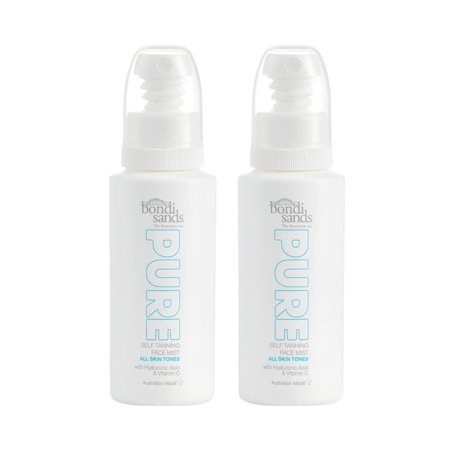
2 x Bondi Sands Pure Self Tanning Face Mist - 70ml
Analysis updated August 2026 · How Scout scores
At a glance
Summary
This self-tanning face mist contains beneficial ingredients like glycerin, hyaluronic acid, and vitamin C, which are known for their moisturizing and antioxidant properties. However, the presence of propylene glycol and polysorbate 20, which are synthetic compounds, slightly lowers the score due to their potential for irritation and the level of processing involved. The product is processed, which also impacts its overall rating.
Key ingredients 10
Vitamin CVery Good
Vitamin C is a potent antioxidant that helps protect the skin from environmental damage. It also brightens the skin and promotes collagen production. It is widely used in skincare for its anti-aging benefits.
Risks
May cause irritation or redness in sensitive skin, especially at high concentrations.
Benefits
Protects against oxidative stress, brightens the complexion, and supports collagen synthesis.
GlycerinGood
Glycerin is a humectant that attracts moisture to the skin, helping to keep it hydrated. It is widely used in skincare for its moisturizing properties. It is generally well-tolerated and beneficial for all skin types.
Risks
There are minimal risks associated with glycerin, though it may cause irritation in very sensitive skin.
Benefits
Helps maintain skin hydration and improves skin barrier function.
Hyaluronic AcidGood
Hyaluronic Acid is a powerful humectant that attracts and retains moisture in the skin. It is highly beneficial for maintaining skin hydration and plumpness. It is well-tolerated and suitable for all skin types.
Risks
There are minimal risks associated with hyaluronic acid, though it may cause irritation in very sensitive skin.
Benefits
Deeply hydrates the skin and improves its elasticity and texture.
AquaNeutral
Aqua, or water, is commonly used as a solvent in cosmetic formulations. It helps dissolve other ingredients and provides a base for the product. It is generally considered safe and non-reactive.
Risks
There are no significant risks associated with water in cosmetics.
Benefits
Water helps in the even distribution of other ingredients and hydrates the skin.
DihydroxyacetoneNeutral
Dihydroxyacetone (DHA) is a common ingredient in self-tanning products. It reacts with amino acids in the skin to produce a temporary darkening effect. While effective for tanning, it can cause skin irritation in some individuals.
Risks
Potential risks include skin irritation and allergic reactions, especially with prolonged use.
Benefits
Provides a sunless tanning effect without exposure to harmful UV rays.
Pentylene GlycolNeutral
Pentylene Glycol is a synthetic humectant and solvent that helps retain moisture in the skin. It also has antimicrobial properties, which can enhance product preservation. It is generally well-tolerated in cosmetic formulations.
Risks
Potential for skin irritation in sensitive individuals.
Benefits
Contributes to skin hydration and product stability.
Polysorbate 20Neutral
Polysorbate 20 is an emulsifier that helps mix oil and water-based ingredients. It is commonly used in cosmetics to stabilize formulations. It is generally considered safe for use in personal care products.
Risks
May cause mild skin irritation in some individuals.
Benefits
Enhances product texture and stability by ensuring even distribution of ingredients.
Dimethyl IsosorbideNeutral
Dimethyl Isosorbide is used as a solvent to enhance the delivery of active ingredients in cosmetics. It improves the penetration of ingredients into the skin. It is generally considered safe for use in cosmetics.
Risks
Potential for skin irritation in sensitive individuals.
Benefits
Enhances the effectiveness of active ingredients by improving their penetration.
Sodium MetabisulfiteNeutral
Sodium Metabisulfite is used as a preservative and antioxidant in cosmetics. It helps prevent the oxidation of ingredients, extending the product's shelf life. It is generally safe but can cause allergic reactions in some individuals.
Risks
May cause allergic reactions or skin irritation in sensitive individuals.
Benefits
Prevents oxidation and extends the shelf life of cosmetic products.
Propylene GlycolBad
Processed additive flagged under Scout's ingredient doctrine.
Risks
May cause skin irritation or allergic reactions in sensitive individuals.
Benefits
Improves skin hydration and enhances the effectiveness of other active ingredients.
Processing
Processed Foods
Get the full breakdown in the Scout appTake Scout shopping
Scan any product to see lab results, healthy alternatives, and your personalized analysis.
Download on theApp Store GET IT ONGoogle Play