
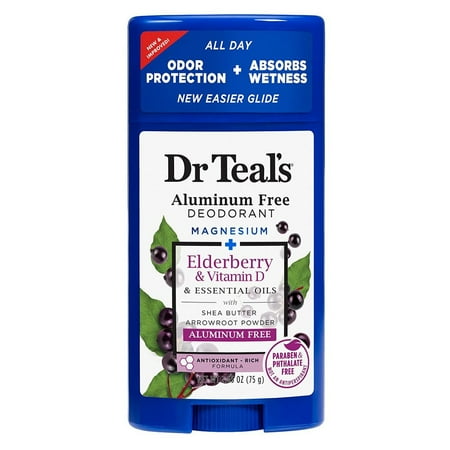
Dr Teal s Aluminum Free Deodorant - Magnesium Plus Elderberry & Vitamin D & Essential Oils 2.65 oz
Analysis updated August 2026 · How Scout scores
At a glance
Summary
This deodorant is aluminum-free and contains several beneficial natural ingredients such as magnesium hydroxide, coconut oil, and shea butter, which contribute to effective odor control and skin nourishment. However, the presence of synthetic fragrance is a concern as it may contain undisclosed chemicals that could cause skin irritation or allergic reactions. The product is processed, which slightly impacts its overall rating, but it remains a relatively clean option in its category.
Key ingredients 9
Magnesium HydroxideVery Good
Magnesium hydroxide is a gentle and effective odor neutralizer. It works by raising the pH of the skin, inhibiting the growth of odor-causing bacteria. It is a preferred alternative to baking soda for sensitive skin.
Risks
Generally considered safe with minimal risk of irritation.
Benefits
It effectively neutralizes odors without causing irritation.
Mentha Viridis (Spearmint) ExtractGood
Spearmint extract is known for its refreshing scent and potential antimicrobial properties. It can help in reducing odor-causing bacteria. Additionally, it provides a cooling sensation which can be soothing.
Risks
Some individuals may experience skin irritation or allergic reactions.
Benefits
It offers a natural fragrance and may help in controlling odor.
Magnesium ChlorideGood
Magnesium chloride is a mineral that can help neutralize body odor. It is less irritating compared to other deodorizing agents. It also supports skin health by maintaining moisture balance.
Risks
Excessive use may lead to skin irritation in sensitive individuals.
Benefits
It effectively neutralizes odor and supports skin hydration.
Simmondsia Chinensis (Jojoba) Seed OilGood
Jojoba oil is a natural moisturizer that mimics the skin's natural oils. It helps in maintaining skin hydration and can soothe irritation. It is non-comedogenic and suitable for sensitive skin.
Risks
Rarely, it may cause allergic reactions in some individuals.
Benefits
It moisturizes and soothes the skin effectively.
Cocos Nucifera (Coconut) OilGood
Coconut oil is a natural emollient that hydrates and nourishes the skin. It has antimicrobial properties that can help reduce odor-causing bacteria. It is widely used in natural deodorants for its skin-friendly properties.
Risks
May cause breakouts in acne-prone skin due to its comedogenic nature.
Benefits
It hydrates the skin and provides antimicrobial benefits.
Sodium BicarbonateGood
Sodium bicarbonate is a powerful natural deodorizer that neutralizes odors effectively. It raises the pH of the skin, making it less hospitable for odor-causing bacteria. It is a common ingredient in natural deodorants for its efficacy.
Risks
Can cause skin irritation or rash in sensitive individuals.
Benefits
It is highly effective at neutralizing odors naturally.
Butyrospermum Parkii (Shea) ButterGood
Shea butter is a rich moisturizer that nourishes and protects the skin. It contains vitamins and fatty acids that promote skin health. It is often used in skincare for its soothing and anti-inflammatory properties.
Risks
Rarely, it may cause allergic reactions in sensitive individuals.
Benefits
It deeply moisturizes and soothes the skin.
Magnesium Sulfate (Epsom Salt)Neutral
Standard formulation ingredient — neither beneficial nor harmful at typical use.
Risks
Overuse can lead to skin dryness or irritation.
Benefits
It soothes the skin and helps in detoxification.
Fragrance (Parfum)Very Bad
Synthetic fragrances can contain phthalates and other chemicals that may cause skin irritation. They are often associated with allergic reactions and sensitivities. The exact composition is usually undisclosed, raising concerns about potential harmful effects.
Risks
May cause skin irritation, allergic reactions, and potential endocrine disruption.
Benefits
Provides a pleasant scent, but benefits are outweighed by potential risks.
Get the full breakdown in the Scout appTake Scout shopping
Scan any product to see lab results, healthy alternatives, and your personalized analysis.
Download on theApp Store GET IT ONGoogle PlayAmazon pricing & content
Amazon price as of . Product prices and availability are accurate as of the date/time indicated and are subject to change. Any price and availability information displayed on Amazon.com at the time of purchase will apply to the purchase of this product.
CERTAIN CONTENT THAT APPEARS ON THIS SITE COMES FROM AMAZON. THIS CONTENT IS PROVIDED “AS IS” AND IS SUBJECT TO CHANGE OR REMOVAL AT ANY TIME.