
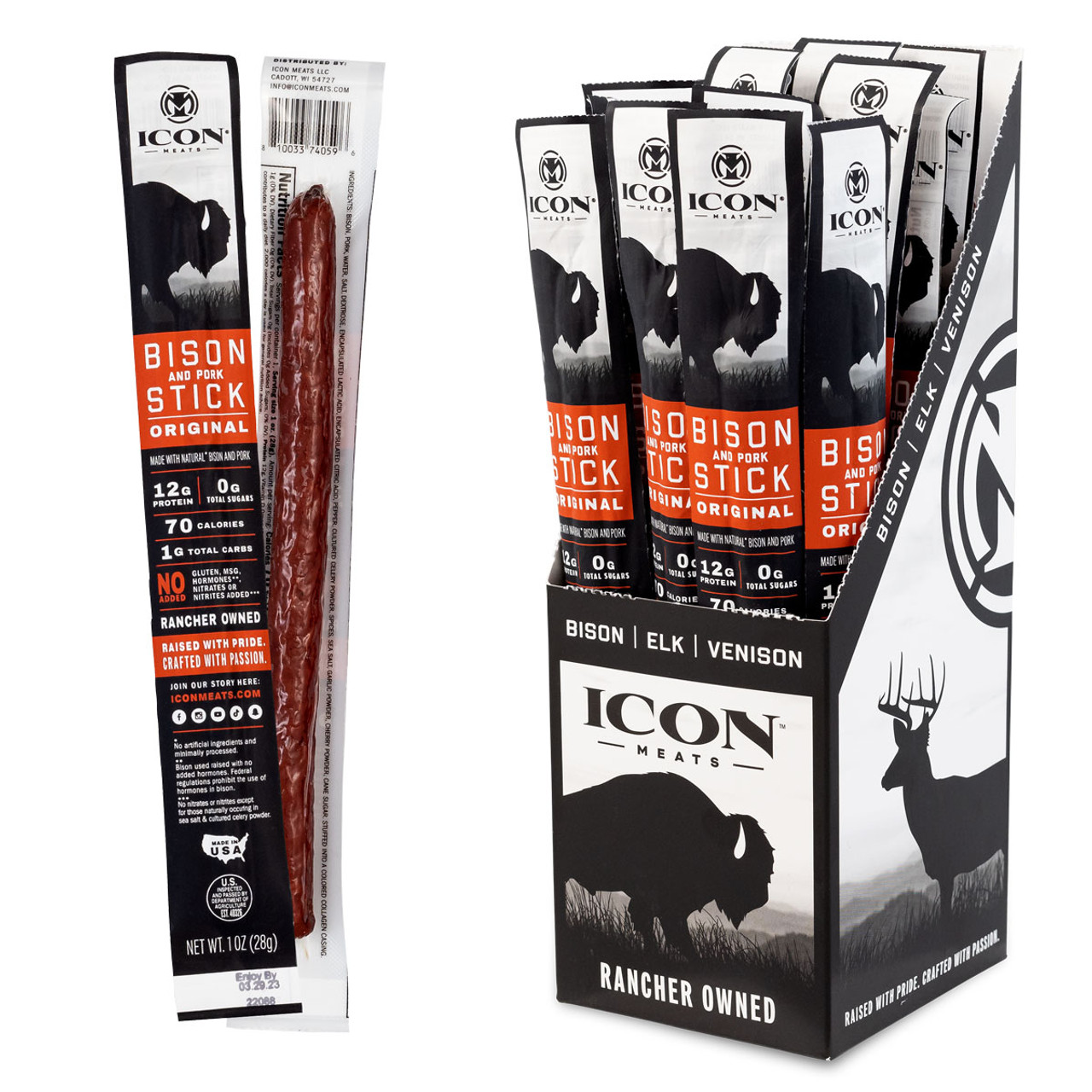


At a glance
Summary
The Bison Sticks feature high-quality ingredients like pasture-raised bison and grass-fed beef, which are excellent sources of protein and beneficial fatty acids. The product is processed, but it avoids harmful additives and seed oils, maintaining a clean ingredient list with natural preservatives like vinegar and spices. The processing level limits the score, but the overall ingredient quality is commendable.
Key ingredients 9
Pasture-Raised BisonVery Good
Pasture-raised bison is a high-quality protein source with a rich amino acid profile. It is leaner than beef and contains beneficial omega-3 fatty acids. The pasture-raised aspect ensures better animal welfare and potentially higher nutrient content.
Benefits
Rich in protein and essential nutrients like iron and vitamin B12, supporting muscle health and energy levels.
Grassfed and Finished BeefVery Good
Grassfed and finished beef is a nutrient-dense protein source with a favorable fatty acid profile. It contains higher levels of omega-3 fatty acids and antioxidants compared to grain-fed beef. The grass-fed and finished process ensures a more natural diet for the cattle.
Benefits
Provides high-quality protein and essential nutrients like zinc and vitamin B12, supporting immune function and energy metabolism.
Sea SaltGood
Unrefined sea salt — a minimally processed, natural source of sodium and essential trace minerals, and a legitimate whole-food seasoning. Treated as a positive ingredient.
Risks
Excessive consumption of salt can lead to increased blood pressure and cardiovascular issues.
Benefits
Provides essential sodium for electrolyte balance and nerve function.
VinegarGood
Vinegar is used as a natural preservative and flavoring agent. It contains acetic acid, which has antimicrobial properties. The use of vinegar can enhance the flavor profile of food products.
Benefits
May aid in digestion and provide antimicrobial benefits.
SpicesGood
Spices are used to enhance flavor and provide aromatic qualities to food products. They contain various phytochemicals with potential health benefits. The specific spices used can vary, contributing to diverse flavor profiles.
Benefits
May provide antioxidant and anti-inflammatory benefits depending on the specific spices used.
Dehydrated VegetablesGood
Dehydrated vegetables, such as onion and red pepper, are used to add flavor and nutrients to food products. They retain many of the vitamins and minerals found in fresh vegetables. The dehydration process concentrates their flavors and nutrients.
Benefits
Provides vitamins, minerals, and antioxidants that support overall health.
WaterNeutral
Water is used as a solvent and processing aid in food products. It does not contribute any nutritional value but is essential for maintaining moisture. Its inclusion is standard in many processed foods.
See more about Water →Encapsulated Citric AcidNeutral
Encapsulated citric acid is used as a preservative and flavor enhancer in processed foods. The encapsulation helps control the release of acidity during processing. It is generally recognized as safe when used in food products.
Benefits
Helps preserve the product and enhance flavor without significant nutritional benefits.
Yeast ExtractBad
Concentrated glutamate source — MSG-adjacent flavor enhancer.
Risks
May contain naturally occurring glutamates, which can be a concern for individuals sensitive to MSG.
Benefits
Provides flavor enhancement and a source of B vitamins.
Processing
Processed Foods
Get the full breakdown in the Scout appTake Scout shopping
Scan any product to see lab results, healthy alternatives, and your personalized analysis.
Download on theApp Store GET IT ONGoogle Play