
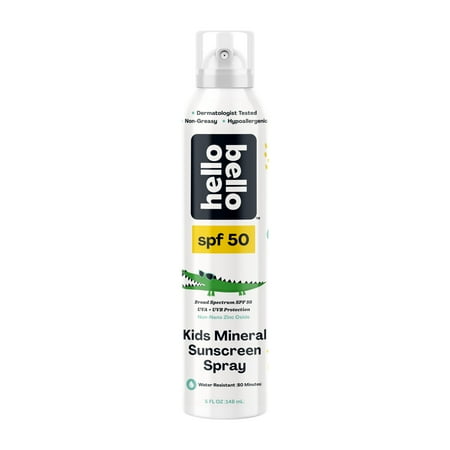
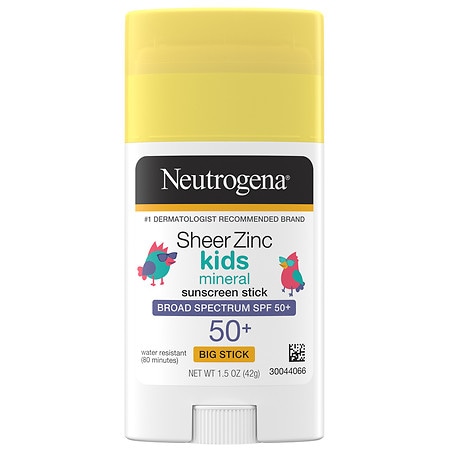
Hello Bello Mineral SPF 50 Kids Sunscreen Reef-Friendly Spray for Kids and Adults 5.0 fl oz
Analysis updated August 2026 · How Scout scores
At a glance
Summary
This sunscreen features zinc oxide as its primary active ingredient, which is a mineral filter known for providing effective broad-spectrum UV protection. The formulation avoids chemical UV filters and other harmful substances, making it suitable for sensitive skin. However, the presence of processed ingredients like polyester-8 and alumina indicates a moderate level of processing, which slightly limits its score.
Key ingredients 8
Zinc oxideGood
Zinc oxide is a mineral known for its effective sun protection and skin-soothing properties, making it a beneficial ingredient.
See more about Zinc oxide →Isocetyl Stearoyl StearateNeutral
This ingredient is generally regarded as safe and functions as an emollient, helping to moisturize the skin without known risks.
C18-21 AlkaneNeutral
This ingredient is a hydrocarbon used as an emollient or solvent, with no significant safety concerns reported.
AluminaNeutral
Alumina is an inert mineral used as an absorbent or abrasive, generally considered safe in cosmetic formulations.
See more about Alumina →Polyhydroxystearic AcidNeutral
This ingredient acts as an emulsifier or surfactant, with a low risk profile and common use in skincare products.
See more about Polyhydroxystearic Acid →Cellulose gumNeutral
Cellulose gum is a natural thickening agent that is safe and widely used in cosmetics and skincare.
See more about Cellulose gum →Methyl DihydroabietateBad
This ingredient is considered harmful due to potential skin irritation and environmental concerns, especially for sensitive skin and ecosystems.
See more about Methyl Dihydroabietate →Polyester-8Bad
Polyester-8 is a synthetic polymer that may cause skin irritation and environmental accumulation, raising safety concerns.
See more about Polyester-8 →Processing
Processed Foods
Get the full breakdown in the Scout appTake Scout shopping
Scan any product to see lab results, healthy alternatives, and your personalized analysis.
Download on theApp Store GET IT ONGoogle PlayAmazon pricing & content
Amazon price as of . Product prices and availability are accurate as of the date/time indicated and are subject to change. Any price and availability information displayed on Amazon.com at the time of purchase will apply to the purchase of this product.
CERTAIN CONTENT THAT APPEARS ON THIS SITE COMES FROM AMAZON. THIS CONTENT IS PROVIDED “AS IS” AND IS SUBJECT TO CHANGE OR REMOVAL AT ANY TIME.