
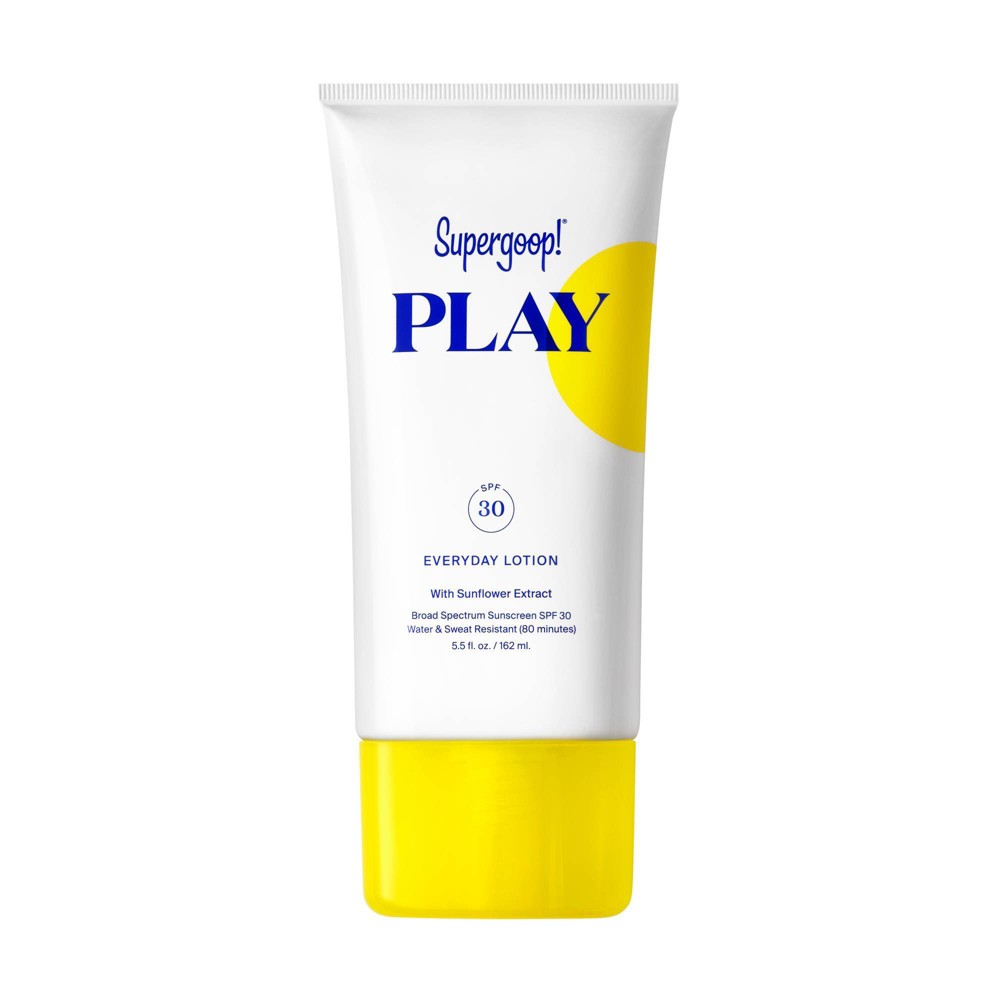
Supergoop! PLAY Everyday Hydrating Body & Face Sunscreen Lotion - SPF 30 - 5.5 fl oz
Analysis updated August 2026 · How Scout scores
At a glance
Summary
This sunscreen contains beneficial ingredients such as zinc oxide, a mineral UV filter, and natural oils like Astrocaryum Vulgare Kernel Oil, which provide moisturizing and protective benefits. The presence of soothing agents like bisabolol and antioxidants like tocopherol further enhance its skin-friendly profile. However, the product is processed, which limits its maximum score despite the absence of harmful chemical UV filters or synthetic fragrances.
Key ingredients 36
Jojoba EstersVery Good
Jojoba Esters are derived from jojoba oil and used as emollients in cosmetics. They are known for their moisturizing and skin-conditioning properties. They are considered safe and highly beneficial for skin health.
Risks
There are minimal risks, primarily limited to potential allergic reactions in sensitive individuals.
Benefits
They provide deep hydration and enhance the skin's natural barrier, improving softness and elasticity.
Astrocaryum Vulgare Kernel OilGood
Astrocaryum Vulgare Kernel Oil is a natural oil rich in fatty acids and vitamins. It is used for its emollient and moisturizing properties. It is considered beneficial for skin health.
Risks
There are minimal risks, primarily limited to potential allergic reactions in sensitive individuals.
Benefits
It provides deep hydration and nourishment to the skin, enhancing its softness and elasticity.
BisabololGood
Bisabolol is a natural compound known for its anti-inflammatory and soothing properties. It is often used in skincare to calm irritated skin. It is considered safe and beneficial for sensitive skin.
Risks
There are minimal risks, primarily limited to potential allergic reactions in rare cases.
Benefits
It helps to reduce redness and irritation, making it ideal for sensitive or reactive skin types.
Caprylic/Capric TriglycerideGood
Caprylic/Capric Triglyceride is a natural emollient derived from coconut oil and glycerin. It is used for its moisturizing and skin-conditioning properties. It is considered safe and beneficial for skin health.
Risks
There are minimal risks, primarily limited to potential allergic reactions in sensitive individuals.
Benefits
It provides lightweight hydration and improves the spreadability of skincare products.
GlycerinGood
Glycerin is a humectant used to attract and retain moisture in the skin. It is considered safe and highly effective for improving skin hydration. It helps to enhance the moisture content and overall health of the skin.
Risks
There are minimal risks, primarily related to potential skin irritation in sensitive individuals.
Benefits
It provides deep hydration and improves the skin's barrier function, enhancing its softness and elasticity.
Haematococcus Pluvialis ExtractGood
Haematococcus Pluvialis Extract is a natural source of astaxanthin, a powerful antioxidant. It is used for its anti-aging and protective properties. It is considered safe and beneficial for skin health.
Risks
There are minimal risks, primarily limited to potential allergic reactions in sensitive individuals.
Benefits
It provides strong antioxidant protection, helping to reduce signs of aging and environmental damage.
TocopherolGood
Tocopherol, also known as Vitamin E, is an antioxidant used to protect skin and cosmetic formulations from oxidative damage. It is considered safe and beneficial for skin health. It helps to enhance the stability and efficacy of products.
Risks
There are minimal risks, primarily limited to potential allergic reactions in sensitive individuals.
Benefits
It provides antioxidant protection, helping to reduce signs of aging and environmental damage.
Zinc OxideGood
Zinc Oxide is a mineral sunscreen agent used to provide broad-spectrum UV protection. It is considered safe and effective in cream or lotion form. It helps to protect the skin from harmful UV rays.
Risks
There are minimal risks, primarily related to potential skin irritation in sensitive individuals.
Benefits
It provides effective sun protection, reducing the risk of sunburn and long-term skin damage.
Arachidyl AlcoholNeutral
Arachidyl Alcohol is a fatty alcohol used as an emollient and thickening agent. It is generally considered safe for use in cosmetics. It helps to improve the texture and feel of the product.
Risks
There are minimal risks associated with Arachidyl Alcohol, primarily limited to potential skin irritation in sensitive individuals.
Benefits
It provides moisturizing properties and enhances the texture of skincare formulations.
Arachidyl GlucosideNeutral
Arachidyl Glucoside is a mild surfactant and emulsifier derived from glucose and fatty alcohols. It is used to stabilize formulations and improve texture. It is considered safe and non-irritating.
Risks
There are minimal risks, with rare cases of skin irritation reported.
Benefits
It helps to blend oil and water components, improving the consistency and stability of the product.
Behenyl AlcoholNeutral
Behenyl Alcohol is a fatty alcohol used as a thickener and emollient in cosmetics. It is generally considered safe and non-irritating. It helps to improve the texture and stability of formulations.
Risks
There are minimal risks, with rare cases of skin irritation reported.
Benefits
It provides a smooth application and enhances the moisturizing properties of skincare products.
C13-14 AlkaneNeutral
C13-14 Alkane is a hydrocarbon used as an emollient and solvent in cosmetics. It is considered safe and non-irritating. It helps to improve the texture and spreadability of formulations.
Risks
There are minimal risks, primarily related to potential skin irritation in sensitive individuals.
Benefits
It provides a lightweight, non-greasy feel, enhancing the sensory experience of the product.
Caprylhydroxamic AcidNeutral
Caprylhydroxamic Acid is a preservative used to prevent microbial growth in cosmetics. It is considered safe and effective at low concentrations. It helps to extend the shelf life of products.
Risks
There are minimal risks, with rare cases of skin irritation reported.
Benefits
It provides broad-spectrum antimicrobial protection, ensuring product safety and longevity.
Capryloyl Glycerin/Sebacic Acid CopolymerNeutral
Capryloyl Glycerin/Sebacic Acid Copolymer is a film-forming agent used to enhance the water resistance of sunscreen products. It is considered safe and effective. It helps to improve the durability of sunscreen protection.
Risks
There are minimal risks, with rare cases of skin irritation reported.
Benefits
It enhances the longevity of sunscreen efficacy, providing better protection during water exposure.
Caprylyl GlycolNeutral
Caprylyl Glycol is a humectant and skin-conditioning agent used in cosmetics. It is considered safe and non-irritating. It helps to improve the moisture content of the skin.
Risks
There are minimal risks, primarily related to potential skin irritation in sensitive individuals.
Benefits
It provides hydration and enhances the overall feel of skincare formulations.
Cellulose GumNeutral
Cellulose Gum is a thickening agent used to improve the texture and stability of cosmetic products. It is considered safe and non-irritating. It helps to enhance the viscosity and spreadability of formulations.
Risks
There are minimal risks, with rare cases of skin irritation reported.
Benefits
It provides a smooth, consistent texture, improving the application experience.
Cetearyl AlcoholNeutral
Cetearyl Alcohol is a fatty alcohol used as an emollient and emulsifier in cosmetics. It is considered safe and non-irritating. It helps to improve the texture and stability of formulations.
Risks
There are minimal risks, primarily related to potential skin irritation in sensitive individuals.
Benefits
It provides a creamy texture and enhances the moisturizing properties of skincare products.
Cetyl AlcoholNeutral
Cetyl Alcohol is a fatty alcohol used as an emollient and thickening agent in cosmetics. It is considered safe and non-irritating. It helps to improve the texture and feel of formulations.
Risks
There are minimal risks, with rare cases of skin irritation reported.
Benefits
It provides a smooth application and enhances the moisturizing properties of skincare products.
Citric AcidNeutral
Citric Acid is used as a pH adjuster and preservative in cosmetics. It is considered safe and effective at low concentrations. It helps to maintain the stability and efficacy of formulations.
Risks
There are minimal risks, primarily related to potential skin irritation in sensitive individuals.
Benefits
It helps to balance the pH of products, ensuring optimal performance and stability.
Coco-GlucosideNeutral
Coco-Glucoside is a mild surfactant derived from coconut oil and glucose. It is used to improve the texture and cleansing properties of formulations. It is considered safe and non-irritating.
Risks
There are minimal risks, with rare cases of skin irritation reported.
Benefits
It provides gentle cleansing and enhances the foaming properties of skincare products.
Diheptyl SuccinateNeutral
Diheptyl Succinate is an emollient used to improve the texture and spreadability of cosmetic products. It is considered safe and non-irritating. It helps to enhance the sensory experience of formulations.
Risks
There are minimal risks, primarily related to potential skin irritation in sensitive individuals.
Benefits
It provides a lightweight, silky feel, improving the application and absorption of skincare products.
ErythritolNeutral
Erythritol is a sugar alcohol used as a humectant and skin-conditioning agent in cosmetics. It is considered safe and non-irritating. It helps to improve the moisture content of the skin.
Risks
There are minimal risks, primarily related to potential skin irritation in sensitive individuals.
Benefits
It provides hydration and enhances the overall feel of skincare formulations.
Ethyl FerulateNeutral
Ethyl Ferulate is an antioxidant used to protect cosmetic formulations from oxidative damage. It is considered safe and effective. It helps to enhance the stability and efficacy of products.
Risks
There are minimal risks, with rare cases of skin irritation reported.
Benefits
It provides antioxidant protection, helping to preserve the integrity of skincare formulations.
Lauryl LaurateNeutral
Lauryl Laurate is an ester used as an emollient and thickening agent in cosmetics. It is considered safe and non-irritating. It helps to improve the texture and feel of formulations.
Risks
There are minimal risks, with rare cases of skin irritation reported.
Benefits
It provides a smooth application and enhances the moisturizing properties of skincare products.
Methyl DihydroabietateNeutral
Methyl Dihydroabietate is a fragrance ingredient used to enhance the scent of cosmetic products. It is considered safe at low concentrations. It helps to improve the sensory experience of formulations.
Risks
There are minimal risks, primarily related to potential skin irritation or allergic reactions in sensitive individuals.
Benefits
It provides a pleasant fragrance, enhancing the overall appeal of skincare products.
Microcrystalline CelluloseNeutral
Microcrystalline Cellulose is used as a bulking agent and stabilizer in cosmetics. It is considered safe and non-irritating. It helps to improve the texture and stability of formulations.
Risks
There are minimal risks, with rare cases of skin irritation reported.
Benefits
It provides a smooth, consistent texture, improving the application experience.
Neopentyl Glycol DiheptanoateNeutral
Neopentyl Glycol Diheptanoate is an emollient used to improve the texture and spreadability of cosmetic products. It is considered safe and non-irritating. It helps to enhance the sensory experience of formulations.
Risks
There are minimal risks, primarily related to potential skin irritation in sensitive individuals.
Benefits
It provides a lightweight, silky feel, improving the application and absorption of skincare products.
Polyester-7Neutral
Polyester-7 is a film-forming agent used to enhance the water resistance of sunscreen products. It is considered safe and effective. It helps to improve the durability of sunscreen protection.
Risks
There are minimal risks, with rare cases of skin irritation reported.
Benefits
It enhances the longevity of sunscreen efficacy, providing better protection during water exposure.
Polyester-8Neutral
Polyester-8 is a film-forming agent used to enhance the water resistance of sunscreen products. It is considered safe and effective. It helps to improve the durability of sunscreen protection.
Risks
There are minimal risks, with rare cases of skin irritation reported.
Benefits
It enhances the longevity of sunscreen efficacy, providing better protection during water exposure.
Polyhydroxystearic AcidNeutral
Polyhydroxystearic Acid is used as a thickening agent and emulsifier in cosmetics. It is considered safe and non-irritating. It helps to improve the texture and stability of formulations.
Risks
There are minimal risks, with rare cases of skin irritation reported.
Benefits
It provides a smooth, consistent texture, improving the application experience.
PropanediolNeutral
Propanediol is a humectant and solvent used in cosmetics. It is considered safe and non-irritating. It helps to improve the moisture content and texture of formulations.
Risks
There are minimal risks, primarily related to potential skin irritation in sensitive individuals.
Benefits
It provides hydration and enhances the overall feel of skincare formulations.
Sea WaterNeutral
Sea Water is used for its mineral content and skin-conditioning properties. It is considered safe and non-irritating. It helps to enhance the sensory experience of formulations.
Risks
There are minimal risks, primarily related to potential skin irritation in sensitive individuals.
Benefits
It provides minerals and trace elements that can benefit skin health.
Sodium GluconateNeutral
Sodium Gluconate is used as a chelating agent and stabilizer in cosmetics. It is considered safe and non-irritating. It helps to improve the stability and efficacy of formulations.
Risks
There are minimal risks, with rare cases of skin irritation reported.
Benefits
It helps to maintain the stability and performance of skincare products.
Sodium Stearoyl GlutamateNeutral
Sodium Stearoyl Glutamate is an emulsifier used to stabilize cosmetic formulations. It is considered safe and non-irritating. It helps to improve the texture and consistency of products.
Risks
There are minimal risks, primarily related to potential skin irritation in sensitive individuals.
Benefits
It provides a smooth, consistent texture, improving the application experience.
WaterNeutral
Water is used as a solvent and base in cosmetic formulations. It is considered safe and non-irritating. It helps to dissolve other ingredients and improve the texture of products.
Risks
There are no significant risks associated with water in cosmetic formulations.
Benefits
It provides hydration and serves as a carrier for other beneficial ingredients.
Butyloctyl SalicylateBad
Processed additive flagged under Scout's ingredient doctrine.
Risks
There are minimal risks, with rare cases of skin irritation reported.
Benefits
It enhances the performance of sunscreen agents, contributing to better UV protection.
Processing
Processed Foods
Get the full breakdown in the Scout appTake Scout shopping
Scan any product to see lab results, healthy alternatives, and your personalized analysis.
Download on theApp Store GET IT ONGoogle PlayAmazon pricing & content
Amazon price as of . Product prices and availability are accurate as of the date/time indicated and are subject to change. Any price and availability information displayed on Amazon.com at the time of purchase will apply to the purchase of this product.
CERTAIN CONTENT THAT APPEARS ON THIS SITE COMES FROM AMAZON. THIS CONTENT IS PROVIDED “AS IS” AND IS SUBJECT TO CHANGE OR REMOVAL AT ANY TIME.