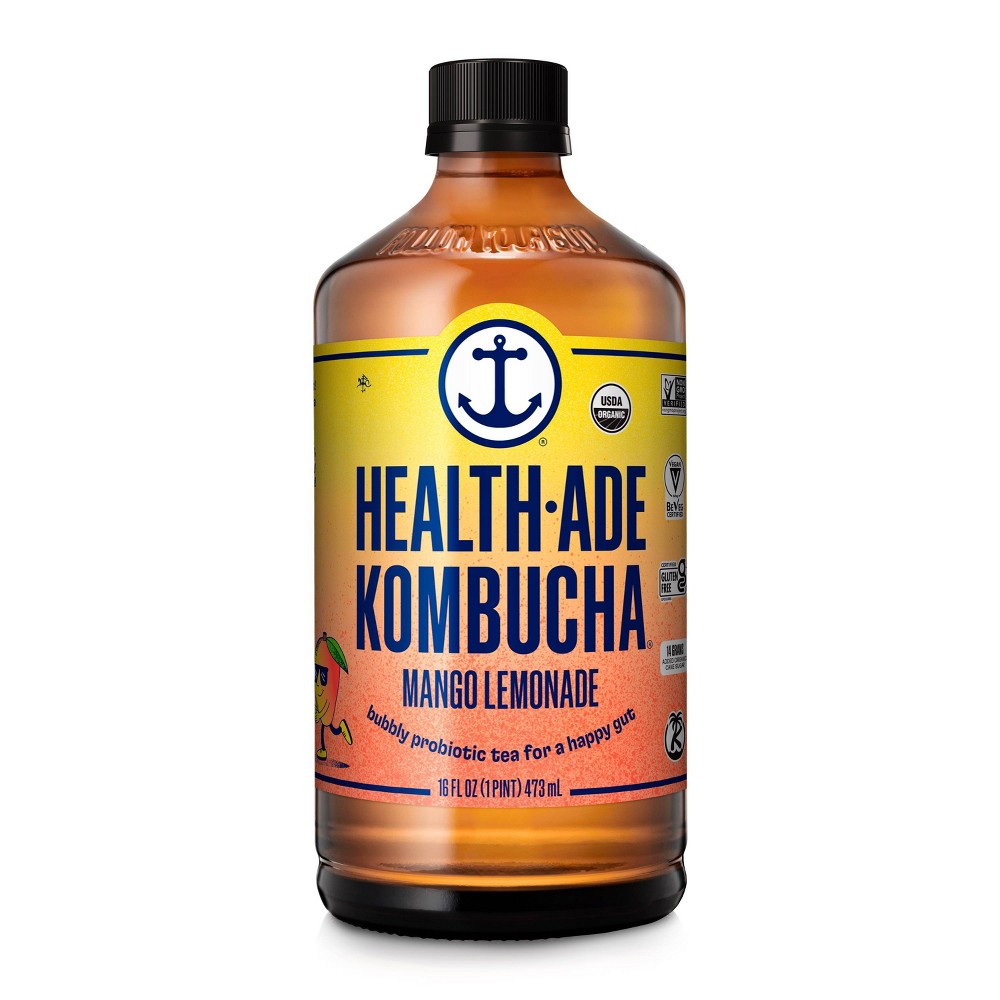
Health-Ade Organic Mango Lemonade Kombucha - 16 fl oz

Health-Ade
95 Excellent
View on Amazon

Summary

This kombucha beverage is made from high-quality organic ingredients, including mango puree and lemon juice concentrate, which provide natural sweetness and essential vitamins. The presence of active cultures and acids from fermentation enhances its probiotic content, supporting gut health. With minimal processing and no harmful additives, this product maintains a clean label and offers significant health benefits.

At a glance

Beneficial ingredients 9
Harmful ingredients 0
Owned by Generous Brands
Category Fermented Drinks

Key ingredients 14

Organic Kombucha
Very Good

Organic Kombucha is a fermented tea beverage known for its probiotic content, which supports gut health. The fermentation process enhances the bioavailability of nutrients and introduces beneficial bacteria. Being organic, it ensures minimal exposure to pesticides and synthetic additives.

Benefits

Rich in probiotics that can improve digestion and boost the immune system.

Mango Puree
Good

Mango Puree provides natural sweetness and is a source of vitamins A and C, which are important for immune function and skin health. The puree form retains more fiber compared to juices, aiding in digestion. As a natural fruit ingredient, it contributes to the overall nutritional profile without added sugars.

Benefits

Provides essential vitamins and natural sugars that offer energy and nutritional benefits.

See more about Mango Puree →
Lemon Juice Concentrate
Good

Lemon Juice Concentrate is a concentrated form of lemon juice that provides vitamin C and antioxidants. It adds a refreshing flavor and can help in enhancing the absorption of iron from other foods. The concentration process retains most of the nutritional benefits of fresh lemon juice.

Benefits

High in vitamin C, which supports immune health and acts as an antioxidant.

See more about Lemon Juice Concentrate →
Lemon Extract
Neutral

Lemon Extract is used for flavoring and contains aromatic compounds from lemons. It is typically used in small amounts and does not significantly impact the nutritional profile. The extract provides a concentrated lemon flavor without the acidity of lemon juice.

Benefits

Adds natural lemon flavor without additional calories or sugars.

See more about Lemon Extract →
Active Cultures (Bacillus Coagulans)
Very Good

Active Cultures like Bacillus Coagulans are probiotics that support digestive health and enhance gut flora balance. They are known to survive the acidic environment of the stomach, making them effective in reaching the intestines. Their inclusion in beverages can aid in maintaining a healthy microbiome.

Benefits

Supports gut health and may improve digestion and immune function.

Filtered Water
Neutral

Filtered Water is used as a base for the beverage, ensuring purity and safety by removing contaminants. It serves as a solvent for other ingredients and does not contribute calories or nutrients. The filtration process ensures the water is free from impurities.

Benefits

Provides hydration without any additional calories or sugars.

See more about Filtered Water →
Acids From Fermentation (Acetic, Lactic, Gluconic, Tartaric)
Good

These acids are natural byproducts of the fermentation process and contribute to the tangy flavor of kombucha. They have antimicrobial properties and can aid in digestion. The presence of these acids indicates a successful fermentation process, enhancing the probiotic content.

Benefits

Contribute to the probiotic benefits and flavor profile of kombucha.

Cane Sugar
Neutral

Cane Sugar is used as a fermentable sugar source for the kombucha cultures. During fermentation, most of the sugar is consumed by the cultures, reducing the final sugar content. It is necessary for the fermentation process but does not significantly contribute to the final sugar content.

Risks

Excessive consumption of added sugars can lead to health issues, but in this context, it is largely consumed during fermentation.

Benefits

Provides energy for fermentation, resulting in probiotic-rich kombucha.

See more about Cane Sugar →
Apple Juice
Good

Apple Juice adds natural sweetness and contains vitamins and antioxidants. It is a natural source of sugars and can enhance the flavor profile of the beverage. The juice contributes to the overall nutritional value without the need for added sugars.

Benefits

Contains natural sugars and antioxidants that can provide energy and health benefits.

See more about Apple Juice →
Black Tea
Good

Black Tea is rich in antioxidants and provides a base for kombucha fermentation. It contains polyphenols that have been linked to various health benefits, including improved heart health. The fermentation process enhances the bioavailability of these compounds.

Benefits

Rich in antioxidants that support heart health and provide anti-inflammatory properties.

See more about Black Tea →
Green Tea
Very Good

Green Tea is known for its high antioxidant content, particularly catechins, which have numerous health benefits. It supports metabolism and has been associated with improved brain function. The use of green tea in kombucha enhances its health-promoting properties.

Benefits

High in antioxidants that support metabolism and overall health.

See more about Green Tea →
Raisin Juice Concentrate
Neutral

Raisin Juice Concentrate is used for natural sweetness and flavor. It contains natural sugars and some antioxidants but is used in small amounts. The concentrate provides a subtle sweetness without the need for added sugars.

Benefits

Adds natural sweetness and some antioxidants to the beverage.

Kombucha Cultures
Very Good

Kombucha Cultures are essential for the fermentation process, converting sugars into beneficial acids and probiotics. They enhance the nutritional profile by introducing live beneficial bacteria. The presence of these cultures is crucial for the health benefits associated with kombucha.

Benefits

Essential for fermentation, providing probiotics that support gut health.

Carbonation
Neutral

Carbonation is added for effervescence and does not impact the nutritional profile. It enhances the sensory experience by providing a fizzy texture. The carbonation process is standard in many beverages and does not pose health risks.

Benefits

Enhances the sensory experience with a fizzy texture.

Processing

Group 2 · Culinary ingredients

Processed Culinary Ingredients

Get the full breakdown in the Scout app

Scan any product to see lab results, healthy alternatives, and your personalized analysis.

Download on theApp Store