
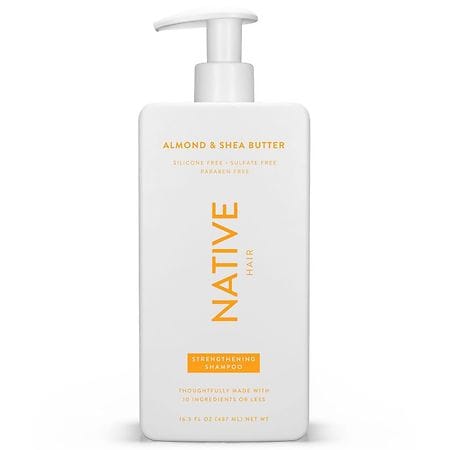



Native Vegan Strengthening Shampoo with Almond & Shea Butter, Clean, Sulfate, Paraben and Silicone Free - 16.5 fl oz
NativeAnalysis updated August 2026 · How Scout scores
At a glance
Summary
This shampoo features gentle coconut-derived surfactants like Sodium Cocoyl Isethionate and Lauramidopropyl Betaine, which are beneficial for mild cleansing without stripping natural oils. However, the presence of synthetic fragrance, which can be a source of allergens and irritants, slightly detracts from its overall safety profile. The product is free from sulfates, parabens, and silicones, contributing to a generally clean formulation, but the processing level limits its maximum potential score.
Key ingredients 11
Sodium Cocoyl IsethionateVery Good
Sodium Cocoyl Isethionate is a gentle surfactant derived from coconut oil, known for its mild cleansing properties. It helps to create a rich lather without stripping the hair of its natural oils. This ingredient is favored in formulations for sensitive skin and hair.
Risks
There are minimal risks associated with this ingredient, though some individuals may experience mild irritation.
Benefits
It provides effective cleansing while maintaining the hair's natural moisture balance.
Lauramidopropyl BetaineGood
Lauramidopropyl Betaine is a mild surfactant that helps to improve the foam and cleansing ability of shampoos. It is derived from coconut oil and is known for its conditioning properties. This ingredient is often used to enhance the mildness of formulations.
Risks
In rare cases, it may cause mild irritation to sensitive skin.
Benefits
It enhances the lather and provides a conditioning effect, making hair feel softer.
WaterNeutral
Water is a common solvent used in shampoos to dissolve other ingredients and provide a base for the formulation. It is essential for the consistency and application of the product. Water itself does not have any direct benefits or risks in the context of a shampoo.
Risks
There are no inherent risks associated with water in cosmetic formulations.
Benefits
Water helps to evenly distribute the shampoo and rinse out impurities from the hair.
Cocamidopropyl BetaineNeutral
Cocamidopropyl Betaine is a surfactant derived from coconut oil, used to increase the foaming capacity of shampoos. It is commonly used in personal care products for its ability to cleanse without being overly harsh. While generally considered safe, it can sometimes cause allergic reactions.
Risks
Some individuals may experience allergic reactions or irritation.
Benefits
It provides effective cleansing and helps to stabilize foam in the shampoo.
Sodium SalicylateNeutral
Sodium Salicylate is a salt of salicylic acid, used for its preservative and anti-inflammatory properties. It helps to maintain the stability of the product and can soothe the scalp. However, it may cause irritation in some individuals.
Risks
It may cause irritation or allergic reactions in sensitive individuals.
Benefits
It helps to preserve the product and can provide soothing effects on the scalp.
Polyquaternium-10Neutral
Polyquaternium-10 is a conditioning agent that helps to improve the texture and manageability of hair. It forms a protective film on the hair shaft, reducing static and enhancing shine. While generally safe, it can cause buildup with prolonged use.
Risks
Prolonged use may lead to buildup on the hair, requiring clarifying treatments.
Benefits
It enhances hair manageability and reduces static, improving overall hair appearance.
Sodium CitrateNeutral
Sodium Citrate is used as a buffering agent to maintain the pH balance of cosmetic products. It helps to stabilize the formulation and ensure product efficacy. There are no significant risks associated with its use in shampoos.
Risks
There are no significant risks associated with sodium citrate in cosmetic formulations.
Benefits
It helps to maintain the pH balance, ensuring the stability and effectiveness of the product.
Citric AcidNeutral
Citric Acid is used to adjust the pH of cosmetic products, ensuring they are not too alkaline. It can also act as a mild exfoliant, helping to remove dead skin cells from the scalp. While generally safe, it can cause irritation in high concentrations.
Risks
In high concentrations, it may cause irritation or dryness.
Benefits
It helps to maintain the pH balance and can gently exfoliate the scalp.
Sodium Lauroyl SarcosinateBad
Processed additive flagged under Scout's ingredient doctrine.
Risks
There is a low risk of irritation, though it is generally well-tolerated.
Benefits
It provides gentle cleansing and helps to improve the texture and manageability of hair.
Sodium BenzoateBad
Synthetic preservative that can form benzene in the presence of vitamin C.
Risks
There is a potential risk of forming benzene, though this is unlikely in shampoos.
Benefits
It effectively prevents the growth of bacteria and fungi, extending the product's shelf life.
FragranceVery Bad
Fragrance in shampoos is often a blend of synthetic chemicals used to impart a pleasant scent. While it enhances the sensory experience, it can be a source of allergens and irritants. The exact composition is usually undisclosed, making it difficult to assess safety comprehensively.
Risks
Fragrance can cause allergic reactions and skin irritation in sensitive individuals.
Benefits
It provides a pleasant scent that enhances the user experience.
Get the full breakdown in the Scout appTake Scout shopping
Scan any product to see lab results, healthy alternatives, and your personalized analysis.
Download on theApp Store GET IT ONGoogle PlayAmazon pricing & content
Amazon price as of . Product prices and availability are accurate as of the date/time indicated and are subject to change. Any price and availability information displayed on Amazon.com at the time of purchase will apply to the purchase of this product.
CERTAIN CONTENT THAT APPEARS ON THIS SITE COMES FROM AMAZON. THIS CONTENT IS PROVIDED “AS IS” AND IS SUBJECT TO CHANGE OR REMOVAL AT ANY TIME.