
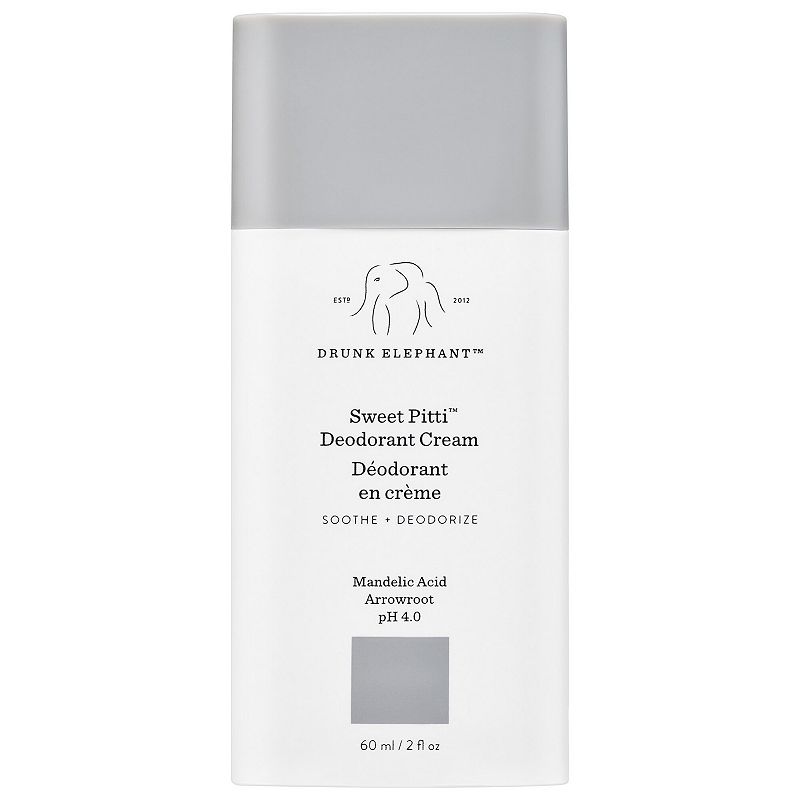

Drunk Elephant Sweet Pitti Deodorant Cream. Soothing and Moisturizing Underarm Deodorizing Cream. (2 fluid ounces)
Analysis updated August 2026 · How Scout scores
At a glance
Summary
This deodorant cream features a clean formula with beneficial ingredients like mandelic acid, arrowroot powder, and shea butter, which provide natural odor control and skin nourishment. It is free from aluminum, synthetic fragrances, and propylene glycol, making it a safer choice for sensitive skin. The presence of natural oils and starches further enhances its moisturizing and moisture-absorbing properties, contributing to its high rating.
Key ingredients 24
Mandelic AcidGood
Mandelic acid is an alpha hydroxy acid (AHA) known for its exfoliating properties. It helps in removing dead skin cells and can improve skin texture. It is generally well-tolerated by sensitive skin.
Risks
Overuse can lead to skin irritation or sensitivity, especially in those with very sensitive skin.
Benefits
It can improve skin texture and tone, making the underarm area smoother.
Maranta Arundinacea Root PowderGood
Also known as arrowroot powder, it is used for its moisture-absorbing properties. It helps keep the underarm area dry and comfortable. It is a natural alternative to talc.
Risks
There are minimal risks associated with arrowroot powder in topical applications.
Benefits
It effectively absorbs moisture, reducing underarm wetness.
Caprylic/Capric TriglycerideGood
This ingredient is derived from coconut oil and glycerin, providing a lightweight, non-greasy emollient. It helps to moisturize and soften the skin. It is well-tolerated by most skin types.
Risks
Rarely, it may cause mild irritation in very sensitive individuals.
Benefits
It provides hydration and improves the skin's texture.
GlycerinGood
Glycerin is a humectant that attracts moisture to the skin. It helps maintain skin hydration and softness. It is widely used in skincare for its moisturizing properties.
Risks
There are minimal risks associated with glycerin in topical applications.
Benefits
It helps keep the skin hydrated and prevents dryness.
Butyrospermum Parkii (Shea) ButterGood
Shea butter is a natural fat extracted from the nuts of the shea tree. It is known for its moisturizing and nourishing properties. It helps soothe and protect the skin.
Risks
Rarely, it may cause allergic reactions in individuals with nut allergies.
Benefits
It deeply moisturizes and nourishes the skin, improving its texture.
Sclerocarya Birrea Seed OilGood
Also known as marula oil, it is rich in antioxidants and fatty acids. It helps moisturize and protect the skin. It is known for its anti-inflammatory and healing properties.
Risks
There are minimal risks associated with marula oil in topical applications.
Benefits
It provides deep hydration and helps improve skin elasticity.
Adansonia Digitata Seed OilGood
Also known as baobab oil, it is rich in vitamins and fatty acids. It helps nourish and moisturize the skin. It is known for its regenerative and anti-inflammatory properties.
Risks
There are minimal risks associated with baobab oil in topical applications.
Benefits
It deeply nourishes the skin and helps improve its elasticity.
Schinziophyton Rautanenii Kernel OilGood
Also known as mongongo oil, it is rich in vitamin E and polyunsaturated fatty acids. It helps protect and moisturize the skin. It is known for its emollient and protective properties.
Risks
There are minimal risks associated with mongongo oil in topical applications.
Benefits
It provides a protective barrier and helps retain skin moisture.
PanthenolGood
Panthenol, also known as provitamin B5, is a moisturizing and soothing agent. It helps improve skin hydration and reduce irritation. It is widely used for its skin conditioning properties.
Risks
There are minimal risks associated with panthenol in topical applications.
Benefits
It enhances skin hydration and soothes irritation.
Prunus Amygdalus Dulcis (Sweet Almond) Seed ExtractGood
Sweet almond seed extract is rich in vitamins and fatty acids. It helps nourish and moisturize the skin. It is known for its soothing and softening properties.
Risks
There are minimal risks associated with sweet almond seed extract in topical applications.
Benefits
It provides nourishment and improves skin softness.
Water/Aqua/EauNeutral
Water is a common solvent used in many cosmetic formulations. It helps dissolve other ingredients and provides a base for the product. It does not have any direct benefits or risks in this context.
Risks
There are no significant risks associated with water in cosmetic products.
Benefits
Water helps in the application and absorption of the product.
Tapioca StarchNeutral
Standard formulation ingredient — neither beneficial nor harmful at typical use.
Risks
There are minimal risks associated with tapioca starch in topical applications.
Benefits
It effectively absorbs moisture, keeping the underarm area dry.
Cetearyl OlivateNeutral
Cetearyl olivate is an emulsifier derived from olive oil. It helps blend oil and water-based ingredients in formulations. It is generally considered safe and non-irritating.
Risks
There are minimal risks associated with cetearyl olivate in topical applications.
Benefits
It helps stabilize the formulation, ensuring even distribution of ingredients.
Cetearyl AlcoholNeutral
Cetearyl alcohol is a fatty alcohol used as an emollient and thickener. It helps improve the texture and consistency of the product. It is not drying like other alcohols and is generally well-tolerated.
Risks
There are minimal risks associated with cetearyl alcohol in topical applications.
Benefits
It provides a creamy texture and helps soften the skin.
Cetyl AlcoholNeutral
Cetyl alcohol is a fatty alcohol used to thicken and stabilize formulations. It provides a smooth, creamy texture to the product. It is generally non-irritating and safe for most skin types.
Risks
There are minimal risks associated with cetyl alcohol in topical applications.
Benefits
It enhances the texture and feel of the product on the skin.
Sorbitan OlivateNeutral
Sorbitan olivate is an emulsifier derived from olive oil. It helps blend oil and water-based ingredients in formulations. It is considered safe and non-irritating.
Risks
There are minimal risks associated with sorbitan olivate in topical applications.
Benefits
It helps stabilize the formulation, ensuring even distribution of ingredients.
Sclerotium GumNeutral
Sclerotium gum is a natural thickening agent derived from fermentation. It helps stabilize and thicken formulations. It is generally considered safe and non-irritating.
Risks
There are minimal risks associated with sclerotium gum in topical applications.
Benefits
It improves the texture and stability of the product.
Sodium Stearoyl GlutamateNeutral
Sodium stearoyl glutamate is an emulsifier used to blend ingredients. It helps improve the texture and stability of formulations. It is derived from natural sources and is generally considered safe.
Risks
There are minimal risks associated with sodium stearoyl glutamate in topical applications.
Benefits
It helps stabilize the formulation and improve texture.
HydroxyethylcelluloseNeutral
Hydroxyethylcellulose is a thickening agent used to improve texture. It helps stabilize formulations and provides a smooth feel. It is generally considered safe and non-irritating.
Risks
There are minimal risks associated with hydroxyethylcellulose in topical applications.
Benefits
It enhances the texture and stability of the product.
Citric AcidNeutral
Citric acid is used to adjust the pH of formulations. It helps maintain the stability and effectiveness of the product. It is generally considered safe in small amounts.
Risks
In high concentrations, it may cause skin irritation.
Benefits
It helps maintain the product's pH balance.
Caprylyl GlycolNeutral
Caprylyl glycol is a skin conditioning agent and preservative. It helps improve skin hydration and extend product shelf life. It is generally considered safe and non-irritating.
Risks
There are minimal risks associated with caprylyl glycol in topical applications.
Benefits
It enhances skin hydration and preserves the product.
ChlorphenesinNeutral
Chlorphenesin is a preservative used to prevent microbial growth. It helps maintain the product's integrity and safety. It is generally considered safe in low concentrations.
Risks
In high concentrations, it may cause skin irritation or allergic reactions.
Benefits
It helps preserve the product, ensuring its safety and efficacy.
Sodium HydroxideNeutral
Sodium hydroxide is used to adjust the pH of formulations. It helps maintain the stability and effectiveness of the product. It is generally considered safe in small amounts.
Risks
In high concentrations, it can be corrosive and cause skin irritation.
Benefits
It helps maintain the product's pH balance.
PhenoxyethanolBad
Processed additive flagged under Scout's ingredient doctrine.
Risks
In high concentrations, it may cause skin irritation or allergic reactions.
Benefits
It effectively preserves the product, preventing spoilage.
Get the full breakdown in the Scout appTake Scout shopping
Scan any product to see lab results, healthy alternatives, and your personalized analysis.
Download on theApp Store GET IT ONGoogle Play