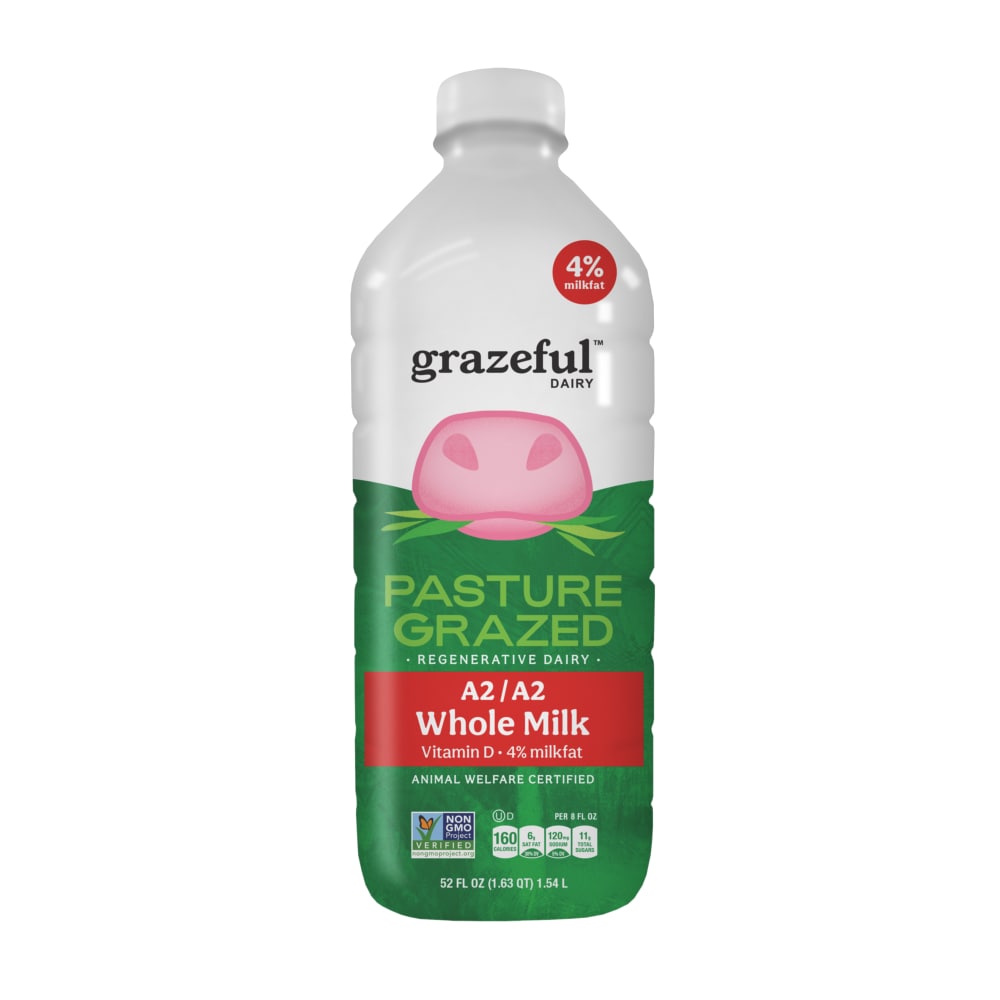
Whole Homogenized Milk

At a glance
Summary
Whole homogenized milk is a minimally processed product that retains its natural nutrient profile, including essential vitamins and minerals like calcium and vitamin D. The pasteurization process ensures safety by eliminating harmful bacteria, while homogenization provides a consistent texture. The addition of Vitamin D3 enhances its nutritional value, making it a healthy choice within its category. Its plastic packaging can shed microplastics into the food and lowers its score.
Key ingredients 2
Pasteurized and homogenized whole milkGood
Whole milk is a natural source of essential nutrients like calcium, vitamin D, and protein. Pasteurization ensures safety by eliminating harmful bacteria, while homogenization provides a uniform texture. It retains most of its nutritional profile, making it a beneficial dietary component.
Risks
Some individuals may be lactose intolerant or allergic to milk proteins, which can cause digestive discomfort.
Benefits
Provides essential nutrients such as calcium and vitamin D, which are important for bone health. Contains high-quality protein that supports muscle maintenance and growth.
Vitamin D3Neutral
Vitamin D3 is added to milk to enhance its nutritional value, supporting bone health and immune function. It is a common fortification in dairy products to help meet dietary needs. While beneficial, it is not naturally present in milk and is added during processing.
Benefits
Supports calcium absorption and bone health. Contributes to immune system function and overall health.
Processing
Unprocessed or Minimally Processed Foods
Get the full breakdown in the Scout appTake Scout shopping
Scan any product to see lab results, healthy alternatives, and your personalized analysis.
Are you South Mountain Creamery? Fix an error Get the badge Get tested