
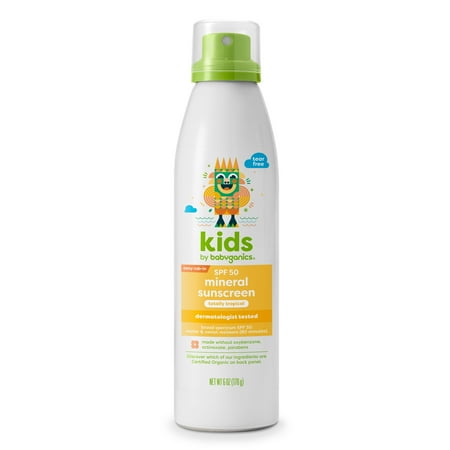

Babyganics Kids All-Mineral Continuous Sunscreen Spray 50 SPF Totally Tropical 6oz Packaging May Vary
Analysis updated July 2026 · How Scout scores
At a glance
Summary
This sunscreen contains zinc oxide as the active ingredient, which is a safe and effective mineral sunscreen agent. The formulation includes beneficial natural oils like jojoba and sunflower seed oil, which are nourishing for the skin. However, the presence of synthetic preservatives like chlorphenesin and the processed nature of the product slightly reduce its overall score.
Key ingredients 26
Simmondsia Chinensis (Jojoba) Seed OilVery Good
Jojoba oil is a natural oil that closely resembles the skin's natural sebum, making it an excellent moisturizer. It is rich in vitamins and minerals that nourish and protect the skin. It is well-tolerated by most skin types and considered safe for use in cosmetics.
Risks
There are minimal risks associated with jojoba oil, primarily related to potential allergic reactions in rare cases.
Benefits
Jojoba oil helps to moisturize and balance the skin, providing nourishment and protection.
TocopherolVery Good
Tocopherol, also known as Vitamin E, is a powerful antioxidant that helps to protect the skin from free radical damage. It is known for its moisturizing and skin-conditioning properties. It is well-tolerated by most skin types and considered safe for use in cosmetics.
Risks
There are minimal risks associated with tocopherol, primarily related to potential allergic reactions in rare cases.
Benefits
Tocopherol helps to protect and nourish the skin, providing antioxidant benefits and improving skin health.
Helianthus Annuus (Sunflower) Seed OilVery Good
Sunflower seed oil is a natural oil rich in essential fatty acids and vitamins that nourish and protect the skin. It is known for its moisturizing and skin-conditioning properties. It is well-tolerated by most skin types and considered safe for use in cosmetics.
Risks
There are minimal risks associated with sunflower seed oil, primarily related to potential allergic reactions in rare cases.
Benefits
Sunflower seed oil helps to moisturize and nourish the skin, providing essential nutrients and improving skin health.
Solanum Lycopersicum (Tomato) Seed OilVery Good
Tomato seed oil is rich in antioxidants and essential fatty acids that help to protect and nourish the skin. It is known for its anti-inflammatory and skin-conditioning properties. It is well-tolerated by most skin types and considered safe for use in cosmetics.
Risks
There are minimal risks associated with tomato seed oil, primarily related to potential allergic reactions in rare cases.
Benefits
Tomato seed oil helps to protect and nourish the skin, providing antioxidant benefits and improving skin health.
Vaccinium Macrocarpon (Cranberry) Seed OilVery Good
Cranberry seed oil is rich in antioxidants and essential fatty acids that help to protect and nourish the skin. It is known for its moisturizing and skin-conditioning properties. It is well-tolerated by most skin types and considered safe for use in cosmetics.
Risks
There are minimal risks associated with cranberry seed oil, primarily related to potential allergic reactions in rare cases.
Benefits
Cranberry seed oil helps to protect and nourish the skin, providing antioxidant benefits and improving skin health.
Nigella Sativa (Black Cumin) Seed OilVery Good
Black cumin seed oil is known for its anti-inflammatory and antioxidant properties, helping to soothe and protect the skin. It is rich in essential fatty acids and vitamins that nourish the skin. It is well-tolerated by most skin types and considered safe for use in cosmetics.
Risks
There are minimal risks associated with black cumin seed oil, primarily related to potential allergic reactions in rare cases.
Benefits
Black cumin seed oil helps to soothe and protect the skin, providing anti-inflammatory and antioxidant benefits.
Rubus Idaeus (Raspberry) Seed OilVery Good
Raspberry seed oil is rich in antioxidants and essential fatty acids that help to protect and nourish the skin. It is known for its moisturizing and skin-conditioning properties. It is well-tolerated by most skin types and considered safe for use in cosmetics.
Risks
There are minimal risks associated with raspberry seed oil, primarily related to potential allergic reactions in rare cases.
Benefits
Raspberry seed oil helps to protect and nourish the skin, providing antioxidant benefits and improving skin health.
Zinc OxideGood
Zinc oxide is a mineral sunscreen agent that provides broad-spectrum UV protection. It is considered safe and effective for sensitive skin, including children's skin. It is non-comedogenic and does not penetrate the skin, making it a preferred choice for physical sunblocks.
Risks
There are minimal risks associated with zinc oxide, primarily related to potential inhalation in spray form.
Benefits
Zinc oxide offers excellent protection against both UVA and UVB rays, reducing the risk of sunburn and long-term skin damage.
Caprylic/Capric TriglyceridesGood
Caprylic/Capric Triglycerides are derived from coconut oil and glycerin, acting as an emollient and skin-repairing ingredient. They help to moisturize and replenish the skin without leaving a greasy residue. They are well-tolerated by most skin types.
Risks
There are minimal risks associated with caprylic/capric triglycerides, primarily related to potential allergic reactions in rare cases.
Benefits
These triglycerides help to improve skin hydration and barrier function, making them beneficial for maintaining healthy skin.
Coco-GlucosideGood
Coco-Glucoside is a mild, non-ionic surfactant derived from coconut oil and glucose. It is used to gently cleanse the skin without stripping natural oils. It is well-tolerated by most skin types and considered safe for use in cosmetics.
Risks
There are minimal risks associated with coco-glucoside, primarily related to potential irritation in very sensitive individuals.
Benefits
Coco-glucoside helps to cleanse the skin gently, making it suitable for sensitive skin formulations.
Cetearyl OlivateGood
Cetearyl Olivate is an emulsifier derived from olive oil, used to blend oil and water components in formulations. It is known for its moisturizing properties and is well-tolerated by most skin types. It is considered safe for use in cosmetics.
Risks
There are minimal risks associated with cetearyl olivate, primarily related to potential irritation in sensitive individuals.
Benefits
This ingredient helps to moisturize and soften the skin, enhancing the overall feel of the product.
Sorbitan OlivateGood
Sorbitan Olivate is an emulsifier derived from olive oil and sorbitol, used to blend oil and water components in formulations. It is known for its moisturizing properties and is well-tolerated by most skin types. It is considered safe for use in cosmetics.
Risks
There are minimal risks associated with sorbitan olivate, primarily related to potential irritation in sensitive individuals.
Benefits
This ingredient helps to moisturize and soften the skin, enhancing the overall feel of the product.
GlycerinGood
Glycerin is a humectant that attracts moisture to the skin, helping to keep it hydrated and soft. It is well-tolerated by most skin types and is considered safe for use in cosmetics. It is a common ingredient in skincare products due to its moisturizing properties.
Risks
There are minimal risks associated with glycerin, primarily related to potential irritation in very sensitive individuals.
Benefits
Glycerin helps to maintain skin hydration, improving its texture and appearance.
WaterNeutral
Water is a common solvent used in cosmetic formulations to dissolve other ingredients. It acts as a base for the formulation, helping to distribute other components evenly. It is generally safe and non-irritating.
Risks
There are no significant risks associated with water in cosmetic formulations.
Benefits
Water helps to hydrate the skin and improve the texture of the product.
IsohexadecaneNeutral
Isohexadecane is a lightweight emollient that provides a silky feel to the skin. It is often used in formulations to enhance spreadability and improve texture. It is considered safe for use in cosmetics.
Risks
There are minimal risks associated with isohexadecane, primarily related to potential irritation in sensitive individuals.
Benefits
Isohexadecane helps to improve the application and feel of the product on the skin.
C12-15 Alkyl BenzoateNeutral
C12-15 Alkyl Benzoate is an emollient ester that provides a silky, non-greasy feel to the skin. It is used to enhance the spreadability of formulations and improve texture. It is generally considered safe for use in cosmetics.
Risks
There are minimal risks associated with C12-15 Alkyl Benzoate, primarily related to potential irritation in sensitive individuals.
Benefits
This ingredient helps to improve the sensory attributes of the product, making it more pleasant to use.
Neopentyl Glycol DiheptanoateNeutral
Neopentyl Glycol Diheptanoate is an emollient that provides a smooth, non-greasy feel to the skin. It is used to improve the texture and spreadability of cosmetic formulations. It is considered safe for use in personal care products.
Risks
There are minimal risks associated with neopentyl glycol diheptanoate, primarily related to potential irritation in sensitive individuals.
Benefits
This ingredient enhances the application and feel of the product on the skin, contributing to a pleasant user experience.
Cetearyl AlcoholNeutral
Cetearyl Alcohol is a fatty alcohol used as an emollient and thickening agent in cosmetic formulations. It helps to stabilize emulsions and improve texture. It is generally considered safe for use in personal care products.
Risks
There are minimal risks associated with cetearyl alcohol, primarily related to potential irritation in sensitive individuals.
Benefits
This ingredient helps to improve the texture and stability of the product, enhancing its overall performance.
Cetearyl GlucosideNeutral
Cetearyl Glucoside is an emulsifier derived from plant-based fatty alcohols and glucose. It helps to blend oil and water components in formulations. It is considered safe for use in cosmetics.
Risks
There are minimal risks associated with cetearyl glucoside, primarily related to potential irritation in sensitive individuals.
Benefits
This ingredient helps to stabilize emulsions, improving the consistency and performance of the product.
EthylhexylglycerinNeutral
Ethylhexylglycerin is a preservative and skin-conditioning agent used to enhance the efficacy of other preservatives. It is considered safe for use in cosmetics and is well-tolerated by most skin types.
Risks
There are minimal risks associated with ethylhexylglycerin, primarily related to potential irritation in sensitive individuals.
Benefits
This ingredient helps to improve the preservation and shelf-life of the product, ensuring its safety and efficacy.
Sodium HydroxideNeutral
Sodium hydroxide is used to adjust the pH of cosmetic formulations. It is used in very small amounts to ensure the product is safe and effective. It is generally considered safe for use in cosmetics when used appropriately.
Risks
There are minimal risks associated with sodium hydroxide when used in small amounts, primarily related to potential irritation if used in excess.
Benefits
This ingredient helps to maintain the stability and efficacy of the product by ensuring the correct pH balance.
Xanthan GumNeutral
Xanthan gum is a natural thickening agent used to stabilize and improve the texture of cosmetic formulations. It is derived from fermented sugars and is considered safe for use in cosmetics. It is well-tolerated by most skin types.
Risks
There are minimal risks associated with xanthan gum, primarily related to potential irritation in sensitive individuals.
Benefits
This ingredient helps to improve the texture and stability of the product, enhancing its overall performance.
Sodium PhytateNeutral
Sodium phytate is a chelating agent used to stabilize cosmetic formulations by binding metal ions. It is derived from plant sources and is considered safe for use in cosmetics. It is well-tolerated by most skin types.
Risks
There are minimal risks associated with sodium phytate, primarily related to potential irritation in sensitive individuals.
Benefits
This ingredient helps to improve the stability and efficacy of the product by preventing metal ion interference.
Citric AcidNeutral
Citric acid is used to adjust the pH of cosmetic formulations and acts as a mild exfoliant. It is derived from citrus fruits and is considered safe for use in cosmetics. It is well-tolerated by most skin types.
Risks
There are minimal risks associated with citric acid, primarily related to potential irritation in sensitive individuals.
Benefits
This ingredient helps to maintain the stability and efficacy of the product by ensuring the correct pH balance.
Butyloctyl SalicylateBad
Processed additive flagged under Scout's ingredient doctrine.
Risks
There are minimal risks associated with butyloctyl salicylate, primarily related to potential irritation in sensitive individuals.
Benefits
This ingredient helps to improve the performance of sunscreen products by enhancing their water resistance and efficacy.
ChlorphenesinBad
Chlorphenesin is a preservative used to prevent microbial growth in cosmetic formulations. It has been associated with skin irritation and allergic reactions in some individuals. It is considered safe for use in cosmetics at low concentrations, but caution is advised for sensitive skin.
Risks
Chlorphenesin may cause skin irritation or allergic reactions, particularly in sensitive individuals.
Benefits
This ingredient helps to preserve the product, preventing microbial contamination and extending shelf life.
Get the full breakdown in the Scout appTake Scout shopping
Scan any product to see lab results, healthy alternatives, and your personalized analysis.
Download on theApp Store GET IT ONGoogle Play