
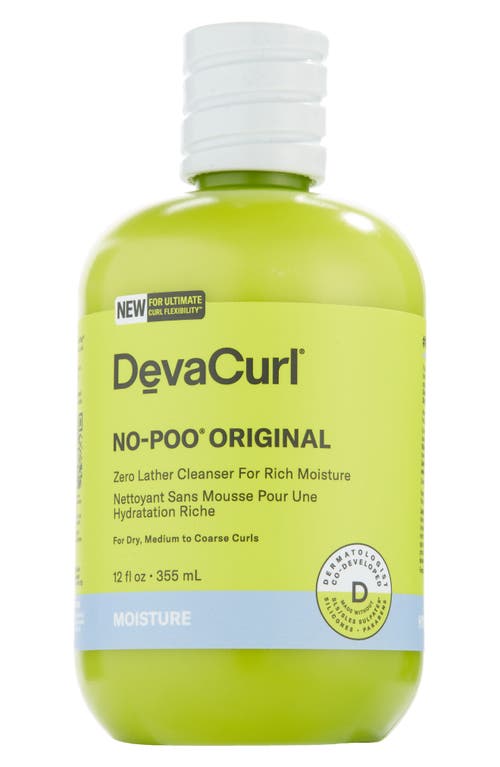

DevaCurl No-Poo Original Shampoo Hair Care 12 oz
Summary
DevaCurl No-Poo Original Shampoo is free from sulfates, silicones, and parabens, which are often harsh on hair and scalp. It uses gentle, natural surfactants and includes beneficial ingredients like aloe vera and panthenol, promoting scalp health. However, as a processed product, it may contain some synthetic additives, which slightly impacts its overall rating.
At a glance
Key ingredients 23
Water
Water is the primary solvent in many cosmetic products, providing a base for other ingredients. It helps to dissolve other ingredients and facilitates their application. It is neutral and generally safe for all skin and hair types.
Risks
There are no significant risks associated with water in cosmetic formulations.
Benefits
Water hydrates and helps distribute other ingredients evenly across the hair and scalp.
Cetyl Alcohol
Cetyl Alcohol is a fatty alcohol used as an emulsifier and thickener in cosmetic formulations. It helps to stabilize and thicken products, providing a creamy texture. It is considered gentle and beneficial for hair conditioning.
Risks
There are minimal risks associated with cetyl alcohol, though some individuals may experience mild irritation.
Benefits
It helps to soften and condition the hair, improving manageability.
Glycerin
Glycerin is a humectant that attracts moisture to the hair and skin, helping to maintain hydration. It is widely used in hair care products for its moisturizing properties. It is considered beneficial for dry and damaged hair.
Risks
In high concentrations, glycerin can attract too much moisture, potentially leading to frizz in humid conditions.
Benefits
Glycerin helps to keep hair hydrated and can improve the overall health and appearance of the hair.
Isopropyl Palmitate
Isopropyl Palmitate is an emollient that helps to improve the texture and spreadability of cosmetic products. It provides a smooth, silky feel and enhances the absorption of other ingredients. It is generally considered safe for use in hair care.
Risks
It may cause mild irritation in sensitive individuals or contribute to product buildup with excessive use.
Benefits
It helps to soften and smooth the hair, enhancing the overall feel and appearance.
Behentrimonium Chloride
Behentrimonium Chloride is a conditioning agent that helps to detangle and soften hair. It is effective in reducing static and improving manageability. It is considered a beneficial ingredient in hair care products.
Risks
In rare cases, it may cause mild irritation or allergic reactions.
Benefits
It provides excellent conditioning properties, making hair easier to comb and style.
Laureth-4
Laureth-4 is a surfactant and emulsifier used to improve the texture and spreadability of products. It helps to mix oil and water-based ingredients. It is generally considered safe but can be irritating to some individuals.
Risks
It may cause skin or scalp irritation, especially in sensitive individuals.
Benefits
It helps to create a stable formulation and improves the product's texture.
Propylene Glycol
Propylene Glycol is a humectant and solvent that helps to retain moisture in hair care products. It enhances the absorption of other ingredients and provides a smooth texture. It is generally considered safe but can cause irritation in some individuals.
Risks
It may cause skin irritation or allergic reactions in sensitive individuals.
Benefits
It helps to keep hair hydrated and enhances the effectiveness of other conditioning agents.
Vitis Vinifera (Grape) Seed Oil
Grape Seed Oil is a natural oil rich in antioxidants and fatty acids, providing nourishment and moisture to the hair. It is lightweight and easily absorbed, making it suitable for all hair types. It is considered a beneficial ingredient for hair health.
Risks
There are minimal risks associated with grape seed oil, though it may cause mild irritation in rare cases.
Benefits
It helps to nourish and condition the hair, improving shine and softness.
Mentha Piperita (Peppermint) Oil
Peppermint Oil is known for its cooling and soothing properties, providing a refreshing sensation on the scalp. It can help to stimulate blood circulation and promote hair growth. It is considered beneficial for scalp health.
Risks
It may cause irritation or allergic reactions in sensitive individuals.
Benefits
It provides a refreshing sensation and can help to invigorate the scalp.
Wheat Amino Acids
Wheat Amino Acids are hydrolyzed proteins that help to strengthen and repair damaged hair. They improve the hair's elasticity and resilience. They are considered beneficial for maintaining healthy hair structure.
Risks
There are minimal risks associated with wheat amino acids, though they may cause mild irritation in rare cases.
Benefits
They help to strengthen and protect the hair, reducing breakage and improving overall health.
Melissa Officinalis Extract
Melissa Officinalis Extract, also known as lemon balm, is used for its soothing and calming properties. It can help to reduce scalp irritation and improve overall scalp health. It is considered a beneficial ingredient for sensitive scalps.
Risks
There are minimal risks associated with this extract, though it may cause mild irritation in rare cases.
Benefits
It helps to soothe and calm the scalp, reducing irritation and promoting a healthy environment for hair growth.
Humulus Lupulus (Hops) Extract
Hops Extract is known for its antioxidant and anti-inflammatory properties, which can benefit scalp health. It helps to soothe and protect the scalp from environmental stressors. It is considered beneficial for maintaining a healthy scalp.
Risks
There are minimal risks associated with hops extract, though it may cause mild irritation in rare cases.
Benefits
It helps to protect and soothe the scalp, promoting a healthy environment for hair growth.
Cymbopogon Schoenanthus Extract
Cymbopogon Schoenanthus Extract, also known as lemongrass, is used for its antimicrobial and astringent properties. It can help to cleanse and tone the scalp, reducing excess oil and buildup. It is considered beneficial for oily scalps.
Risks
It may cause irritation or allergic reactions in sensitive individuals.
Benefits
It helps to cleanse and refresh the scalp, reducing oiliness and promoting a balanced environment.
Chamomilla Recutita (Matricaria) Extract
Chamomile Extract is known for its soothing and anti-inflammatory properties, making it beneficial for sensitive scalps. It can help to reduce irritation and promote a calm, healthy scalp environment. It is considered a beneficial ingredient for scalp health.
Risks
There are minimal risks associated with chamomile extract, though it may cause mild irritation in rare cases.
Benefits
It helps to soothe and calm the scalp, reducing irritation and promoting a healthy environment for hair growth.
Rosmarinus Officinalis (Rosemary) Extract
Rosemary Extract is known for its antioxidant and antimicrobial properties, which can benefit scalp health. It helps to stimulate blood circulation and promote hair growth. It is considered beneficial for maintaining a healthy scalp.
Risks
There are minimal risks associated with rosemary extract, though it may cause mild irritation in rare cases.
Benefits
It helps to invigorate the scalp and promote healthy hair growth.
Achillea Millefolium Extract
Yarrow Extract is known for its anti-inflammatory and astringent properties, which can benefit scalp health. It helps to soothe and balance the scalp, reducing excess oil and irritation. It is considered beneficial for maintaining a healthy scalp.
Risks
There are minimal risks associated with yarrow extract, though it may cause mild irritation in rare cases.
Benefits
It helps to soothe and balance the scalp, promoting a healthy environment for hair growth.
Cocamidopropyl Betaine
Cocamidopropyl Betaine is a mild surfactant derived from coconut oil, used to cleanse and condition the hair. It helps to create a rich lather and improve the texture of hair care products. It is considered a gentle and beneficial ingredient for hair cleansing.
Risks
It may cause irritation or allergic reactions in sensitive individuals.
Benefits
It provides gentle cleansing and conditioning, making hair soft and manageable.
Menthol
Menthol is known for its cooling and soothing properties, providing a refreshing sensation on the scalp. It can help to invigorate the scalp and promote a sense of cleanliness. It is considered beneficial for scalp health.
Risks
It may cause irritation or allergic reactions in sensitive individuals.
Benefits
It provides a refreshing sensation and can help to invigorate the scalp.
Citric Acid
Citric Acid is used to adjust the pH of cosmetic products, ensuring they are compatible with the skin and hair. It helps to maintain the stability and effectiveness of formulations. It is generally considered safe and beneficial for maintaining product stability.
Risks
In high concentrations, it may cause irritation or dryness.
Benefits
It helps to maintain the pH balance of the product, ensuring it is gentle on the hair and scalp.
Polyquaternium-7
Polyquaternium-7 is a conditioning agent that helps to improve the texture and manageability of hair. It provides a smooth, silky feel and reduces static. It is generally considered safe and beneficial for hair conditioning.
Risks
There are minimal risks associated with polyquaternium-7, though it may cause mild irritation in rare cases.
Benefits
It helps to condition and detangle the hair, improving manageability and reducing frizz.
Diazolidinyl Urea
Diazolidinyl Urea is a preservative used to prevent microbial growth in cosmetic products. It helps to extend the shelf life and maintain the safety of formulations. However, it is a formaldehyde releaser and can be a potential irritant.
Risks
It may release formaldehyde, which is a known irritant and potential carcinogen.
Benefits
It helps to preserve the product and prevent contamination, ensuring safety and longevity.
Iodopropynyl Butylcarbamate
Iodopropynyl Butylcarbamate is a preservative used to prevent microbial growth in cosmetic products. It helps to extend the shelf life and maintain the safety of formulations. It is effective in low concentrations but can be a potential irritant.
Risks
It may cause irritation or allergic reactions in sensitive individuals.
Benefits
It helps to preserve the product and prevent contamination, ensuring safety and longevity.
Fragrance (Parfum)
Fragrance is used to provide a pleasant scent to cosmetic products. It can enhance the user experience but is often composed of synthetic chemicals. It is considered a potential irritant and allergen.
Risks
It may cause irritation or allergic reactions, especially in sensitive individuals.
Benefits
It provides a pleasant scent, enhancing the overall sensory experience of the product.
Processing
Processed Foods
Get the full breakdown in the Scout app
Scan any product to see lab results, healthy alternatives, and your personalized analysis.
Download on theApp Store