
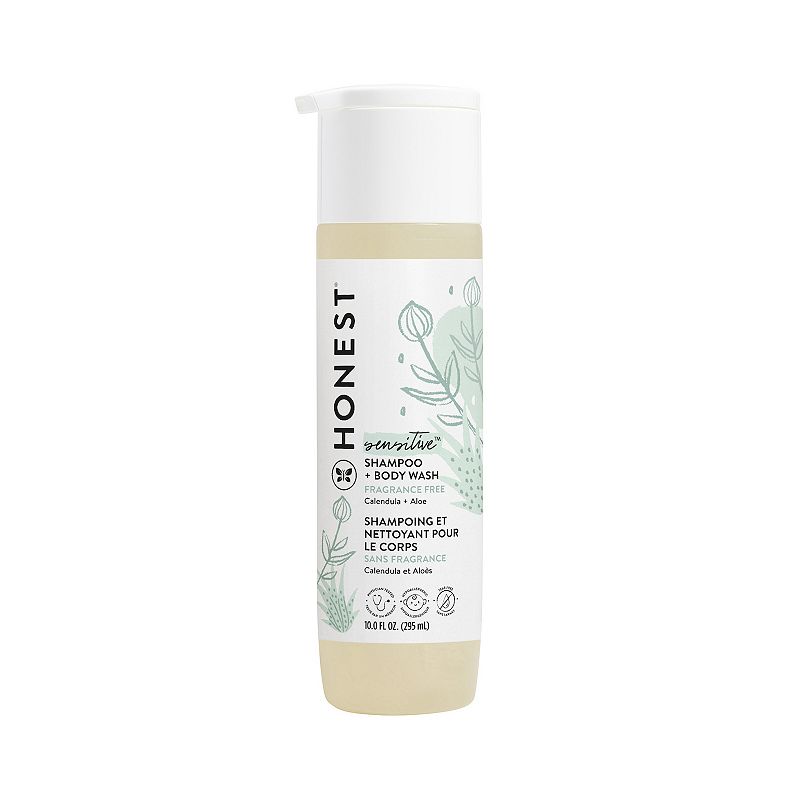



The Honest Company Sensitive Shampoo + Body Wash Fragrance Free - 10 fl oz: 2-In-1 Gel for All Hair Types, Daily Cleansing
At a glance
Summary
This shampoo features a gentle formula with beneficial ingredients like aloe vera, coconut-derived surfactants, and chamomile extract, which are known for their soothing and moisturizing properties. However, the presence of sodium chloride, which can cause dryness and irritation, slightly detracts from its overall safety profile. The product is processed, which limits its maximum potential score despite its mostly clean ingredient list.
Key ingredients 21
Sodium Cocoyl IsethionateVery Good
This is a gentle surfactant derived from coconut oil, known for its mild cleansing properties. It is effective in removing dirt and oil without stripping natural oils from the hair. It is highly regarded in hair care formulations.
Risks
There are minimal risks associated with this ingredient.
Benefits
It provides effective cleansing while maintaining hair's natural moisture balance.
Cocos Nucifera (Coconut) Fruit ExtractVery Good
Coconut extract is rich in fatty acids and provides moisturizing and conditioning benefits. It helps to nourish and hydrate the hair, improving its overall health. It is a highly beneficial ingredient in hair care products.
Risks
There are minimal risks associated with coconut extract.
Benefits
It deeply moisturizes and conditions the hair, enhancing its softness and shine.
Aloe Barbadensis Leaf JuiceGood
Aloe vera is known for its soothing and moisturizing properties. It helps to hydrate the scalp and hair, reducing dryness and irritation. It is a beneficial ingredient in hair care products.
Risks
There are minimal risks associated with aloe vera, though some individuals may experience allergic reactions.
Benefits
Aloe vera provides hydration and soothing effects, making it beneficial for sensitive scalps.
Calendula Officinalis Flower ExtractGood
Calendula extract is known for its soothing and anti-inflammatory properties. It can help calm irritated skin and promote healing. It is a beneficial addition to hair care products for sensitive scalps.
Risks
There are minimal risks, though some individuals may experience allergic reactions.
Benefits
It soothes and calms the scalp, reducing irritation.
Chamomilla Recutita (Matricaria) Flower ExtractGood
Chamomile extract is known for its calming and anti-inflammatory properties. It can help soothe the scalp and reduce irritation. It is a beneficial ingredient for sensitive skin.
Risks
There are minimal risks, though some individuals may experience allergic reactions.
Benefits
It provides soothing and calming effects on the scalp.
GlycerinGood
Glycerin is a humectant that attracts moisture to the hair and scalp. It helps to maintain hydration and prevent dryness. It is a beneficial ingredient in hair care products for its moisturizing properties.
Risks
There are minimal risks associated with glycerin.
Benefits
It helps to keep the hair and scalp hydrated, reducing dryness.
PanthenolGood
Panthenol, also known as provitamin B5, is known for its moisturizing and strengthening properties. It helps to improve hair elasticity and reduce breakage. It is a beneficial ingredient in hair care products.
Risks
There are minimal risks associated with panthenol.
Benefits
It strengthens and moisturizes the hair, improving its overall health.
Water (Aqua)Neutral
Water is a common solvent used in cosmetic formulations. It acts as a base for the product, helping to dissolve other ingredients. It does not have any direct benefits or risks associated with its use in shampoos.
Risks
There are no known risks associated with water in this context.
Benefits
Water helps to dissolve and distribute other ingredients evenly throughout the product.
Cocamidopropyl HydroxysultaineNeutral
This is a mild surfactant derived from coconut oil, used to help cleanse the hair and scalp. It is generally considered safe and effective for use in shampoos. It does not have significant benefits or risks beyond its cleansing ability.
Risks
Some individuals may experience mild irritation or allergic reactions.
Benefits
It provides gentle cleansing without stripping natural oils from the hair.
Sodium Laurylglucosides HydroxypropylsulfonateNeutral
This ingredient is a mild surfactant used for its cleansing properties. It is derived from natural sources and is considered safe for use in personal care products. It does not have significant benefits or risks beyond its intended use.
Risks
There are minimal risks associated with this ingredient.
Benefits
It helps to cleanse the hair and scalp effectively.
Disodium Cocoyl GlutamateNeutral
This is a mild surfactant derived from coconut oil and glutamic acid. It is used for its gentle cleansing properties in shampoos. It is generally considered safe and effective.
Risks
There are minimal risks associated with this ingredient.
Benefits
It provides gentle cleansing suitable for sensitive skin.
Sodium ChlorideNeutral
Standard formulation ingredient — neither beneficial nor harmful at typical use.
Risks
It can lead to dryness and irritation of the scalp.
Benefits
It helps to thicken the product, improving texture.
Caprylyl GlycolNeutral
Caprylyl glycol is used as a skin conditioning agent and preservative. It helps to improve the texture of the product and extend its shelf life. It does not have significant benefits or risks beyond its intended use.
Risks
There are minimal risks associated with this ingredient.
Benefits
It helps to condition the skin and preserve the product.
Guar Hydroxypropyltrimonium ChlorideNeutral
This ingredient is used as a conditioning agent to improve the texture and manageability of hair. It helps to reduce static and frizz. It does not have significant benefits or risks beyond its intended use.
Risks
There are minimal risks associated with this ingredient.
Benefits
It improves hair manageability and reduces frizz.
Caprylhydroxamic AcidNeutral
Caprylhydroxamic acid is used as a preservative in cosmetic formulations. It helps to prevent microbial growth and extend the shelf life of the product. It does not have significant benefits or risks beyond its intended use.
Risks
There are minimal risks associated with this ingredient.
Benefits
It helps to preserve the product and prevent spoilage.
Trisodium Ethylenediamine DisuccinateNeutral
This ingredient is used as a chelating agent to improve the stability and efficacy of the product. It helps to bind metal ions and prevent discoloration. It does not have significant benefits or risks beyond its intended use.
Risks
There are minimal risks associated with this ingredient.
Benefits
It enhances product stability and prevents discoloration.
Sodium PCANeutral
Sodium PCA is a humectant that helps to retain moisture in the hair and skin. It is derived from amino acids and is considered safe for use in personal care products. It does not have significant benefits or risks beyond its intended use.
Risks
There are minimal risks associated with sodium PCA.
Benefits
It helps to maintain moisture levels in the hair and skin.
Coconut AcidNeutral
Coconut acid is derived from coconut oil and is used as a surfactant and emulsifier. It helps to cleanse and condition the hair. It does not have significant benefits or risks beyond its intended use.
Risks
There are minimal risks associated with coconut acid.
Benefits
It helps to cleanse and condition the hair.
Glutamic AcidNeutral
Glutamic acid is an amino acid used as a conditioning agent in hair care products. It helps to improve the texture and manageability of hair. It does not have significant benefits or risks beyond its intended use.
Risks
There are minimal risks associated with glutamic acid.
Benefits
It improves hair texture and manageability.
Citric AcidNeutral
Citric acid is used to adjust the pH of cosmetic formulations. It helps to maintain the stability and efficacy of the product. It does not have significant benefits or risks beyond its intended use.
Risks
There are minimal risks associated with citric acid.
Benefits
It helps to maintain the product's pH balance.
Sodium BenzoateBad
Synthetic preservative that can form benzene in the presence of vitamin C.
Risks
There are minimal risks associated with sodium benzoate.
Benefits
It helps to preserve the product and prevent spoilage.
Get the full breakdown in the Scout appTake Scout shopping
Scan any product to see lab results, healthy alternatives, and your personalized analysis.
Download on theApp Store GET IT ONGoogle PlayAmazon pricing & content
Amazon price as of . Product prices and availability are accurate as of the date/time indicated and are subject to change. Any price and availability information displayed on Amazon.com at the time of purchase will apply to the purchase of this product.
CERTAIN CONTENT THAT APPEARS ON THIS SITE COMES FROM AMAZON. THIS CONTENT IS PROVIDED “AS IS” AND IS SUBJECT TO CHANGE OR REMOVAL AT ANY TIME.