
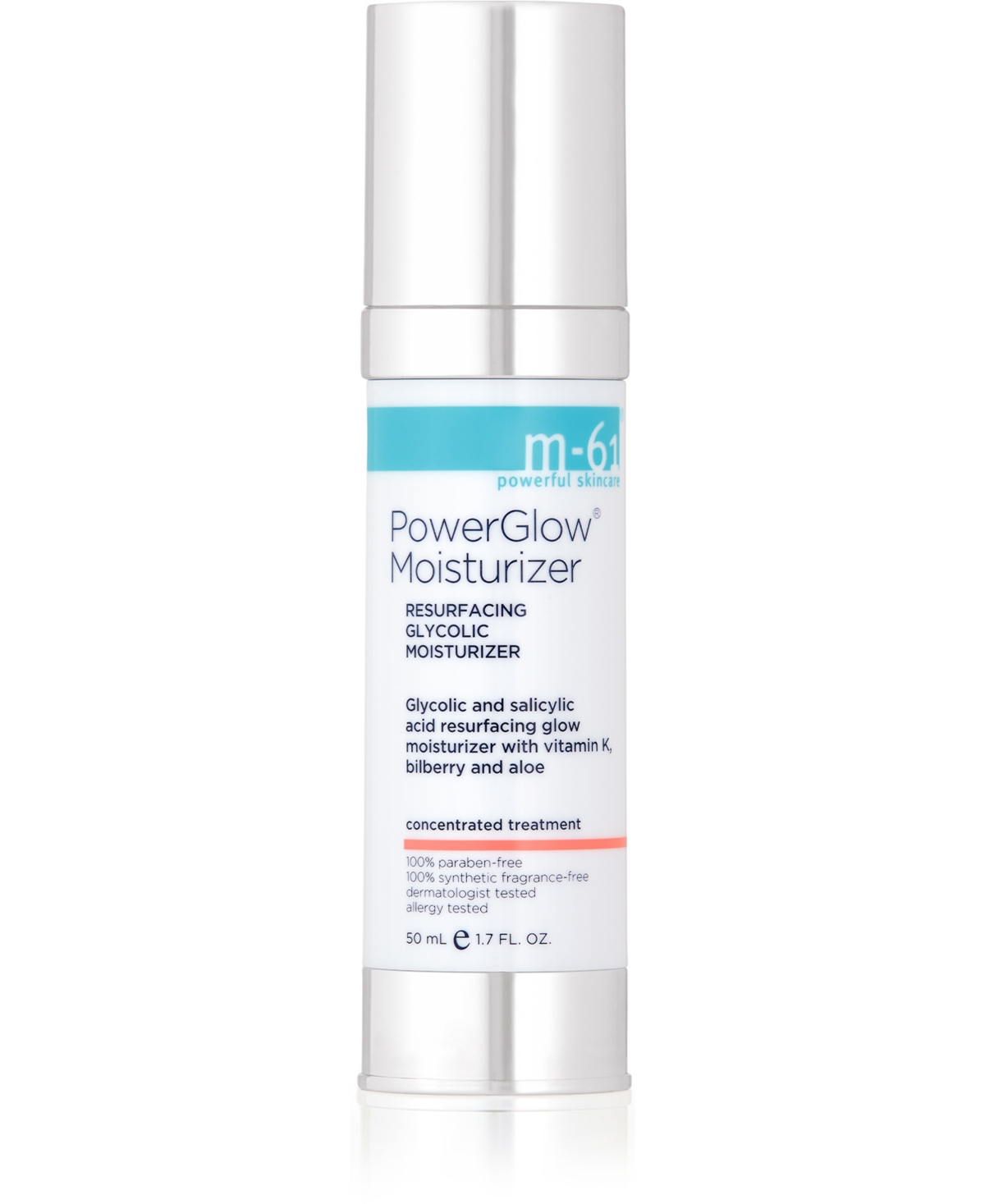
m-61 by Bluemercury PowerGlow Moisturizer
Summary
This moisturizer contains beneficial ingredients like jojoba and sunflower seed wax, which are natural and skin-friendly. However, it also includes synthetic components such as hydrogenated polyisobutene and PPG-3 benzyl ether myristate, which are more processed. The presence of alcohol can be drying to the skin, which affects the overall safety and quality of the formulation.
At a glance
Key ingredients 10
water (aqua)
Water is a universal solvent and is used as a base in many cosmetic formulations. It helps dissolve other ingredients and provides hydration to the skin. It is generally considered safe and non-irritating.
Risks
There are no significant risks associated with water in cosmetic formulations.
Benefits
Water helps to hydrate the skin and acts as a carrier for other beneficial ingredients.
glycerin
Glycerin is a humectant that attracts moisture to the skin, helping to keep it hydrated. It is commonly used in skincare products for its moisturizing properties. It is generally well-tolerated and non-irritating.
Risks
Glycerin is generally safe, but in rare cases, it may cause irritation if used in high concentrations.
Benefits
Glycerin helps to maintain skin hydration and improve skin barrier function.
hydrogenated polyisobutene
Hydrogenated polyisobutene is a synthetic polymer used as an emollient and moisturizer in cosmetics. It provides a smooth application and helps to lock in moisture. It is considered safe for use in cosmetics.
Risks
There are minimal risks associated with hydrogenated polyisobutene, though it is a synthetic ingredient.
Benefits
It helps to create a smooth texture and provides long-lasting moisture to the skin.
propanediol
Propanediol is a glycol that is used as a solvent and skin-conditioning agent. It enhances the absorption of other ingredients and provides a smooth feel. It is generally considered safe and non-irritating.
Risks
Propanediol is generally safe, but it may cause irritation in sensitive individuals.
Benefits
It improves the texture of the product and enhances the penetration of active ingredients.
glycolic acid
Glycolic acid is an alpha hydroxy acid (AHA) used for its exfoliating properties. It helps to remove dead skin cells and improve skin texture. It is effective in promoting cell turnover and improving skin radiance.
Risks
Glycolic acid can cause irritation, redness, and sensitivity, especially in high concentrations.
Benefits
It helps to exfoliate the skin, improve texture, and promote a more radiant complexion.
caprylic/capric triglyceride
Caprylic/capric triglyceride is derived from coconut oil and glycerin. It is used as an emollient and helps to improve the spreadability of products. It is considered safe and non-irritating.
Risks
There are minimal risks associated with this ingredient, though it is derived from coconut oil, which may be a concern for those with allergies.
Benefits
It provides a lightweight, non-greasy feel and helps to moisturize the skin.
ppg-3 benzyl ether myristate
PPG-3 benzyl ether myristate is a synthetic ester used as an emollient and skin-conditioning agent. It provides a silky feel and enhances the texture of the product. It is generally considered safe for use in cosmetics.
Risks
There are minimal risks, but as a synthetic ingredient, it may cause irritation in sensitive individuals.
Benefits
It improves the texture and feel of the product, providing a smooth application.
Acacia Decurrens/Jojoba/Sunflower Seed Wax Polyglyceryl-3 Esters
This ingredient is a blend of natural waxes and esters used as an emollient and thickening agent. It helps to stabilize formulations and provides a smooth texture. It is derived from natural sources and is generally considered safe.
Risks
There are minimal risks associated with this ingredient, though it may cause irritation in very sensitive individuals.
Benefits
It provides a natural, smooth texture and helps to stabilize the formulation.
Acetyl Hexapeptide-8
Acetyl Hexapeptide-8 is a peptide used for its anti-aging properties. It helps to reduce the appearance of fine lines and wrinkles by relaxing facial muscles. It is considered safe and effective in cosmetic formulations.
Risks
There are minimal risks, but it may cause irritation in sensitive skin.
Benefits
It helps to reduce the appearance of fine lines and improve skin smoothness.
Alcohol
Alcohol is used as a solvent and astringent in cosmetic formulations. It helps to dissolve other ingredients and provides a quick-drying finish. However, it can be drying and irritating to the skin.
Risks
Alcohol can cause dryness, irritation, and disruption of the skin barrier, especially with frequent use.
Benefits
It provides a quick-drying finish and helps to dissolve other ingredients in the formulation.
Processing
Processed Foods
Get the full breakdown in the Scout app
Scan any product to see lab results, healthy alternatives, and your personalized analysis.
Download on theApp Store