
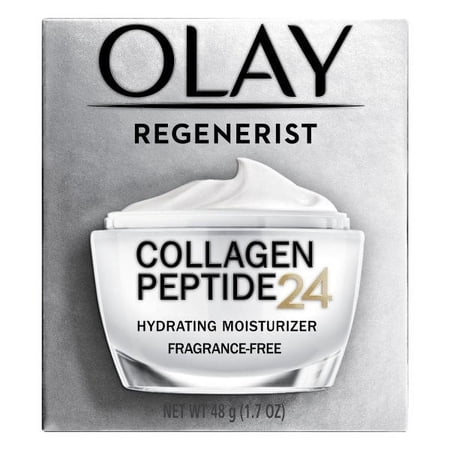
Olay Regenerist Collagen Peptide 24 Face Moisturizer Cream with Niacinamide for Firmer Skin Anti-Wrinkle Fragrance-Free 1.7 oz Includes Olay Whip Travel Size for Dry Skin

65 Fair
$34.94 · 1.7 oz
View on Amazon
Verified Amazon match

Summary

This moisturizer contains beneficial skin actives such as niacinamide, peptides, and sodium hyaluronate, which are known for their hydrating and anti-aging properties. However, the inclusion of synthetic fragrance results in a penalty due to potential skin irritation and sensitivity issues. The product is moderately processed, which slightly impacts its overall rating despite the presence of high-quality ingredients.

At a glance

Beneficial ingredients 0
Harmful ingredients 0
Category Moisturizer

Key ingredients 14

Water

Water is a common solvent used in cosmetics to dissolve other ingredients. It helps in the application and absorption of the product. It is generally considered safe and non-irritating.

Risks

There are no significant risks associated with water in cosmetics.

Benefits

Water helps to hydrate the skin and improve the texture of the product.

See more about Water →
Glycerin

Glycerin is a humectant that attracts moisture to the skin, helping to keep it hydrated. It is widely used in skincare products for its moisturizing properties. It is considered safe and beneficial for most skin types.

Risks

Rarely, glycerin can cause irritation in very sensitive skin.

Benefits

Glycerin helps to maintain skin hydration and improve skin barrier function.

See more about Glycerin →
Niacinamide

Niacinamide is a form of Vitamin B3 that is known for its anti-inflammatory and skin-soothing properties. It helps to improve skin elasticity and reduce redness. It is well-tolerated by most skin types.

Risks

In rare cases, niacinamide can cause mild irritation or redness.

Benefits

Niacinamide improves skin texture, reduces fine lines, and enhances skin barrier function.

See more about Niacinamide →
Palmitic Acid

Palmitic acid is a fatty acid used as an emollient and thickening agent in cosmetics. It helps to soften and smooth the skin. It is generally considered safe for use in skincare products.

Risks

There are minimal risks, though it can be comedogenic for some skin types.

Benefits

Palmitic acid helps to moisturize and protect the skin's surface.

See more about Palmitic Acid →
Stearic Acid

Stearic acid is a fatty acid used as an emulsifier and thickener in skincare products. It helps to stabilize formulations and improve texture. It is considered safe for most skin types.

Risks

Stearic acid can be comedogenic for some individuals, potentially leading to clogged pores.

Benefits

Stearic acid provides a smooth texture and helps to maintain the integrity of the skin barrier.

See more about Stearic Acid →
Cetearyl Alcohol

Cetearyl alcohol is a fatty alcohol used as an emollient and emulsifier in cosmetics. It helps to soften the skin and improve product texture. It is generally considered safe and non-irritating.

Risks

There are minimal risks associated with cetearyl alcohol, though it can cause irritation in very sensitive skin.

Benefits

Cetearyl alcohol helps to moisturize and condition the skin.

See more about Cetearyl Alcohol →
Dimethicone

Dimethicone is a silicone-based polymer used to provide a smooth application and protect the skin barrier. It helps to lock in moisture and improve product spreadability. It is generally considered safe for use in cosmetics.

Risks

Dimethicone can potentially cause breakouts in acne-prone skin due to its occlusive nature.

Benefits

Dimethicone provides a silky texture and helps to prevent moisture loss.

See more about Dimethicone →
Caprylic/Capric Triglyceride

Caprylic/capric triglyceride is an emollient derived from coconut oil and glycerin. It helps to moisturize and replenish the skin. It is considered safe and non-irritating for most skin types.

Risks

There are minimal risks, though it can be comedogenic for some individuals.

Benefits

Caprylic/capric triglyceride helps to improve skin hydration and texture.

See more about Caprylic/Capric Triglyceride →
Sodium Hyaluronate

Sodium hyaluronate is a salt form of hyaluronic acid known for its ability to retain moisture. It helps to hydrate and plump the skin. It is well-tolerated by most skin types.

Risks

There are no significant risks associated with sodium hyaluronate.

Benefits

Sodium hyaluronate provides intense hydration and helps to reduce the appearance of fine lines.

See more about Sodium Hyaluronate →
Collagen Amino Acids

Collagen amino acids are derived from collagen and used to improve skin elasticity and hydration. They help to support the skin's natural structure. They are generally considered safe and beneficial.

Risks

There are minimal risks associated with collagen amino acids.

Benefits

Collagen amino acids help to improve skin firmness and hydration.

Peptides

Peptides are short chains of amino acids that help to stimulate collagen production and improve skin elasticity. They are known for their anti-aging benefits. They are considered safe and effective for most skin types.

Risks

There are minimal risks, though some individuals may experience mild irritation.

Benefits

Peptides help to reduce the appearance of wrinkles and improve skin texture.

Phenoxyethanol

Phenoxyethanol is a preservative used to prevent microbial growth in cosmetics. It helps to extend the shelf life of products. It is generally considered safe in low concentrations.

Risks

Phenoxyethanol can cause irritation in sensitive skin and is a potential allergen.

Benefits

Phenoxyethanol helps to maintain product safety by preventing contamination.

See more about Phenoxyethanol →
Ethylhexylglycerin

Ethylhexylglycerin is a preservative and skin-conditioning agent used to enhance the efficacy of other preservatives. It helps to improve skin feel and product stability. It is considered safe for use in cosmetics.

Risks

There are minimal risks, though it can cause irritation in very sensitive skin.

Benefits

Ethylhexylglycerin helps to improve product preservation and skin texture.

See more about Ethylhexylglycerin →
Fragrance

Fragrance is used to impart a pleasant scent to cosmetics. It is a common ingredient in many personal care products. However, it is a known irritant and allergen for some individuals.

Risks

Fragrance can cause skin irritation, allergic reactions, and sensitivity, especially in sensitive skin.

Benefits

Fragrance provides a pleasant sensory experience, though it offers no direct skin benefits.

See more about Fragrance →

Processing

Group 3 · Processed

Processed Foods

Get the full breakdown in the Scout app

Scan any product to see lab results, healthy alternatives, and your personalized analysis.

Download on theApp Store