
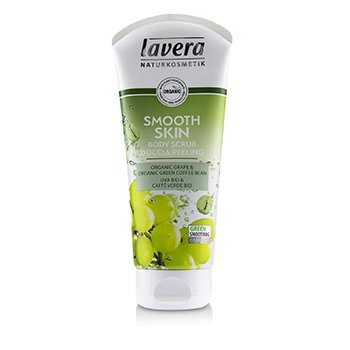

LaveraBody Scrub - Smooth Skin (Organic Grape & Organic Green Coffee Bean) 200ml/6.6oz
Analysis updated August 2026 · How Scout scores
At a glance
Summary
This body scrub contains beneficial natural ingredients like aloe vera, grape fruit extract, and coffee seed extract, which provide antioxidant and moisturizing benefits. However, the presence of denatured alcohol as a top ingredient can be drying and irritating to the skin, and the inclusion of fragrance adds potential for skin sensitivity. These factors, combined with the overall processing level, influence the product's rating.
Key ingredients 30
Aloe Barbadensis Leaf JuiceVery Good
Aloe Vera is known for its soothing and moisturizing properties. It helps in calming irritated skin and provides hydration. It is widely used for its healing and anti-inflammatory benefits.
Risks
Rarely, it may cause allergic reactions in sensitive individuals.
Benefits
Aloe Vera provides soothing, anti-inflammatory, and moisturizing benefits to the skin.
Vitis Vinifera (Grape) Fruit ExtractVery Good
Grape Fruit Extract is rich in antioxidants, particularly polyphenols, which help protect the skin from environmental damage. It has anti-aging properties and helps in improving skin elasticity. It is beneficial for its nourishing and protective effects.
Risks
Generally safe, but may cause irritation in very sensitive skin.
Benefits
Provides antioxidant protection and helps in maintaining youthful skin.
Camellia Sinensis Leaf ExtractVery Good
Green Tea Extract is rich in antioxidants and has anti-inflammatory properties. It helps in protecting the skin from environmental damage and reducing redness. It is beneficial for its soothing and protective effects.
Risks
Generally safe, but may cause irritation in very sensitive skin.
Benefits
Provides antioxidant protection and helps in soothing the skin.
Hydrogenated Jojoba OilVery Good
Hydrogenated Jojoba Oil is a stable form of jojoba oil used for its moisturizing properties. It helps in forming a protective barrier on the skin and provides long-lasting hydration. It is beneficial for its emollient and skin-conditioning effects.
Risks
Generally safe with minimal risk of irritation.
Benefits
Provides long-lasting hydration and helps in maintaining skin softness.
Hydrogenated Jojoba WaxVery Good
Hydrogenated Jojoba Wax is used for its emollient properties and ability to form a protective barrier on the skin. It helps in locking in moisture and providing a smooth texture. It is beneficial for its moisturizing and skin-protective effects.
Risks
Generally safe with minimal risk of irritation.
Benefits
Helps in maintaining skin moisture and provides a smooth texture.
Coco-GlucosideGood
Coco-Glucoside is a mild surfactant derived from coconut oil and glucose. It is used for its cleansing and foaming properties without stripping natural oils. It is considered gentle and suitable for sensitive skin.
Risks
There are minimal risks, but it may cause mild irritation in very sensitive individuals.
Benefits
Coco-Glucoside provides gentle cleansing and helps maintain the skin's natural moisture balance.
Caprylyl/Capryl GlucosideGood
Caprylyl/Capryl Glucoside is a mild surfactant derived from coconut oil and glucose. It is used for its cleansing and foaming properties without being harsh on the skin. It is suitable for sensitive skin and is biodegradable.
Risks
Minimal risk of irritation, generally considered safe.
Benefits
Provides gentle cleansing and is environmentally friendly.
Coffea Arabica (Coffee) Seed ExtractGood
Coffee Seed Extract is rich in antioxidants and is known for its anti-inflammatory properties. It helps in reducing puffiness and improving skin texture. It is beneficial for its energizing and revitalizing effects on the skin.
Risks
Rarely, it may cause irritation in sensitive individuals.
Benefits
Provides antioxidant protection and helps in reducing skin puffiness.
Rosmarinus Officinalis Leaf ExtractGood
Rosemary Leaf Extract is known for its antioxidant and antimicrobial properties. It helps in protecting the skin from free radical damage and has astringent effects. It is beneficial for its purifying and toning properties.
Risks
May cause irritation in sensitive skin if used in high concentrations.
Benefits
Provides antioxidant protection and helps in purifying the skin.
Rosmarinus Officinalis (Rosemary) Leaf OilGood
Rosemary Leaf Oil is used for its antimicrobial and anti-inflammatory properties. It helps in improving circulation and has a refreshing scent. It is beneficial for its invigorating and purifying effects on the skin.
Risks
Can cause irritation if used in high concentrations.
Benefits
Provides antimicrobial benefits and helps in invigorating the skin.
GlycerinGood
Glycerin is a well-known humectant that attracts moisture to the skin. It helps in keeping the skin hydrated and smooth. It is widely used for its moisturizing and skin-protective properties.
Risks
Generally safe, but may cause a sticky feeling if used in high concentrations.
Benefits
Provides excellent hydration and helps in maintaining skin moisture.
Water (Aqua)Neutral
Water is a common solvent used in cosmetics to dissolve other ingredients. It helps in forming emulsions and provides hydration. It is generally safe and non-irritating.
Risks
There are no significant risks associated with water in cosmetics.
Benefits
Water helps in hydrating the skin and acts as a carrier for other beneficial ingredients.
SorbitolNeutral
Standard formulation ingredient — neither beneficial nor harmful at typical use.
Risks
Excessive use may lead to a sticky feeling on the skin.
Benefits
Sorbitol helps in maintaining skin moisture and provides a smooth texture.
Xanthan GumNeutral
Xanthan Gum is a natural thickening agent used to stabilize emulsions in cosmetics. It helps in improving the texture and consistency of the product. It is generally considered safe and non-irritating.
Risks
There are no significant risks associated with its use in cosmetics.
Benefits
Xanthan Gum helps in stabilizing formulations and improving product texture.
Hydrated SilicaNeutral
Hydrated Silica is used as an abrasive and thickening agent in cosmetics. It helps in exfoliating the skin and improving product texture. It is generally considered safe for topical use.
Risks
Inhalation of silica dust can be harmful, but this is not a concern in topical applications.
Benefits
Provides gentle exfoliation and improves the texture of cosmetic products.
Citrus Aurantifolia (Lime) OilNeutral
Lime Oil is used for its refreshing scent and astringent properties. It helps in toning the skin and providing a fresh aroma. It is generally safe but can be photosensitizing.
Risks
Can cause photosensitivity, leading to skin irritation when exposed to sunlight.
Benefits
Provides a refreshing scent and helps in toning the skin.
Citrus Limon (Lemon) Peel OilNeutral
Lemon Peel Oil is known for its astringent and antiseptic properties. It helps in brightening the skin and providing a fresh scent. It is generally safe but can be photosensitizing.
Risks
Can cause photosensitivity, leading to skin irritation when exposed to sunlight.
Benefits
Provides a brightening effect and a refreshing scent.
CaffeineNeutral
Standard formulation ingredient — neither beneficial nor harmful at typical use.
Risks
May cause irritation in sensitive skin if used in high concentrations.
Benefits
Helps in reducing puffiness and improving skin firmness.
Carthamus Tinctorius (Safflower) Flower PowderNeutral
Safflower Flower Powder is used for its exfoliating properties. It helps in removing dead skin cells and improving skin texture. It is generally considered safe for topical use.
Risks
May cause irritation if used excessively.
Benefits
Provides gentle exfoliation and improves skin texture.
Hydrolyzed Gardenia Florida ExtractNeutral
Gardenia Extract is used for its fragrance and potential antioxidant properties. It helps in providing a pleasant scent and may offer some skin protection. It is generally safe for use in cosmetics.
Risks
May cause irritation in sensitive skin due to fragrance components.
Benefits
Provides a pleasant fragrance and potential antioxidant benefits.
Gardenia Jasminoides Fruit ExtractNeutral
Gardenia Fruit Extract is used for its fragrance and potential antioxidant properties. It helps in providing a pleasant scent and may offer some skin protection. It is generally safe for use in cosmetics.
Risks
May cause irritation in sensitive skin due to fragrance components.
Benefits
Provides a pleasant fragrance and potential antioxidant benefits.
Chromium Hydroxide Green (CI 77289)Neutral
Chromium Hydroxide Green is a colorant used in cosmetics to provide green pigmentation. It is considered safe for use in cosmetics when used within recommended limits. It does not have significant skin benefits or risks.
Risks
Generally safe, but may cause irritation in sensitive individuals.
Benefits
Provides color to cosmetic products without significant skin benefits.
Iron Oxide (CI 77499)Neutral
Iron Oxide is a colorant used in cosmetics to provide pigmentation. It is considered safe for use in cosmetics and is commonly used in various products. It does not have significant skin benefits or risks.
Risks
Generally safe, but may cause irritation in sensitive individuals.
Benefits
Provides color to cosmetic products without significant skin benefits.
MaltodextrinNeutral
Maltodextrin is used as a binding and stabilizing agent in cosmetics. It helps in improving the texture and consistency of products. It is generally considered safe for use in cosmetics.
Risks
There are no significant risks associated with its use in cosmetics.
Benefits
Helps in stabilizing formulations and improving product texture.
CitronellolNeutral
Citronellol is a fragrance component with a floral scent. It can be irritating to the skin and may cause allergic reactions. It is generally safe when used in low concentrations.
Risks
Can cause skin irritation and allergic reactions, especially in sensitive individuals.
Benefits
Provides a floral scent to cosmetic products.
LimoneneBad
Processed additive flagged under Scout's ingredient doctrine.
Risks
Can cause skin irritation and sensitization, especially when oxidized.
Benefits
Provides a fresh citrus scent to cosmetic products.
LinaloolBad
Processed additive flagged under Scout's ingredient doctrine.
Risks
Can cause skin irritation and sensitization, especially when oxidized.
Benefits
Provides a pleasant floral scent to cosmetic products.
CitralBad
Processed additive flagged under Scout's ingredient doctrine.
Risks
Can cause skin irritation and allergic reactions, especially in sensitive individuals.
Benefits
Provides a strong lemon scent to cosmetic products.
Alcohol denat.Very Bad
Denatured alcohol is used as a solvent and astringent in cosmetics. It can be drying and irritating to the skin, especially in high concentrations. It is often used to enhance the penetration of other ingredients.
Risks
Can cause dryness and irritation, especially for sensitive skin types.
Benefits
Helps in quick drying of the product and enhances the absorption of other ingredients.
Fragrance (Parfum)Very Bad
Fragrance is used to provide a pleasant scent to cosmetics. However, it can be irritating to the skin and may cause allergic reactions. It is often criticized for its potential to cause skin sensitivity.
Risks
Can cause skin irritation and allergic reactions, especially in sensitive individuals.
Benefits
Provides a pleasant scent to cosmetic products.
Get the full breakdown in the Scout appTake Scout shopping
Scan any product to see lab results, healthy alternatives, and your personalized analysis.
Download on theApp Store GET IT ONGoogle Play