
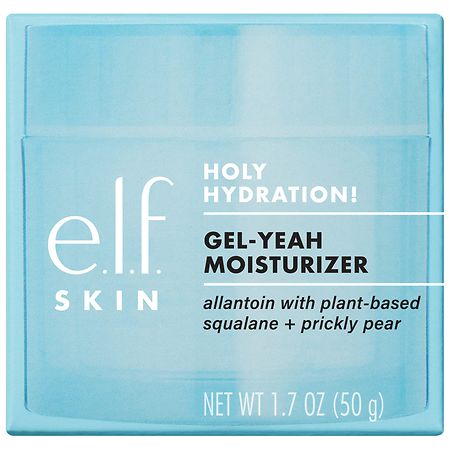

e.l.f. SKIN Holy Hydration! Gel-Yeah Face Moisturizer - 1.7fl oz: Paraben-Free, Vegan, Oily & Combination Skin
Analysis updated September 2026 · How Scout scores
At a glance
Summary
This moisturizer contains beneficial ingredients like squalane, sodium hyaluronate, and tocopherol, which provide hydration and antioxidant benefits. However, the presence of fragrance components such as geraniol and linalool, which can cause skin irritation and allergic reactions, detracts from its overall safety profile. The inclusion of synthetic fragrance also contributes to potential irritation, impacting the product's rating.
Key ingredients 20
SqualaneVery Good
Squalane is a highly effective emollient and natural antioxidant. It mimics the skin's natural oils, making it an excellent moisturizer. It is non-irritating and suitable for all skin types.
Benefits
Provides deep hydration and helps to maintain the skin's barrier.
Opuntia Dillenii ExtractGood
Opuntia Dillenii Extract is derived from cactus and is known for its hydrating and soothing properties. It contains antioxidants that help protect the skin. It is beneficial for maintaining skin hydration.
Benefits
Provides hydration and antioxidant protection to the skin.
AllantoinGood
Allantoin is a skin-soothing agent that helps to calm irritated skin. It promotes skin healing and is often used in products for sensitive skin. It is generally considered safe and beneficial.
Benefits
Soothes and protects the skin, promoting healing.
Sodium HyaluronateGood
Sodium Hyaluronate is a form of hyaluronic acid that is highly effective in retaining moisture. It helps to plump the skin and reduce the appearance of fine lines. It is well-tolerated by most skin types.
Benefits
Provides intense hydration and helps to maintain skin elasticity.
TocopherolGood
Tocopherol, or Vitamin E, is a powerful antioxidant that helps to protect the skin from free radical damage. It also has moisturizing properties. It is beneficial for maintaining healthy skin.
Benefits
Protects the skin from oxidative stress and provides moisture.
Water (Aqua)Neutral
Water is a common solvent used in cosmetics to dissolve other ingredients. It helps in the application and absorption of the product. It does not provide direct benefits or risks.
Benefits
Acts as a base for the formulation, allowing other ingredients to be effectively delivered.
Butylene GlycolNeutral
Butylene Glycol is a common humectant that helps to retain moisture in the skin. It also acts as a solvent and improves the texture of the product. It is generally considered safe for use in cosmetics.
Risks
May cause irritation in sensitive skin types.
Benefits
Helps to keep the skin hydrated by attracting moisture.
TrehaloseNeutral
Trehalose is a sugar that acts as a moisturizer and antioxidant. It helps to protect the skin from dehydration. It is generally safe for use in cosmetics.
Benefits
Provides moisture and antioxidant protection to the skin.
Bis-PEG-18 Methyl Ether Dimethyl SilaneNeutral
This ingredient is used as an emollient and conditioning agent in cosmetics. It helps to improve the texture and feel of the product. It is generally considered safe for use.
Risks
May cause irritation in sensitive individuals.
Benefits
Improves the texture and spreadability of the product.
DiglycerinNeutral
Diglycerin is a humectant that helps to retain moisture in the skin. It is similar to glycerin but with a higher viscosity. It is generally considered safe for use in cosmetics.
Benefits
Helps to keep the skin hydrated by attracting moisture.
Dipropylene GlycolNeutral
Dipropylene Glycol is used as a solvent and humectant in cosmetics. It helps to improve the texture and stability of the product. It is generally considered safe for use.
Risks
May cause irritation in sensitive individuals.
Benefits
Improves product texture and helps retain moisture.
ArginineNeutral
Arginine is an amino acid that helps to improve skin hydration and elasticity. It is often used in anti-aging products. It is generally considered safe for use in cosmetics.
Benefits
Improves skin hydration and supports elasticity.
HydroxyacetophenoneNeutral
Hydroxyacetophenone is an antioxidant and preservative used in cosmetics. It helps to protect the product from degradation. It is generally considered safe for use.
Benefits
Provides antioxidant protection and enhances product stability.
1,2-HexanediolNeutral
1,2-Hexanediol is a solvent and preservative used in cosmetics. It helps to improve the texture and shelf life of the product. It is generally considered safe for use.
Risks
May cause irritation in sensitive individuals.
Benefits
Enhances product texture and stability.
Acrylates/C10-30 Alkyl Acrylate CrosspolymerBad
Processed additive flagged under Scout's ingredient doctrine.
Risks
May cause irritation in sensitive individuals.
Benefits
Enhances the texture and stability of the formulation.
DimethiconeBad
Occlusive silicone film-former — flagged under clean-beauty doctrine.
Risks
May cause breakouts in acne-prone skin.
Benefits
Provides a smooth application and protects the skin barrier.
Disodium EDTABad
Processed additive flagged under Scout's ingredient doctrine.
Risks
May cause irritation in sensitive individuals.
Benefits
Enhances product stability and shelf life.
GeraniolBad
Geraniol is a fragrance component that can cause skin irritation and allergic reactions. It is often used for its rose-like scent. It is considered a potential allergen.
Risks
Can cause skin irritation and allergic reactions.
Benefits
Adds a floral scent to the product.
LinaloolBad
Linalool is a fragrance ingredient that can cause skin irritation and allergic reactions. It is commonly used for its pleasant scent. It is considered a potential allergen.
Risks
Can cause skin irritation and allergic reactions.
Benefits
Provides a floral scent to the product.
Fragrance (Parfum)Very Bad
Fragrance is used to impart a pleasant scent to cosmetics but can be a common irritant. It may cause allergic reactions or skin sensitivity. It is often criticized for its potential to cause irritation.
Risks
Can cause skin irritation and allergic reactions.
Benefits
Provides a pleasant scent to the product.
Get the full breakdown in the Scout appTake Scout shopping
Scan any product to see lab results, healthy alternatives, and your personalized analysis.
Download on theApp Store GET IT ONGoogle PlayAmazon pricing & content
Amazon price as of . Product prices and availability are accurate as of the date/time indicated and are subject to change. Any price and availability information displayed on Amazon.com at the time of purchase will apply to the purchase of this product.
CERTAIN CONTENT THAT APPEARS ON THIS SITE COMES FROM AMAZON. THIS CONTENT IS PROVIDED “AS IS” AND IS SUBJECT TO CHANGE OR REMOVAL AT ANY TIME.