
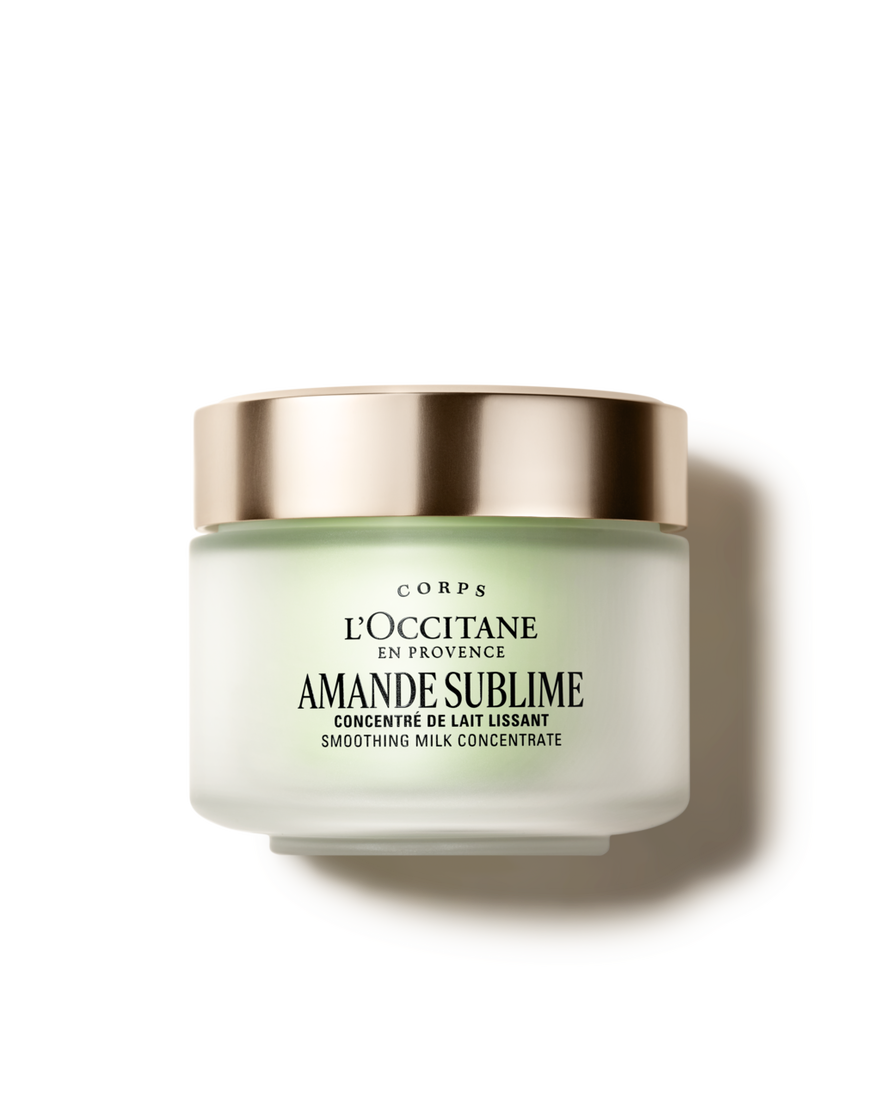


Small Travel Size L'occitane 20ml Almond Milk Concentrate
Analysis updated August 2026 · How Scout scores
At a glance
Summary
This moisturizer contains beneficial ingredients like sweet almond oil and glycerin, which are known for their moisturizing and skin-nourishing properties. However, the presence of fragrance, which can cause irritation, and preservatives like chlorphenesin and sodium metabisulfite, which may lead to allergic reactions, lower its safety profile. The product's processing level and inclusion of these potentially irritating ingredients prevent it from achieving a higher score.
Key ingredients 36
Prunus Amygdalus Dulcis (Sweet Almond) OilVery Good
Sweet Almond Oil is a natural oil rich in fatty acids and vitamins. It is known for its moisturizing and nourishing properties. It is suitable for all skin types and helps to soothe and soften the skin.
Risks
Rarely, it may cause allergic reactions in individuals with nut allergies.
Benefits
Deeply nourishes and moisturizes the skin, improving its texture.
Coco-Caprylate/CaprateGood
Coco-Caprylate/Caprate is an emollient derived from coconut oil and caprylic acid. It provides a silky feel and helps to soften the skin. It is generally well-tolerated and non-irritating.
Risks
Rarely, it may cause mild irritation in sensitive individuals.
Benefits
Improves skin texture and provides a smooth application.
Caprylic/Capric TriglycerideGood
This ingredient is a mixed triester derived from coconut oil and glycerin. It is used for its skin-replenishing and moisturizing properties. It is lightweight and non-greasy, making it suitable for all skin types.
Risks
Minimal risk of irritation or allergic reaction.
Benefits
Enhances skin hydration and provides a smooth, non-greasy finish.
GlycerinGood
Glycerin is a humectant that attracts moisture to the skin, helping to keep it hydrated. It is a well-known ingredient for improving skin barrier function. It is safe and effective for all skin types.
Risks
Very low risk of irritation.
Benefits
Deeply hydrates the skin and improves its resilience.
Prunus Amygdalus Dulcis (Sweet Almond) ProteinGood
Sweet Almond Protein is used for its conditioning properties. It helps to strengthen and protect the skin barrier. It is generally well-tolerated and beneficial for skin health.
Risks
Minimal risk of irritation or allergic reaction.
Benefits
Enhances skin barrier function and provides conditioning benefits.
Prunus Amygdalus Dulcis (Sweet Almond) Seed ExtractGood
Sweet Almond Seed Extract is rich in vitamins and minerals that nourish the skin. It provides antioxidant benefits and helps to improve skin tone and texture. It is safe for most skin types.
Risks
Potential for allergic reactions in individuals with nut allergies.
Benefits
Provides antioxidant protection and improves skin health.
Aqua/WaterNeutral
Water is a common solvent used in cosmetics to dissolve other ingredients. It helps in the application and absorption of the product. It does not have any direct benefits or risks.
Benefits
Provides a base for other ingredients to be absorbed effectively.
Methylsilanol MannuronateNeutral
Methylsilanol Mannuronate is a derivative of seaweed and is used for its moisturizing properties. It helps to improve skin elasticity and firmness. It is generally considered safe for use in cosmetics.
Benefits
May enhance skin firmness and elasticity.
Cetearyl AlcoholNeutral
Cetearyl Alcohol is a fatty alcohol used as an emollient and thickener in cosmetics. It helps to stabilize formulations and improve texture. It is non-irritating and safe for most skin types.
Risks
Low risk of irritation for sensitive skin.
Benefits
Improves product texture and provides emollient benefits.
Tapioca StarchNeutral
Tapioca Starch is used as a thickening agent and to absorb excess oil on the skin. It provides a matte finish and improves the feel of the product. It is generally safe and non-irritating.
Benefits
Helps control oil and provides a smooth, matte finish.
Juglans Regia (Walnut) Seed ExtractNeutral
Walnut Seed Extract is used for its antioxidant properties. It helps to protect the skin from environmental stressors. It is generally safe for topical use.
Risks
May cause allergic reactions in individuals with nut allergies.
Benefits
Offers antioxidant protection and supports skin health.
MethylpropanediolNeutral
Methylpropanediol is a solvent and penetration enhancer used in cosmetics. It helps to improve the absorption of other ingredients. It is considered safe for use in cosmetics.
Risks
Low risk of irritation or sensitization.
Benefits
Enhances the absorption and efficacy of active ingredients.
Caprylyl GlycolNeutral
Caprylyl Glycol is a skin conditioning agent with antimicrobial properties. It helps to preserve the product and improve skin hydration. It is generally well-tolerated and safe for use.
Risks
Low risk of irritation.
Benefits
Improves skin hydration and helps preserve the product.
Cetearyl GlucosideNeutral
Cetearyl Glucoside is an emulsifier derived from coconut oil and glucose. It helps to stabilize formulations and improve texture. It is considered safe and non-irritating.
Benefits
Stabilizes formulations and improves product texture.
Sodium PolyacrylateNeutral
Sodium Polyacrylate is a thickening agent and film-former used in cosmetics. It helps to improve the texture and stability of the product. It is generally considered safe for use.
Risks
May cause mild irritation in sensitive individuals.
Benefits
Enhances product texture and stability.
CarbomerNeutral
Carbomer is a thickening agent used to create gel-like textures in cosmetics. It helps to stabilize emulsions and improve product consistency. It is safe for use in cosmetics.
Risks
Low risk of irritation.
Benefits
Improves product consistency and stability.
Potassium Cetyl PhosphateNeutral
Potassium Cetyl Phosphate is an emulsifier that helps to blend oil and water-based ingredients. It improves the texture and stability of the product. It is generally safe and non-irritating.
Benefits
Enhances product texture and stability.
MannitolNeutral
Mannitol is a sugar alcohol used as a humectant and skin conditioning agent. It helps to retain moisture in the skin. It is considered safe for use in cosmetics.
Benefits
Helps retain moisture and improve skin hydration.
Sodium HydroxideNeutral
Sodium Hydroxide is used to adjust the pH of cosmetic formulations. It is effective in small amounts but can be irritating in higher concentrations. It is generally safe when used appropriately.
Risks
Can cause irritation if used in high concentrations.
Benefits
Helps maintain the desired pH of the product.
Sodium CitrateNeutral
Sodium Citrate is used as a buffering agent to control the pH of cosmetics. It helps to stabilize formulations and improve product performance. It is considered safe for use in cosmetics.
Benefits
Stabilizes formulations and controls pH levels.
Biosaccharide Gum-1Neutral
Biosaccharide Gum-1 is a polysaccharide used for its moisturizing and soothing properties. It helps to improve skin hydration and reduce irritation. It is generally safe and non-irritating.
Benefits
Provides moisturizing and soothing benefits to the skin.
Sodium LevulinateNeutral
Sodium Levulinate is a preservative derived from levulinic acid. It helps to prevent microbial growth and extend the shelf life of cosmetics. It is considered safe for use in cosmetics.
Risks
Low risk of irritation.
Benefits
Helps preserve the product and prevent microbial growth.
Glyceryl CaprylateNeutral
Glyceryl Caprylate is an emollient and emulsifier used in cosmetics. It helps to stabilize formulations and improve skin hydration. It is generally safe and non-irritating.
Benefits
Improves skin hydration and stabilizes formulations.
Benzoic AcidNeutral
Benzoic Acid is a preservative used to prevent microbial growth in cosmetics. It is effective in low concentrations and generally safe for use. It can cause irritation in sensitive individuals.
Risks
Potential for skin irritation in sensitive individuals.
Benefits
Helps preserve the product by preventing microbial growth.
P-Anisic AcidNeutral
P-Anisic Acid is used as a preservative and fragrance ingredient in cosmetics. It helps to prevent microbial growth and enhance the scent of the product. It is generally considered safe for use.
Risks
Low risk of irritation.
Benefits
Provides preservative benefits and enhances fragrance.
Hydrogenated LecithinNeutral
Hydrogenated Lecithin is an emulsifier and skin conditioning agent. It helps to stabilize formulations and improve skin texture. It is generally safe and non-irritating.
Benefits
Improves skin texture and stabilizes formulations.
1,2-HexanediolNeutral
1,2-Hexanediol is a solvent and preservative used in cosmetics. It helps to improve the absorption of other ingredients and prevent microbial growth. It is generally considered safe for use.
Risks
Low risk of irritation.
Benefits
Enhances ingredient absorption and preserves the product.
Citric AcidNeutral
Citric Acid is used to adjust the pH of cosmetic formulations. It also provides mild exfoliating benefits. It is generally safe for use in cosmetics.
Risks
Can cause irritation if used in high concentrations.
Benefits
Helps maintain the desired pH and provides mild exfoliation.
CoumarinNeutral
Coumarin is a fragrance ingredient with a sweet, vanilla-like scent. It is used to enhance the fragrance profile of cosmetics. It is generally safe but can cause allergic reactions in sensitive individuals.
Risks
Potential for allergic reactions in sensitive individuals.
Benefits
Enhances the fragrance profile with a sweet scent.
ChlorphenesinBad
Chlorphenesin is a preservative used to prevent microbial growth in cosmetics. It can cause skin irritation and allergic reactions in some individuals. It is considered a moderate risk ingredient.
Risks
Potential for skin irritation and allergic reactions.
Benefits
Helps preserve the product by preventing microbial growth.
Sodium MetabisulfiteBad
Sodium Metabisulfite is a preservative and antioxidant used in cosmetics. It can cause allergic reactions and irritation in some individuals. It is considered a moderate risk ingredient.
Risks
Potential for allergic reactions and skin irritation.
Benefits
Helps preserve the product and prevent oxidation.
Disodium EDTABad
Processed additive flagged under Scout's ingredient doctrine.
Risks
Low risk of irritation.
Benefits
Improves product stability and prevents degradation.
Sorbic AcidBad
Processed additive flagged under Scout's ingredient doctrine.
Risks
Potential for skin irritation in sensitive individuals.
Benefits
Helps preserve the product by preventing microbial growth.
LimoneneBad
Processed additive flagged under Scout's ingredient doctrine.
Risks
Potential for skin irritation upon oxidation.
Benefits
Provides a fresh, citrus scent to the product.
LinaloolBad
Processed additive flagged under Scout's ingredient doctrine.
Risks
Potential for skin irritation upon oxidation.
Benefits
Adds a pleasant floral scent to the product.
Parfum/FragranceVery Bad
Fragrance is used to impart scent to cosmetics but can cause allergic reactions and irritation. It is a common cause of contact dermatitis. It is considered a high-risk ingredient for sensitive skin.
Risks
High risk of allergic reactions and skin irritation.
Benefits
Enhances the sensory experience of the product.
Get the full breakdown in the Scout appTake Scout shopping
Scan any product to see lab results, healthy alternatives, and your personalized analysis.
Download on theApp Store GET IT ONGoogle PlayAmazon pricing & content
Amazon price as of . Product prices and availability are accurate as of the date/time indicated and are subject to change. Any price and availability information displayed on Amazon.com at the time of purchase will apply to the purchase of this product.
CERTAIN CONTENT THAT APPEARS ON THIS SITE COMES FROM AMAZON. THIS CONTENT IS PROVIDED “AS IS” AND IS SUBJECT TO CHANGE OR REMOVAL AT ANY TIME.