
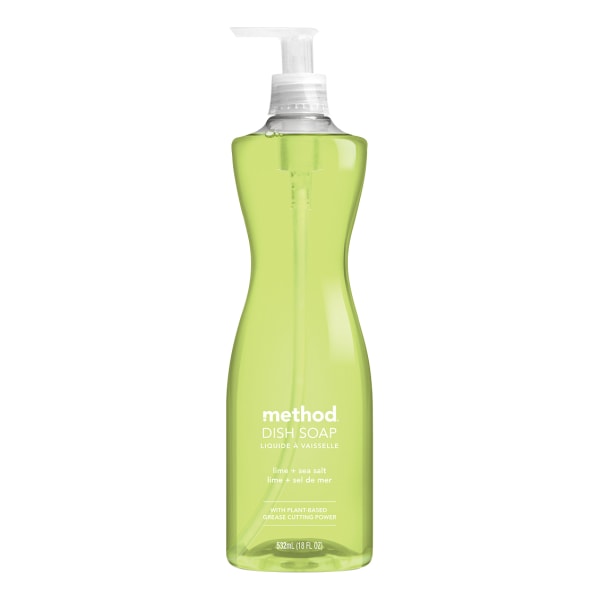

Method Dish Soap Lime + Sea Salt 18 ounce
Summary
This dish soap is primarily plant-based and includes biodegradable ingredients, which are favorable for both indoor use and the environment. It avoids harsh surfactants like SLS and SLES, and instead uses milder, plant-derived alternatives. The presence of synthetic fragrances slightly impacts its overall safety and environmental score, but the product remains a solid choice for those seeking a cleaner formulation.
At a glance
Key ingredients 13
Sodium Lauryl Sulfate
Sodium lauryl sulfate is a common surfactant used for its effective cleaning properties. It is known for its ability to create a rich lather. However, it is a harsh surfactant and can be irritating to the skin.
Risks
It is a strong skin irritant and can cause dryness and irritation with prolonged exposure.
Benefits
It effectively removes grease and dirt due to its strong surfactant properties.
Lauramine Oxide
Lauramine oxide is a surfactant and foam booster used in cleaning products. It helps to stabilize foam and enhance cleaning performance. It is generally considered safe for use in cleaning products.
Risks
May cause mild skin irritation in sensitive individuals.
Benefits
It is biodegradable and enhances the cleaning power of formulations.
Decyl Glucoside
Decyl glucoside is a mild, plant-derived surfactant. It is used for its gentle cleansing properties and is suitable for sensitive skin. It is derived from glucose and coconut oil.
Risks
Generally considered safe with low risk of irritation.
Benefits
It is biodegradable and gentle on the skin, making it a preferred choice for eco-friendly products.
Lauryl Glucoside
Lauryl glucoside is a non-ionic surfactant derived from natural sources. It is used for its mildness and ability to produce a stable foam. It is suitable for sensitive skin formulations.
Risks
Low risk of irritation, generally considered safe.
Benefits
It is biodegradable and enhances the mildness of cleaning products.
Glycerin
Glycerin is a humectant that helps to retain moisture. It is often used in cleaning products to prevent drying of the skin. It is derived from natural sources and is safe for use.
Risks
Generally safe with minimal risk of irritation.
Benefits
It helps to moisturize and protect the skin from drying out.
Ethanol
Ethanol is used as a solvent and antibacterial agent in cleaning products. It helps to dissolve other ingredients and enhance the cleaning power. It is effective in killing bacteria and viruses.
Risks
Can be drying to the skin with prolonged exposure.
Benefits
It provides antibacterial properties and enhances the effectiveness of cleaning formulations.
Sodium Chloride
Sodium chloride is used as a thickening agent in cleaning products. It helps to adjust the viscosity of the formulation. It is a common and safe ingredient.
Risks
Generally safe with no significant risks.
Benefits
It helps to stabilize and thicken the product formulation.
Citric Acid
Citric acid is used to adjust the pH of cleaning products. It is derived from citrus fruits and is biodegradable. It helps to enhance the cleaning power by breaking down mineral deposits.
Risks
Generally safe with low risk of irritation.
Benefits
It is biodegradable and enhances the cleaning effectiveness of the product.
Methylisothiazolinone
Methylisothiazolinone is a preservative used to prevent microbial growth in products. It is effective in low concentrations. However, it is a known skin sensitizer.
Risks
Can cause allergic reactions and skin sensitization in some individuals.
Benefits
It helps to extend the shelf life of products by preventing microbial contamination.
Methylchloroisothiazolinone
Methylchloroisothiazolinone is a preservative used to inhibit microbial growth. It is often used in combination with methylisothiazolinone. It is effective but can be a skin sensitizer.
Risks
May cause allergic reactions and skin irritation.
Benefits
It helps to maintain product integrity by preventing microbial contamination.
Fragrance (Parfum)
Fragrance is added to cleaning products to provide a pleasant scent. It is a mixture of various aromatic compounds. However, synthetic fragrances can cause allergic reactions.
Risks
Potential for allergic reactions and skin irritation.
Benefits
Provides a pleasant scent to enhance user experience.
Polymeric Blue
Polymeric blue is a colorant used to give products a visually appealing color. It is used in small amounts and is generally considered safe. However, it does not contribute to cleaning efficacy.
Risks
Generally safe with minimal risk.
Benefits
Enhances the visual appeal of the product.
Polymeric Yellow
Polymeric yellow is a colorant used to provide a bright color to products. It is used in small quantities and is considered safe. It does not affect the cleaning performance.
Risks
Generally safe with minimal risk.
Benefits
Improves the aesthetic appeal of the product.
Processing
Processed Foods
Get the full breakdown in the Scout app
Scan any product to see lab results, healthy alternatives, and your personalized analysis.
Download on theApp Store